Micro Savings 500 Winners List

The 2nd and 3rd  draw winners of Micro Savings,. Each winner will receive Php1,000 which will be deposited directly to the winner’s Micro Savings account:

R1A_SecondandThirdDrawWinners

R1B_SecondandThirdDrawWinners

R2A_SecondandThirdDrawWinners

R2B_SecondandThirdDrawWinners

R3_SecondandThirdDrawWinners

R4A_SecondandThirdDrawWinners

R4B_SecondandThirdDrawWinners

R5_SecondandThirdDrawWinners

1st draw winners of Micro Savings Acquisition Promo. Each winner will receive Php1,000 which will be deposited directly to the winner’s Micro Savings account:

R1A_1st Draw Winners

R1B_1st Draw Winners

R2B_1st Draw Winners

R2A_1st Draw Winners

R3_1st Draw Winners

R4A_1st Draw Winners

R4B_1st Draw Winners

R5_1st Draw Winners


Kids and Financials: The Merit System of Teaching Kids about Financial Management This Holiday

As a parent, it is our duty to teach our kids the value of money at an early age. Knowing its true value and the various ways on how to use it properly would not only be beneficial for their mentality towards it as they grow, it would also orient them about the hard work that goes along with earning every centavo. Some parents would take the easy way out and simply give their kids around twenty (20) to fifty (50) Pesos, hoping to distract them for a bit until they come back to ask for more. This isn’t the right way to raise them. Responsible parents would rather choose to discipline them at an early age, make them face the hard truth about money and the pitfalls that goes along with overspending them.

For those who have yet to experience teaching their kids about this valuable lesson and are totally clueless on how to do it efficiently, look no further than our list of tips (and tricks) about financial management at an early age and the merits to teaching it at that very stage.

First of all, let us address something very important

Understandably, one of the many things that may happen while teaching your kids the value of money is that they may compare your expenditures with that of their playmate’s parents. The thing is, not everyone has an executive position at work, so while their playmate’s parents may be making hundreds of thousands a month, your couple of thousands would definitely be lower, hence, resulting to a tighter budget. You may hear your kids say, “Why does Peter’s parents buy him toys every payday, while I only get them every holiday?” There is no shame in telling your kids the truth, never make up excuses or funny stories, instead, let them know of your financial situation. Orienting your kids as early as now would definitely do wonders in the long run.

With that out of the way, here are a few valuable tips to teach your kids on how to save and manage their finances at an early age:

1.) Tell them that every cent earned is a result of long hours of work.

There is no such thing as a free lunch. Explaining this at first to your kids may be tough, but the easiest way to do this would be to compare your job with their school work. Students who submit their assignments and are active in recitations would get higher grades than those who do not exert any effort. The same thing applies to your job, with countless hours spent filing papers, hammering nails, washing plates, etc. in order to receive a salary every cut off of the month. Take this tip as a form of hitting two birds with one stone, not only would they understand the value of money, they would also be inspired to study hard. Hard work always pays in the end.

2.) Every item bought has its particular use.

Kids without discipline would often buy candies and knick knacks, enjoying it all for a short period of time, until they run out of short change and beg for more from their parents. The thing about kids not knowing the value of money is that they also don’t know the importance of buying something that should be useful for a long time. Adults would purchase air conditioners, refrigerators, flat screen TVs, desktop computers, cellphones, etc. in order to have something to use on a daily basis, a useful appliance or gadget of sorts. Kids aren’t aware of this concept, but they would easily understand once you use their toys as an example. Choose their most favorite toy and ask them how often do they play with it? If they answer “too often,” then you’d know that you hit the spot. Tell them that items as important as their favorite toy are bought with hard-earned money, and the same rule should apply to all of the things that they’d purchase in the future. School supplies, books, clothes, all of it should be a top priority rather than junk foods and knick knacks.

3.) Let them know that saving money is a sign of being nice, not naughty.

Kids always expected Santa Claus to swoop down from the roof and bring them presents every Christmas day. This belief holds true until this very day. In such case, use this to your advantage in teaching them about managing their finances, tell them that Santa doesn’t like kids who overspend. That being a good kid entails one to save, instead of overspending everything.

4.) Make them realize that Christmas season isn’t the only season for discounts and low budget purchases.

Orient them about the other national holidays, and how the major manufacturers (such as the ones who sell their favorite toys) are aware of these other holidays as well, so that they wouldn’t need to worry when it comes to missing out on the nice things this Christmas. It doesn’t mean that you are depriving them of gifts and treats, but rather, they should at least learn to set aside a few amounts for other future expenses. Develop this at their early age and it would be very advantageous to them in the long run.

5.) Don’t just teach them, reward them.

Every triumph deserves a trophy. Remember, one of the tip above entails that they wouldn’t need to spend, since Santa already has them covered. In such case, it is up to you to reward them for a valuable lesson learned. Give them a reason to not spend their pocket money, by providing them with a gift this Christmas. Of course, you don’ need to go all out. A simple gift such as a small toy or their preferred shoe or apparel would do the trick.


With all of these in mind, you may be looking for a well-trusted name that would safely value the security of your hard-earned money. Well, look no further than Cebuana Lhuillier’s Micro Savings, at its core, it aims to provide easier banking access to Filipinos. The product is almost the same with any regular savings account in the Philippines, but doesn’t require a maintaining balance. You will only need 1 government ID and atleast P50 initial deposit, Filipino citizens as young as 7 years old old are also qualified to open an account, which can be considered as a “kids savings” or “junior savings” account. So what are you waiting for? Feel free to visit the nearest Cebuana Lhuillier now!

How to Track your Spending this Holiday

Tracking your spending on a regular basis is tough. There might be a situation in which you have a lot of expenditures and bills to pay off, hence, you aren’t keeping tabs on your budget at all, so as long as you’re able to settle all bills and debts. For that matter, you may have an even tougher time tracking your expenses this holiday season, due to the fact that, while it may be a season of being jolly and generous, it is also a season where expenditures are multiplied tenfold. You may have settled your bills as of late, but other expenses such as gifts, the materials used to wrap them with, your company Christmas party contributions, the food for the Noche Buena, etc. are all added variables that may balloon your planned budget for the month. And these added variables are not what you regularly have at your budget list, or at least not the most common thing you’d list down for your monthly expenses. In such case, you’d need a lot of help and valuable tips for tracking your expenditures this Yuletide season. Look no further than our important budgeting lists:

1.) Plan everything out beforehand.

Those who are prepared to face every obstacle or adversary always has a bigger chance of winning in the end. The same goes for tracking your expenses. What better way to do that efficiently than to have a master plan of your expenses, even before the holiday season begins. Consider plotting out the things you’d need to buy for the holidays, like gifts, the gift wrappers (yes, regardless if they cost a little less than a hundred, that is still an expense), food, replacement Christmas decorations, etc. After listing them down, combine them with the other things you’d normally write down in your monthly expense list. Of course, utility bills are still a priority. You wouldn’t want to spend Christmas Eve with no lights or connection at all. After that, you may go into detail, with regards to who are the people you are gifting this year. Be sure to list them down clearly, so you wouldn’t lose count and forget someone. And then, feel free to write down the food as well. It’s fine if you were to list down the deliverables for the Noche Buena at first, but never forget that you also have guests in the other days of the Yuletide season, which is why you should at least consider setting aside a few more amounts for your simpler “menu” for guests.

2.) Expenses are always easier to track if there are only a few in your lists.

If you think writing down your expenses is the hardest thing about tracking your financials this holiday season, think again. Eliminating items from your list is tougher. To put that into perspective, you are listing down things to purchase (gifts, food, clothes, decorations, etc.), and then having to choose which one of those you’d erase after. We are not saying that you’d erase the whole category in one go, what we mean is you’d have to choose a few of the things from the “sub-category.” For example, within the main category of food for this holiday season, not all of the food you have in mind would have to be prepared, or at least not the whole menu you had planned in advance. If you have too many sweets, then you may favor one dessert over the other. The same goes for Christmas decorations. Do you really need a new Christmas light? If the one you’ve used the year before still works, then scratch Christmas lights off your list, and focus on buying other holiday decors. Again, eliminating something from your list doesn’t necessarily mean erasing the whole thing, but at least reducing the amount or volume of that expense category. As we’ve said, it’s easier to track your expenditures without too much clutter on your budget list. With that in mind.

3.) Not everyone has to receive gifts this holiday season.

We do not mean to sound like the Grinch, but that is a most truthful statement right there. If you want to track your expenses in an efficient way, at least limit your gifting list to family and friends. You may eliminate workmates from the mix, since you’ve already contributed to the Christmas party, may it be financials or with exchange gifts. You may also want to eliminate your best friend’s cousin, your neighbors, and even your Barangay chairman. In short, focus on people who are the closest to you. This is efficient, in a way that you are very familiar with the people that matters most, you know what they like and what they don’t, you know the type of gifts that they would commend you for, you know where and when to buy these gifts. And having that much familiarity is the key to tracking and even predicting how much your gift expenses would be. You may get creative, go big, or even go small, so as long as you know, whatever you’re giving these important people in your life would be very much worth it. Of course, tracking your expenses isn’t far from reducing them. After all, isn’t that the purpose of you managing an expense list? So that you may monitor whether you’re going over your planned budget or not. You’ll always need to save and set aside a few amounts for future expenses.

With all of these in mind, you may be looking for a well-trusted name that would safely value the security of your savings during the holidays.
Well, look no further than Cebuana Lhuillier’s Micro Savings, at its core, it aims to provide easier banking access to Filipinos. The product is almost the same with any regular savings account in the Philippines, but doesn’t require a maintaining balance. You will only need 1 government ID and atleast P50 initial deposit, Filipino citizens as young as 7 years old old are also qualified to open an account, which can be considered as a “kids savings” or “junior savings” account. So what are you waiting for? Feel free to visit the nearest Cebuana Lhuillier now!

Precious Gifts for your Precious Ones: Affordable Gift Ideas for your Loved Ones this Christmas Season

Our loved ones are the most precious ones in our lives. No material thing may ever replace them, no gold, no diamond, no silver may ever take their place. Indeed, irreplaceable are our parents, brothers, sisters, and even our best of friends. This Christmas season, we have the opportunity to let them know how important they are to us. We have the opportunity to give them something that would always tell them that they have a spot in our hearts, that we are thankful for them, that they matter. Of course, some, if not many, are able to show their greatest appreciation by gifts worth more than anyone can imagine. There are those who can afford gifting their loved ones with gifts which are above a few hundred, some are even way above thousands. atters most. But what if you do not have the budget to do that? What if you’re running on low funds due to the accumulated expenses of this Yuletide season? Do you simply give up on the notion of giving your loved ones something nice? Of course not! There are always alternatives to gifting a gift worth a thousand words (and thousand Pesos more), and you have all the resources in the world to do just that. Here are just a few affordable gift ideas for the holiday season:

1.) Get creative. Make the gift!

Arts in crafts will always be a part of humanity. Since the beginning of time, people have appreciated art, in many forms and sizes. In the ancient times, Pharaohs would order their loyal subjects to adorn the pyramids with ornaments and writings, kings would demand a few golden cups be laden out in on their gigantic dining table, and emperors would require huge scrolls of writings on their stylishly-built houses. Indeed, up to this very day, art has been one of the most fascinating things that humans have set their eyes upon. For the Pharaohs, kings, and emperors of your life (simply put, your loved ones), why not create something very creative and presentable this Christmas season. There are thousands of artsy gifts you may give that wouldn’t break your bank account. You have your paper mache sculptures, your homemade greeting cards, your folding doll houses, etc. And all that you need for these art projects would be a few pieces of paper, glue, and scissors. Add a touch of color, if you may. Paint the paper mache sculpture to your heart’s content, combine a blend of light colors for a much cheerful item. Go crazy with the smiley faces and emoji designs if you think your loved ones would have a laugh in the ev nnd. Or even paint a few stars, flowers, and hand prints if they prefer a much ordinary layout. If paint isn’t really your thing but still prefer to add color to your item then at least try using one of those glitter glues. They come in different colors, red, blue, yellow, green, your usual color wheel content. Just spread a few on the surface of your art project, and then let it settle for about twenty to thirty minutes. Set it in front of an electric fan if you want to speed up the drying process. It would have a glossy surface, littered with glitters of different colors

2.) Don’t mind the brand, mind the quality.

Well-known brands will always be costlier than those which are lesser known. The common belief is that, the more expensive they are, the higher their quality and durability is. Of course, that’s mostly true as their manufacturing machines are top grade and would produce nothing less of a perfect product. Millions are spent on their manufacturing machines, so understandably, the result should be as durable as any other tough material in the world, may it be clothes, shoes, bags, etc. Now, if that’s the case for well-known brands, how about those which names are almost unrecognizable in the market? Well, there are a few items sold in your local stores which are categorized to be substandard, apparels or items which would not last a whole year or two. Perhaps they are very much identifiable according to their country of origin (you know what we’re referring to). But the thing is, not all unfamiliar brands are included in this category of substandard items. Some lesser-known brands are top notch, durable, and would give well-known brands a run for their money. Aside from that, they are also very affordable. Unfamiliar as they are, brands which are of high quality yet cheaper are worthy of your attention. The thing is, why buy an expensive item which can break your budget, if you can buy two or three of those same items for a much lower price. Quality is always better than quantity, of course, but if you are given the opportunity to attain both then much as well grab it.

3.) Pre-loved items are always a go-to alternatives.

Do you have an item at home which is still in mint condition, yet, mostly unused? There are a couple of times in which our loved ones would have the same idea, with regards to our favorites and interest, and then they’d gift us with the same item, twice. You may use one of them, but completely ignore the other. In such case, why clutter your home with multiple items if you can just give them to your loved ones. May it be a toaster, a powerbank, a mini fan, or even a Bluetooth speaker, these items may accumulate overtime as they are some of the most common choices of holiday gifts, and the people giving you gifts may have the same idea after all. Of course, you still have to be careful when giving pre-loved items, as you may forget the vital detail of the recipient being the one who actually gave you the pre-loved item in the first place.

Take note that these are just a few tips to get ahead of the game, in terms of affordable gifting ideas this Yuletide season, and you may encounter more valuable tips along the way. The thing is, no matter how much you limit your budget, things may still end up getting short, and you’d have to look for financials elsewhere. Take it from us, borrowing cash from other people is no joke. Perhaps you are much safer pawning off a few items in exchange for cash. A high appraisal would at least guaranty you a fair return, providing that well needed cash for buying affordable gifts and Christmas treats.

With all of that being said, you may be looking for a pawn shop that would provide you with the most secure, reliable, and honest service and highest appraisal possible. No worries, as Cebuana Lhuillier has got your back. With their Pawning Service you can never go short in any amount, as they accept an array of items, from jewelry to gadgets, as collaterals. They also lead the pawning industry by offering safety and the highest appraisal rate in the industry in its more than 2,500branches nationwide. Visit your nearest Cebuana Lhuillier branch now – we assure a fast, easy and secure transaction.

Great Investments for a Growing Family

Having a new member in the family would be one of the most glorious things to ever happen within the household. A new baby marks the arrival of a new blessing that should further solidify the relationship and strength of the family itself. With that being said, everything should be in place, the adjustments that goes along with it, the preparation of an extra space for the newborn, and the budget that would fill in that new void as a result of the newest member. While many of these can be accomplished with enough effort, it is understandable that there may be struggles in terms of the financials. Setting up a new space for the baby is simple enough, like rearranging the furniture, assembling the crib, and placing the other child care items within the designated baby room. In terms of the emotional adjustment, there would not be much of an issue, as both the parents and the baby’s siblings may have already been anticipating the arrival of a newborn, hence, everyone is emotionally and psychologically ready for a new member of the family. We’re not saying that it’s a very easy adjustment, it’s just that it may go much smoother if everyone’s already “up to the job.” As for the financials, the earnings of both the parents are something that may not be adjusted to increase in just a snap of a finger. Monthly income isn’t determined by the addition of a new family member, after all. It is plotted out by contract and by decision of the company’s higher management, which is why the adjustment should come from the household instead.

There are various ways to increase one’s earnings as the provider of the household, and these are what we may call as investments. There are lots and lots of investment opportunities out there which parents and other members of the family may participate in. The thing is, doubling the monthly income is a hard task, but definitely doable and manageable with proper teamwork. Luckily for you, you have your whole family to support you with such opportunities. Here are just a few examples to get you started:

1.) A Sari-Sari Store

Businesses are a great investment in the long run, and nothing brings out a more Filipino-like business better than a sari-sari store. Remember when we said that doubling your income would be a team effort? Well, having a business is no “walk in the park.” You need a helping hand, and you need your family to take over your store while you and your spouse are at your day jobs. Your teenage kids may watch over the store and tend to buyers after school. They may even report the whole day’s income after you come home from work. It’s also a good practice for the kids and teenagers to interact with buyers at an early age, as it helps develop their social skills. But that’s not all, being in charge of the store while you’re away would help orient them with the ins and outs of a business venture, no matter how small it is. A sari-sari store may not seem much, but it would add more funds for your daily expenses. A baby would need a continuous supply of milk and diapers, and your daily earnings in your small store would be beneficial for those expenses.

2.) Online Buy & Sell

With the introduction of online selling apps, you are now presented with the opportunity to run a business at the comfort of your home. If you do not feel comfortable about your kids running a small store, at least with online buy and sells, your privacies would be much better protected, with many apps taking on more secure features for their online sellers. Your options are limitless when it comes to online selling, many would sell clothes and apparels, there are some who sell tumblers and lunch boxes, there are those who would sell powerbanks and USB drives, indeed, you wouldn’t run out of options. You may have to register first before you can begin to sell, as with other social media sites, nonetheless, it is much simpler to sell online than to set up shop like a sari-sari store, which in turn would require you to spend more, especially as you’d need to construct the store itself, with expenses coming from construction materials and handy work.

3.) Buying a Car

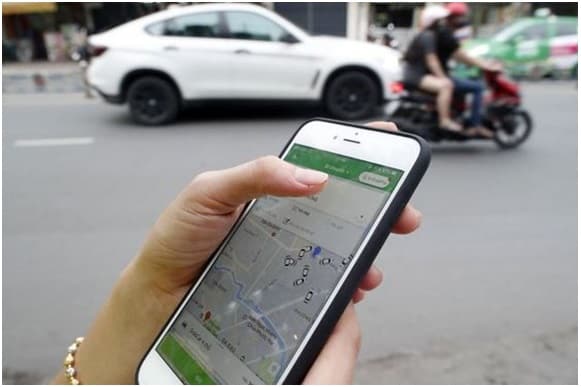
Out of all the things mentioned in this list, we’re sure that you may find this part seemingly counterproductive. It’s very understandable, as we’ve mentioned in the earlier part that the purpose of having an investment is for you to double the family’s income. Buying a car doesn’t only seem expensive at the point if purchase, but also very costly in maintenance. But let us put this into perspective, there are sources of income nowadays which requires a car, and those livelihoods are somewhat the “in-thing” when it comes to earning a fair amount in no time. Aside from apps which functions for online selling, there are also apps which are coordinated with a car. They are known as TNVS and are the modern Taxis of today. With a simple click of an app, a passenger may request for a ride, whether their destination is a few minutes or a few hours away. The driver (who is the recipient of the ride request) would simply indicate the fare price. If both the driver and the passenger were to agree on the conditions (price and destination), the passenger would be picked up, thus, beginning the whole transaction. It may all seem simple enough, but such can produce a regular income that the whole family, including the newest member, would appreciate, especially as everyone travels. There are students and employees traveling towards their daily destinations, and the need for transportation arises, mostly for those places where a regular bus or jeep doesn’t go to because of differing routes.

With all of these suggested investments, you may be looking for a service that would protect the fruit of all your labors, a service that you can trust with your financials, a service that values the love that you have for your family, especially its newest member. Well, no need to look further than Cebuana Lhuiller’s ProtectMAX, a microinsurance product designed for individuals aged 7 to 70 years old, featuring Death Benefit, Accident or Sickness Emergency Cash Assistance, Accidental Dismemberment and/or Disablement, Murder and Unprovoked Assault and Residential Fire Reconstruction cash assistance. For as low as P50, each certificate is valid for four (4) months from the date of issuance and can be availed up to a maximum of 5 certificates per insured.

Simply put, just think of all the insurances you’ve heard of before, and then raise them into a higher level, that’s what ProtectMAX is. You are better off investing in this particular Microinsurance, especially if your main priority is attaining an insurance that’s affordable and worth your hard-earned money. You may ask, “Well, that sounds great! But is my family qualified for this?” The definite answer is yes! The following are qualified beneficiaries for ProtectMAX:

Qualified beneficiaries:

  • Legal Spouse
  • Child of legal age (18 years old)
  • Parents – Mother/Father
  • Siblings – of legal age and single; married

So what are you waiting for? Visit your nearest Cebuana Lhuillier branch now – we assure a fast, easy and secure transaction.

Christmas Savings: Tips on How to Save In Spite of the Yuletide Season


This Holiday season, there are too many discounts and temptations to run away from. You have your shopping malls, your local stores, your grocery savers, and your online shopping apps. All of them are relying on your decision to spend your 13th month pay, but you should not forget that you also have other expenses, even after the Christmas season ends, hence, why you should have a definite amount of self-control. Many are distracted by the whole festivities to notice that the shopping expenses can stack up, leaving you with little to no amount by the start of the New Year. Pinoys aren’t even particularly careful during this season, as they believe that this is the “season of giving,” and there’s nothing wrong about giving right? Well, that particular belief has been misused from time to time, and this is no different than those other situations.

If you think we’re just over exaggerating on the spending habits of Pinoys during the holidays, then why not take a peek into this data taken from 2017:

  • “Among respondents participating in the data gathering, 55% indicated that December is the heaviest shopping month, with November coming in second at 24%. Only 5% of respondents said they shop in either September or October.”
  • “Among respondents participating in the data gathering, only 35% of respondents said they own a credit card, while 48% still do not own a debit card.” This data alone indicates that a majority of holiday shoppers pay with their cash, and definitely, no other resource is more used than their 13th month pay.
  • “Many of the respondents prefer clothes over other material items.” Of course, we are not ignoring those who prefer to receive or purchase electronics, but still, clothes and apparels are the most must-buys during the holidays. You have the influence of social media personalities to thank for that. Whatever they are wearing, that’s the “in-thing” nowadays.

With all of these in mind, you may be wondering how you can best save money during the holidays. You are faced with temptations, faced with countless discounts and price drops, faced with bundle packs and deals. Well, look no further than our money savings tips for the Yuletide season:

1.)Make a strict budget out of your 13th month pay/Christmas bonus

No means no and yes means yes. Self-control begins with setting boundaries, the same goes for your budget. Perhaps, you may set aside one-third of your bonus for gifts and holiday expenses, and then set aside the rest for your savings and expenses after the holidays. You can also do the reverse, where one-third is kept in your bank account while two-thirds are utilized for the holidays. It may be tough to avoid temptations during the holidays, but remember, you should spend all of your resources in one go. Many businesses and individuals found themselves at the bottom of a deep mound of debt due to lack of proper financial management. Speaking of temptations..

2.)Avoid dwelling too much into your social media accounts for the time being

You may try sticking to text messages, calls, and e-mails during the holidays. Nowadays, corporations and big brands are targeting their potential customers via customized ads online, and your social media accounts aren’t safe. Sellers spend a lot of money to roll out these customized ads in order to capitalize on spending habits, corporations are very much aware of this and would take advantage of everyone’s mutual bonuses to capitalize on their gains and revenues before the year ends. This leaves all the decision making to you, in terms of your purchases. Yes, there are temptations everywhere, yes, there are amazing deals as advertised on your screens, but these are mere marketing tactics to hook you into buying a brand’s products. A common joke nowadays is that people are drowning their sadness away through online shopping, an outlet which may turn into addiction if not monitored. It’s all funny for the time being, but it holds a certain reality at its core. People can fall victim to this outlet and be in debt at the end of every holiday season. Don’t be one of them.

3.)Be sure to track your spending

Many people spend their money without taking note of their expenses overall. You may find yourself buying a discounted item, and then be tempted to buy another, and another, until you are left with only a few centavos from your thousands of bonus pay. This is a result of two things; not planning your purchases ahead of time and not setting aside an amount from your holiday earnings. It may seem harmless at first, but remember that all bad things begin from those which do not pose a great threat at the first sight. If you go shopping for gifts, be sure to have a notepad with you. If you’re not comfortable carrying around a pen and paper, then at least use your cellphone’s calculator and note functionality to tally your expenditures. Begin by window shopping, take note of the prices, and decide which items and bundles would fit your budget. Be disciplined enough to set aside an amount in the first place and then choose to spend the rest. If you can, you may opt for cheaper alternatives, as not all expensive items are really of high quality, you’re mostly paying for the brand, after all.

4.)Choose homemade gifts instead

We’ve already said it and we’ll say it again, Pinoys love to honor the spirit of giving. There’s nothing wrong about being generous and mindful of your family, friends, and loved ones, but if it’s going to greatly affect your budget, then at least be creative enough to gift them with something affordable, yet, presentable. It could be a homemade figurines, food specialty, or any artsy craft. Remember, it’s the thought that counts.

With all of these in mind, you may be looking for a well-trusted name that would safely value the security of your hard-earned money. Well, look no further than Cebuana Lhuillier’s Micro Savings, at its core, it aims to provide easier banking access to Filipinos. The product is almost the same with any regular savings account in the Philippines, but doesn’t require a maintaining balance. You will only need 1 government ID and atleast P50 initial deposit, Filipino citizens as young as 7 years old are also qualified to open an account, which can be considered as a “kids savings” or “junior savings” account. So what are you waiting for? Feel free to visit the nearest Cebuana Lhuillier now!

A good habit to develop

The Philippines is said to have one of the lowest savings rates in Southeast Asia. And according to a survey conducted by the Bangko Sentral ng Pilipinas, only one in four households has savings.

Meanwhile, the World Bank has said in another survey in the Philippines that most Filipino families’ incomes were eaten up by basic necessities, thus representing a significant hurdle in the amount of savings Filipino families can set aside.

According to the World Bank, respondents of the survey who were financially literate, or who were familiar with basic terms like interest rates, purpose of insurance, and risk diversification, were found to be more responsible with their finances.

World Bank said that policymakers should focus on financial literacy education and come up with interventions such as getting financial literacy into the basic education curriculum.

Thankfully, there are companies like Cebuana Lhuillier who have made it their mission to teach Filipinos the benefits of saving money and how a micro savings product can help them secure and grow their savings, little by little, towards becoming financially independent in the future.

As part of its mission, the company has empowered its 8,000-strong workforce to become “iponaryo” ambassadors, visiting far-flung communities, schools and workplaces to teach and show Filipinos how to manage their spending, save money, keep them in a micro-savings account, not in the usual alkansya.

In more than 500 iponaryo sessions conducted nationwide so far, attendees are encouraged to take on the P50 iponaryo challenge by depositing P50 directly into a micro-savings account as frequently as possible with the aim of growing it to P50,000.

Cebuana Lhullier Rural Bank has an interest-bearing deposit product with low initial deposit and no maintaining balance. The product is being carried by Cebuana Lhullier Pawnshop as cash agent. Cebuana Lhullier Micro Savings is currently available in close to 2,500 branches nationwide.

With more than 2.5 million new micro-savings accounts already generated, Cebuana Lhuillier is finally giving millions of unbanked Filipinos the opportunity to safely grow their hard-earned money.

Read more at https://www.philstar.com/business/2019/11/24/1971265/no-goverment-takeover#rxBcqEHPIJDxDzcl.99

Cebuana Lhuillier’s 2,500 branches advocate financial independence promote micro-savings product thru its rural bank subsidiary

Nowadays, when money is hard to come by, it’s nice to know there are companies who will go out of their way to help Filipinos overcome their financial problems, starting with a few small steps.

Widely known for its pawnshop business, Cebuana Lhuillier is getting more recognized now for advocating financial independence, especially among lower-income communities, through promoting a micro-savings product of Cebuana Lhuillier Rural Bank.

Through more than 500 “iponaryo” sessions, around 80,000 employees in more than 2,500 Cebuana Lhuillier outlets go to various barangays, schools, non-government organizations, and local government units nationwide — to teach Filipinos how to manage their everyday spending, save even the smallest amount of money, keep it safe and secure, and grow it further.

The financial wellness program aims to help millions of unbanked Filipinos become financially capable by encouraging them to save money and opening a micro-savings account, one that can help them achieve their financial goals.

To start their journey towards financial independence, they just have to go to any Cebuana Lhuillier branch, and open a micro-savings account by submitting one valid ID and ₱50 initial deposit.


Authored by Elinando B. Cinco

Sending Thy Love: An In Depth Look Into the Filipino Notion of Money Remittance during the Holidays

Money remittance has always been parallel with an OFW’s main goal. The thing is, their families are depending on them back home, and what better way to provide than to send financial sustenance on a monthly basis. Believe it or not, there used to be a time in which the process of money remittance itself is scarce, to almost non-existent to many parts of the world. OFWs of the old age used to send money through envelopes, through snail mail, and you can probably guess how that went. There’s a reason why it was called snail mail, and indeed, it arrived later than usual, hence their families were always on the verge of deadlines and due dates. Nowadays, people have gone smart and instead chose to send money via a more practical and efficient way.

The rise of money remittance centers somewhat became synonymous with the stereotype of Filipinos being the hardworking heroes in foreign countries, perhaps the notion of being resilient amidst homesickness and loneliness gave off a very inspiring aura among Pinoys. The fact that we are regarded as such by foreigners as well would definitely say so much about this longstanding reputation, so much that pop culture and modern day marketing capitalized on this vividly, that we’d often see more of this via our local commercials and teleseryes. Talk about national identity and stereotyping in the media, this one takes the cake to a whole new level.

With that aside, you may be wondering how this came to be. How did we Filipinos end up being the very image of hardworking heroes? And how did we end up staying significantly parallel with the process of money remittance as well? To understand this whole concept, we should begin with the basics.

First of all, what is Money Remittance?

A quick online search gave this very specific definition about money remittance:

“A remittance refers to money that is sent or transferred to another party. The term is derived from the word remit, which means to send back. Remittances can be sent via a wire transfer, electronic payment system, mail, draft, or check. Remittances can be used for any type of payment including invoices or other obligations. But the term is typically used to refer to money sent to family members back in a person’s home country.”

Take note of the last sentence. The most common perception about money remittance is it is a way for foreign workers and expats to send financial assistance back at home. It doesn’t matter what country they are currently in, as long as the financial support is bigger than what their loved ones earn back at home on an average, it is considered a financial help or sustenance. Now, you may ask, what if the amount sent isn’t bigger than what their loved ones currently earn on an average? Well, there’s the fact that it invalidates the purpose of being an overseas worker in the first place. Knowing very well that they wouldn’t make much of a money when working abroad would simply tell them that leaving their country of origin wouldn’t make any difference at all.

How big is the contribution of Pinoys when it comes to Money Remittances?

If you think that the numbers are insignificant, think again. Here are a couple of data with regards to OFW’s remittance contributions to the country:

  • As of late, there are more than 10 million Filipinos are living as expats—a sum equal to 10% of the country’s population.
  • According to data gathered by Bangko Sentral ng Pilipinas (Philippines Central Bank, BSP) back in 2017, the Philippines was able to receive an inflow of USD$32,808 million, which translates to 10.5% of the Gross Domestic Product (GDP).
  • If you’re wondering about the most preferred countries for Filipinos to work in, according to the BSP, overseas Filipino workers (OFWs) support their families mainly from the United States (9.4 million), the United Arab Emirates (2.54 million) and Saudi Arabia (2.5 million). These choice of countries are evidently portrayed in local TV teleseryes most of the time. However, as time went by, the consensus shifted towards other choices such as Canada, Australia and New Zealand.

As you’ve noticed, a huge number of people definitely results to a much bigger return in finance. Take note that these numbers only represent data gathered from that very year, hence, there is a big chance that it may have gone up as the years went by. Do not be surprised if the numbers even doubled up, with a few more countries widening their doors towards Filipino workers in the past years alone, along with the support of the Philippine government continuously providing their assistance towards Filipinos who are hoping to make a living in the various parts of the world. Speaking of increase in numbers.

What is the most recent count, in terms of all OFW’s remittance in the past year alone?

Simply put, it was huge! According to another recent data gathered by the BSP:

“Cash sent home by Overseas Filipino Workers (OFW) surged to an all-time high in December 2018 and clocked in full-year growth that outpaced the central bank’s growth forecast even as it was the slowest annual increase on record. Cash remittances reached $2.849 billion that month, up 3.9% from the $2.741 billion inflows recorded in December 2017, spurring full-year inflows up 3.1% to $28.943 billion from 2017’s $28.060 a little past the BSP’s three-percent growth projection. That month’s (December) increase was the fastest since October 2018’s 8.7%. The increase in remittances was propelled by a 2.8% hike in the amounts sent by land-based OFWs, plus a 4.6% pickup in funds sent by those working at sea.”

Let us put into perspective that the cash flow was calculated in US Dollars ($), hence, if it was to be converted into Philippine Pesos (Php), the numbers would reach a very astounding amount. Indeed, it greatly contributes to the Philippine economy, along with the import, export, and businesses we have with other countries.

Is the level of money remittance affected by the ever-changing season?

That’s a good question that would be best answered by this particular statement from a sought after economist:

“December is the season for sending back money for loved ones in the Philippines,” says Chief Economist Mr. Carlo O. Asuncion. “Remittances usually peak towards December each year as OFWs send more money to support increased spending for festivities and gifts during the holidays.”

This is true, as according to BSP, “Household spending contributes about three-fifths of gross domestic product. The latest available Philippine Statistics Authority data show household final consumption expenditure growth slowing to 5.4% in 2018’s fourth quarter from the year-ago 6.2%, and full-year increase slowing to 5.6% in 2018 from 5.9% in 2017.”

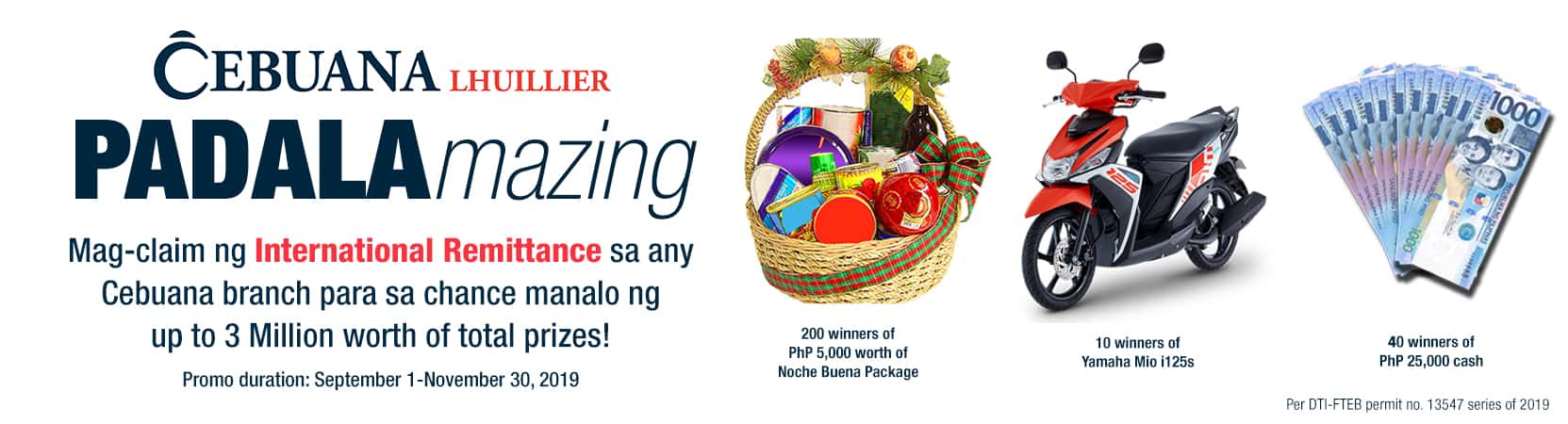
While the Holidays is near, a lot of Filipinos send money and receives remittances. If you are sending or receiving remittances until November 2019, you can win in our Cebuana Lhuillier’s PADALAmazing Raffle Promo and Double Your Remittance Promo!

More info on these promos on this links:

https://www.cebuanalhuillier.com/cebuana-padalamazing-raffle-promo-mechanics/

https://www.cebuanalhuillier.com/double-your-remittance-promo/

Pawning Protection: Pawning Around the World and the Red Flags against Scams

Scams are everywhere. Not only are they limited to financial transactions, they’ve also entered the world of marketing, networking, and even after-sales. Scams may come in many forms, some you may have already heard of from your local evening news, while others are still under wraps, with assailants proving to be too much of a burden to the authorities. The thing about scams is that their effectivity and execution would rely on how less the victim knows. Those who are not knowledgeable about these modern modus operandi are more likely to be tricked by assailants. The same goes for people who are not cautious and vigilant in their everyday transactions.

There are already countless cases of scams around the world, and one major establishment isn’t safe from unscrupulous people either, namely, the pawnshop. You may not heard of it much, but yes, there are cases in which people fell victim to pawnshop scams before, perhaps banking scandals and the likes of “budol-budol” are more rampant, hence why they get reported more than these pawnshop escapades. Nonetheless, they exists, which is why you should be as vigilant as ever when undergoing a transaction inside a pawnshop. A few are just mere examples of cases from around the world, and the perfect opportunities and preparations you should undergo in order to avoid them.

The Proxy Method Scam

Ever had an item in your hand that you wanted to pawn off? Well, the most practical thing to do would be to visit your nearest pawnshop and to pawn them off straight away, right? Well, that’s the most straightforward way to do it, sure, you’d have to allot time and fare money in order to reach the pawnshop, but the return is always higher, especially if you’re going for a pawnshop with a high appraisal record. Now, there are those who, unfortunately, would rather take the easy way out. Some would be too lazy or reluctant to speak to the pawnshop authorities, so much that there are scammers who would offer to do the transaction for you, somewhat of a pawning proxy. The thing is, they would approach you, offer to pawn off your item, and promise to come back with the whole amount. They’d ask for a very small percentage in exchange for the service well done. This may seem convenient and wise at first, but remember, there is always a catch. Not only would these scammers cheat you out of your items with false promises, they would also run off with the amount. It’s as if you gave them permission to rob you, and you were very much in on the act as well. Avoid talking to people that you do not know outside the pawnshop branches and instead, transact with authorized pawnshop personnel.

The Fake Gold Scam

With this modus, not only are you the victim of the scam, but you’re the proxy to the crime as well. A news story from years ago reported that a man from the province was approached by people calling themselves as “treasure hunters.” He was then shown a huge chunk of gold, after which, he was told to find a buyer in exchange for a commission. The chunk of gold was drilled in front of him in order to prove that such an item was authentic. They gave him the gold, but asked a particular amount as a guaranty that he would return to them with the sale. Normally, a pawnshop would be the wisest choice to approach and transact with on this matter, so the man did exactly just that. But after reaching the pawnshop, the pawnbroker was able to test out the authenticity of the item, and it turns out that it was fake. It might have been a harmless transaction if it weren’t for two things: a) the victim gave a particular amount to the scammers as guaranty money, so he already lost a lot in this case. b) he could be sued as an accessory to the crime, as giving a fake item to the pawnshop is definitely against the law. It’s one thing to be scammed out of money, but it’s another to be used as an accessory to the crime. Don’t fall for this mess. Avoid interacting with people claiming to be the source of instant commissions and opportunities. If it’s too good to be true, well, it usually is.

With all of that being said, you may be looking for a pawn shop that would provide you with the most secure, reliable, and honest service and highest appraisal possible. No worries, as Cebuana Lhuillier has got your back. With their Pawning Service you can never go short in any amount, as they accept an array of items, from jewelry to gadgets, as collaterals. They also lead the pawning industry by offering safety and the highest appraisal rate in the industry in its 2,500branches nationwide. Visit your nearest Cebuana Lhuillier branch now – we assure a fast, easy and secure transaction.

Dreams into Reality: Micro Savings as a Gateway towards Business and Financial Success


Saving solves it all. As daunting as expenses can be, people can avoid going broke or running out of money by simply setting aside consistent amounts for their future. You may have heard of stories about people who had nothing at first, but then decided to save up after every payday and invested it on a wise financial choice, such as a business or a partnership venture, then went on to become one of today’s richest conglomerate. Stories such as these are a living proof that anyone can be successful with the right mindset and the ready-to-go attitude of rolling up their sleeves for a hard day’s worth of work.

Of course, while inspiring stories such as these may motivate many to save up wisely, there are still those who do not understand the fundamentals of saving, mainly due to the fact that product prices are at an all-time high, and that money saved would simply be “withdrawn” to sustain daily needs in the household. Admittedly, this has been the situation for quite a while, that is until an innovative financial process came along to even the playing field, the Cebuana LhuillierMicro Savings!

First of all, what is Micro Savings?

A quick online search gave the following definition – “It is a branch of microfinance, consisting of a small deposit account offered to lower-income families or individuals as an incentive to store funds for future use. Microsavings accounts work similar to a normal savings account, however, are designed around smaller amounts of money. There is no maintaining balance,allowing users to save small amounts of money and not be charged for the service.”

To put that into perspective, it’s very much like opening a savings account in your local bank, however, in a much more “affordable” and manageable scale. Micro Saving understands the situation of lower-income families or individuals, offering a much convenient solution when it comes to investing financially without a large risk at hand. No one wants to experience the never-ending cycle of getting your monthly wage, depositing it in the bank, then having to withdraw it again as your expenses wouldn’t allow your budget to cut corners. This new financial innovation breaks that particular cycle, thus, giving a majority of hard workers a much bigger chance of creating their success stories in life and for the future of their families.

How can it help in the long run?

It can help in a variety of ways, and the opportunities that Micro Savings can provide extends its reach to various members of the society, may it be an individual or a group. The following are a subset of categories by which Micro Savings can help out in the long run. Take note that these are just some of the many examples, and the reach that Micro Savings has is limitless, with the proper implementation and cooperation of the participating parties or individuals.

1.)For Retirees/Pensioners.

Our beloved senior citizens have spent their lives grinding away at work, carrying nothing but the hope of giving their sons, daughters, and even grandchildren a good life. Now that they are retired and hoping to be their own bosses, Micro Savings would at least help them out in realizing that dream into reality. Yes, they may receive a certain amount every month due to their pensioner status, but even that may not be enough to compensate for a business venture. Those who have applied for a Micro Savings in the earlier part of their careers may obviously reap the benefits during their retirement. If they were to combine the amounts that they’ve saved with Micro Savings and their upcoming monthly pensions, they would truly have enough for a venture late into their lifetime.

2.)For those who are Planning to Have a Business of their Own.

Remember when we said that those who have applied for a Micro Savings in the earlier part of their careers may obviously reap the benefits during their retirement? This is true, but why wait to reap the benefits until your retirement, if you can utilize them during the younger and mid-life stage of your life. Do you see the pattern now? The earlier that you acquire a Micro Savings account, the more that you’ll be able to save moving forward, hence, why starting out early is the key. In Cebuana Lhuillier, for example, Filipino citizens as young as seven (7) years old are qualified to open an account, which can be considered as a “kids savings” or “junior savings” account. If you were not to touch any of that until your adult years, just imagine how much you could have already saved by then. And we haven’t even started on the interest rates as well. Remember, as you save up along the way, the interest rate adds to that, Cebuana Lhuiller’s Interest Rate Per Annum is 0.30%, with a minimum balance of Php 500 to initiate the earning of interest.

So imagine if you were to start early and use that saved amount into your adult years of business planning, at least you’d have enough to start up a venture, with little (to even non-existent) margin of error, as you already have the appropriate amounts.

3.)For those who are Preparing for Emergencies.

According to data gathered back in 2018, on average, the Philippines would experience up to 20 typhoons per year. The amount of damage to property and livelihood is both devastating and limitless, which is why everyone should have the mindset of preparation when it comes to tackling these expenses. If you are one of the many who would set aside money for future emergencies, then we would urge you to try out Micro Savings, as not only is it a far more manageable way of saving, it would also be easier to withdraw, just in case your property procures damage during the ordeal. Remember, those who are always prepared comes out of the ordeal with less amounts of scratches, meaning that the financial blow caused by storms and typhoons wouldn’t be too bad in the long run.

Preparations aside, Micro Savings has its various perks and advantages. The financial outcome would simply depend on the manner in which a group or individual utilizes those returns. Speaking of perks and advantages, Cebuana Lhuillier has something for their avid Micro Saving patrons. Introducing, the Cebuana Lhuillier Ka-Cebuana Iponaryo Contest! Joining the promo is simple as 1-2-3. For more details, they may visit https://www.cebuanalhuillier.com/ka-cebuana-iponaryo-contest/ or inquire through the nearest Cebuana Lhuillier branch.

Perfecting Your Investment with a Solid Protection

Investments – there are countless resources that you can capitalize on in order to make a living, or even to double your profits. Like most activities which would involve hard work, you may need to invest time as well in order to make it work. Sure, there are a lot of things at risk when you’re investing resources at your disposal, with no guaranty of a huge return in the end, but that doesn’t mean that you should not take the risk. Remember, fortune favors the bold, and if it’s fortune that you’re seeking, then your options are limitless. In any case, you do not even need to look far if you’re to discover these investments within your reach, you have your time, money (savings), connections, and even your colleagues to help you out if you ever decide to invest towards a particular goal.

First of all, what is the very definition of “investment?”

The truth is, the definition may vary, depending on what you’re going to invest. It is “an asset or item acquired with the goal of generating income or appreciation. In an economic sense, an investment is the purchase of goods that are not consumed today but are used in the future to create wealth. In finance, an investment is a monetary asset purchased with the idea that the asset will provide income in the future or will later be sold at a higher price for a profit.” Take note that it usually concerns the outlay of some asset today, like time, money, effort, etc., in hopes of a greater payoff in the future than what was originally put in.

One of the main goals of investing is that you may double your profits in the end, a wise investment may either double or even triple your return, as long as you’d make wise decisions along the way. This is no different than reviewing for your exams back in high school. If you were to invest time reading your books, reviewing your notes and lessons, surely, the return would be a high, exemplary grade worthy of any proud parent’s attention. In business, the same principle applies, if you were to invest a reasonable amount while playing your cards right, your venture may bring in a high return of earnings at the ends of the day. Such are the very origins of many successful businesses today, with apps, gadgets, appliances, cars, and even furniture taking in the helm.

Risks in Investments

As with all things in life, there will always be risks. Counting on something to work without expecting the possible obstacles along the way would be an unwise thing to do, as being complacent in the long run would make you unprepared when something doesn’t go according to plan, and most of the time, especially when it comes to financial matters, they don’t go over smoothly.

All successful businessmen went through the very same rough patch that you may encounter along the way, hence, why you should lift your head up high and remember that there will always be solutions to every problem. Your financial investments aren’t safe from risks, but that doesn’t mean that you should give up at the first sign of trouble, you should instead take every lesson in stride and continue to march towards your goal, may it be doubling your returns or solidifying the legacy of your venture.

After all, all investments involve some degree of risk. In finance alone, there will always be a touch of uncertainty and/or potential financial loss inherent in an investment decision.  In general, as investment risks rise, investors seek higher returns to compensate themselves for taking such risks.

Major Risks that may affect your Investment

1.)Scams

Let’s face it, there will always be people out there who do not have our best intentions at heart. You may have heard stories of people falling victim to these scams, perpetrated when they least expect it or when they were not on their guard. Indeed, falling prey to scams would garner a huge financial lost, hence, why you shouldn’t always trust strangers who are offering an immediate increase in investment returns. Do not be fooled by modern day investment scams, read the newspaper, watch your evening news, learn about these scams via your social media apps. Victims are always willing to share their side of the story, learn from them and always remember the dos and don’ts of trusting other people.

2.)External Calamities

You’ve already set up your small venture (local store), invested your life savings on all of the needed materials and structure, and even spent a few on marketing your business, when all of a sudden, a huge typhoon ravages your community, costing a lot in damages, including your business. This is one of those situations in which investors (such as you) would have preferred to be robbed instead of being hit by the storm. At least if thieves were to take a few of your earnings, they wouldn’t have had destroyed the whole place in the process. The thing is, the Philippines is prone to storms and calamities. In the recent years, 20 typhoons were recorded to have landed in the country, and that is on a year to year basis. So aside from unscrupulous scammers, you have the weather to worry about as well. In such case, the best thing would be to insure your business, thus, lessening the cost and taking you a step beyond storm warnings.

3.)Constant Inflation

This has been a concern of many business moguls for quite a while now. The mere definition of a financial inflation is the general upward movement of prices.  Inflation reduces purchasing power, which is a risk for investors receiving a fixed rate of interest.  The principal concern for individuals investing in cash equivalents is that inflation will erode returns. That last part alone is enough to send chills down every investor’s spine. Again, preparing for such an unexpected event may ease up possible loses in the long run.

4.)General Business Risk

Some concerns may come from the very core of your business decisions. If you didn’t make a wise choice early on, it may come back to haunt you (financially). If that part doesn’t ring a bell, take this very specific example from one of our online searches:

“With a stock, you are purchasing a piece of ownership in a company.  With a bond, you are loaning money to a company.  Returns from both of these investments require that that the company stays in business. If a company goes bankrupt and its assets are liquidated, common stockholders are the last in line to share in the proceeds.  If there are assets, the company’s bondholders will be paid first, then holders of preferred stock.  If you are a common stockholder, you get whatever is left, which may be nothing.”

Indeed, every step you take in business is a vital one, so choose wisely.

You may be looking for a very reliable way to protect your investments. Well, look no further than Cebuana Lhuillier’s MicroBiz Protect. It is a comprehensive Property Insurance with Personal Accident coverage, Comprehensive General Liability and AXA Assistance made specifically for micro enterprises. It covers the property and its contents against perils fire and/or lightning and other allied perils such as earthquake, typhoon, flood and others. It also covers MSMEs against burglary and robbery, accidental death, permanent disablement and accidental medical reimbursement. Fees for the micro-insurance policy covering up to 12 months can go as low as PHP540. Aside from that, it is also underwritten by AXA Philippines. Visit your nearest Cebuana Lhuillier branch now for more information – we assure a fast, easy and secure transaction.

Aeta community in Pampanga no longer unbanked

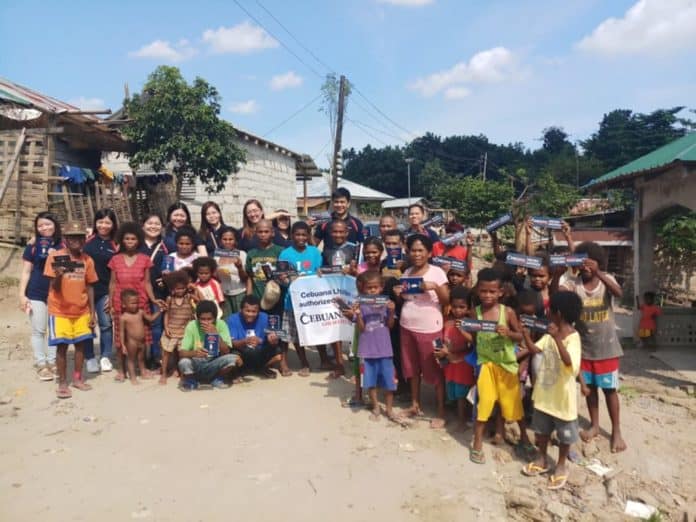
This Aeta community in Barangay Villamaria in Pampanga can now look forward to saving their hard-earned money through their Cebuana Lhuillier Micro Savings accounts.

An indigenous community in Porac, Pampanga can now enjoy secure ways of saving their hard-earned money. The Aetas who live on farming, have recently opened Cebuana Lhuiillier Micro Savings accounts during an Iponaryo cascade.

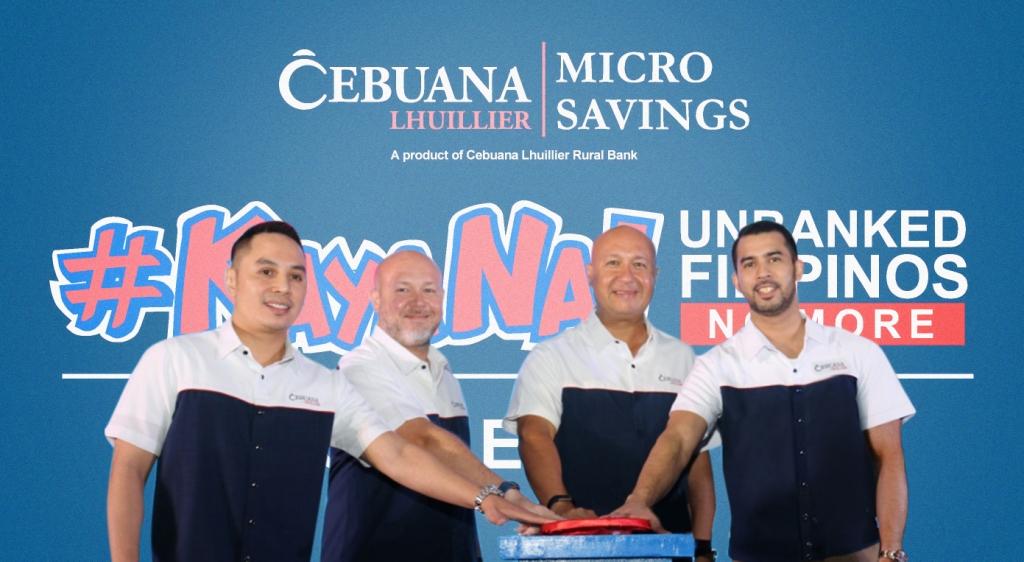
“We are happy that an Aeta community is now part of our growing number of Iponaryos who are a step closer to financial inclusion. This complements our #KayaNa: Unbanked Filipinos No More movement which provides unbanked and underbanked Filipinos with access to a savings account,” said Jean Henri Lhuillier, Cebuana Lhuillier president and CEO.

During the cascade conducted by Iponaryo Ambassadors, the community members were excited to read the Cebuana Lhuillier Iponaryo booklet and do the invisible P50 savings challenge.

Nakakatuwa po na may ganito na pala ang Cebuana Lhuillier, para ‘yung ipon namin na kakaunti galing sa pagsasaka at pangangalakal ay pwede naming itago sa Cebuana at kunin kapag kailangan,” said Jojo Lansang, a Barangay Kagawad who is also an Aeta.

Iponaryo Ambassadors from nearby Cebuana Lhuillier branches and offices reached Barangay Villamaria and Barangay Diaz, in Sitio Tarik, Pampanga after climbing a mountain and trekking through muddy terrain.

From as early as June 2019, 8,000 Cebuana Lhuillier employees, dubbed “Iponaryo Ambassadors”, have been conducting cascades nationwide to promote the value of micro savings. In September, over two million Filipinos have already opened a Cebuana Lhuillier Micro Savings account to jumpstart their Iponaryo journey.

Da Best Ka-Winter Promo


Promo Mechanics:

  1. This promo is open to all clients in United Arab Emirates (UAE) who will send their Cebuana Direct remittance transactions through the ff. partners:
  • Cash Express/Al Ansari Exchange
  • Al Fardan Exchange
  • Al Ghurair Exchange
  • Al Fuad Exchange
  • RakBank
  • Lari Exchange
  • Send Exchange/Dubai Remit
  • Index Exchange
  • Lulu Exchange
  1. Promo runs from October 1 to December 31, 2019.
  2. Remittance transactions that were made from October 1 to December 31, 2019, must be uploaded to this link: https://www.tag911.ae/win/cebuana/  in order to qualify for the promo.
  3. Winners will be drawn in January 2020.
  4. Grand raffle winners will win an all-expense-paid trip to Bucharest, Romania from February 21 to 23, 2020.


Lhuillier bags Asia CEO Awards’ Global Filipino Executive of the Year distinction

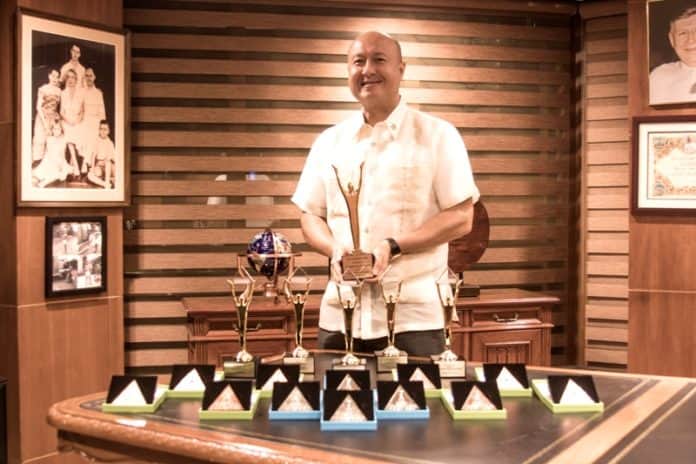
Cebuana Lhuillier president and CEO Jean Henri Lhuillier has received the prestigious Global Filipino Executive of the Year plum during the Asia CEO Awards 2019 held at the Marriott Hotel Manila.

The Global Filipino Executive of the Year distinction is given by the Asia CEO Awards, the largest award-giving body in Southeast Asia, to Filipino citizens or persons of Filipino descent who have achieved success in the Philippines or otherwise, whether in the business sector, the government, or the academe.

“This award is a testament of a bigger challenge that is presented to me and my team to keep true to our mission of empowering more Filipinos to be included in the conversation on financial inclusion.” said Lhuillier.

The award recognized Lhuillier’s visionary leadership that continues to raise the bar for Cebuana Lhuillier and parent company, PJ Lhuillier. He has shown his passion-fueled desire to not only achieve success in his business endeavors but also influence others with his philanthropic initiatives.

This year, Lhuillier led the introduction of the company’s Micro Savings product, in concurrence with the “#KayaNa: Unbanked Filipinos No More” movement. He is also the chief Iponaryo of the campaign to ensure the Philippines becomes a nation of people well-versed in the value of saving.

The Global Filipino Executive awardee is at the forefront of the expansion of the Cebuana Lhuillier pawnshop chain which has become a one-stop-shop for microfinancial services with 2,500 branches nationwide. His directions on partnerships with entities abroad continue to improve and update the company’s money remittance service that provides convenience to Overseas Filipino Workers.

Lhuillier is also committed to help his fellowmen by creating opportunities for their betterment. Through the Cebuana Lhuillier Foundation, he has opened nearly a hundred Alternative Learning System (ALS) centers which has benefited 8,000 learners and sponsored more than 1,000 scholars.

The Asia CEO Awards recipient is also a longtime softball and tennis patron, and is the person responsible for the impressive run of the RP Blu Girls in the recent Asia/Oceania Qualifying Tournament in Shanghai, China. He also supports international tennis stalwarts such as Treat Huey and Ruben Gonzales.

The Asia CEO Awards 2019 bestowed 15 awards to individuals and companies who represent Asia’s best in leadership and growth.

The Golden Bazaar

Gusto mo bang mag-invest sa gold jewelry? Save the date on on November 16-17, 2019 at magpunta sa aming Golden Bazaar sa Robinsons Galleria Ortigas Level 1 Atrium Activity Area! Matutuwa kang mamimili with 20,000 unique designs offered in best jewelry prices! See you, Ka-Cebuanas!

Per DTI Fair Trade Permit No. FTEB-19833 Series of 2019

Students start journey to financial freedom

More than 3,000 students and teachers of various schools nationwide have learned the value of saving money and opening a savings account through the Cebuana Lhuillier Micro Savings Iponaryo roadshows.

The students from Mantalongon National High School and Cawayan National High School in Cebu, Osmena Colleges in Masbate, St. Peters College in Iligan City, Davao City National High School, and University of Makati have also opened their own Cebuana Lhuillier Micro Savings accounts, to become the latest Iponaryo members of the almost two million-strong #KayaNa: Unbanked Filipinos No More movement.

Protecting Your Investment: Cebuana Lhuillier’s Newest Premium

Life is unpredictable. One day you’re out in the park, enjoying a family reunion while feeling that you’re on top of the world, and all of a sudden, something unexpected occurs. Most of the time, people are not aware of how things can change in a flash, calm becomes a storm and health is put in risk. In such case, a good investment is important to ensure that the future of your family would not go to waste. It is always better to be prepared than sorry, and Cebuana Lhuillier is here to help you accomplish just that.

Cebuana Lhuiller’s ProtectMax is a microinsurance product designed for individuals aged 7 to 70 years old with Death Benefit, Accident or Sickness Emergency Cash Assistance, Accidental Dismemberment and/or Disablement, Murder and Unprovoked Assault and Residential Fire Reconstruction cash assistance. For as low as P50, each certificate is valid for four (4) months from the date of issuance and can be availed up to a maximum of 5 certificates per insured.

Simply put, just think of all the insurances you’ve heard of before, and then raise them into a higher level, that’s what ProtectMax is. You are better off investing in this particular Microinsurance than if your main priority is attaining an insurance that’s affordable and worth your hard-earned money. You may ask, “Well, that sounds great! But is my family qualified for this?” The definite answer is yes! The following are qualified beneficiaries for ProtectMax:


Qualified beneficiaries:

  • Legal Spouse
  • Child of legal age (18 years old)
  • Parents – Mother/Father
  •   Siblings – of legal age and single; married

What are the Premiums?

Just P50. Yes, you’ve read that right. For as low as P50, you may avail this amazing Microinsurance. More specifically:


One (1) COC
Premium Benefits Coverage
Php 50 Accidental Death Php 25,000
Accidental Dismemberment and/or Disablement Php 20,000
Murder and Unprovoked Assault Php 5,000
Fire/Lightning Cash Assistance Php 5,000
Death Benefit (due to Sickness/Old age) Php 5,000
Accident or Sickness Emergency Cash Assistance Php 1,000

Accidental Dismemberment and/or Disablement Php 20,000

Murder and Unprovoked Assault Php 5,000

Fire/Lightning Cash Assistance Php 5,000

Death Benefit (due to Sickness/Old age) Php 5,000

Accident or Sickness Emergency Cash Assistance Php 1,000


Now, just because the most affordable option is P50 doesn’t mean that you are limited to just that. Another premium is P250, by which, the coverage is much higher:

One (1) COC
Premium Benefits Coverage
Php 250 Accidental Death Php 125,000
Accidental Dismemberment and/or Disablement Php 100,000
Murder and Unprovoked Assault Php 25,000
Fire/Lightning Cash Assistance Php 25,000
Death Benefit (due to Sickness/Old age) Php 25,000
Accident or Sickness Emergency Cash Assistance Php 1,000 per
incident maximum
of 5 incidents


Definitely, you might be tempted to get a higher premium as well, with the coverages at least including most of your loved ones. But the inclusions, premiums, and coverages aren’t the only advantage to Cebuana Lhuillier’s ProtectMax. The claiming process is as important and convenient as the other processes involved.


Processing of Claims:

1) In the event of a claim, the claimant shall submit the complete claim at any Cebuana Lhuillier branch nationwide.

2) Cebuana Lhuillier Branch Personnel shall review the completeness of all claim documents and submit to Cebuana Lhuillier Insurance Brokers, Inc. (CLIB) (depending on the type of claim) for claims evaluation and approval; the review shall be done in accordance with the guidelines of Pioneer Insurance and Surety Corporation (PISC).

3) CLIS will submit final advice, within 48 hours to the BP and claimant the status of the claim.


a. If a claim is approved, CLIB Head Office will pay the claimant in advance thru Pera Padala.

b.If the claim is Denied, CLIB Head Office shall send letter of denial to the claimant.


The Claim Requirements:

1) Accidental Death

a. Original Confirmation of Cover (COC)

b. Birth/Death Certificate (CTC)

c. Police Report/ Incident Report (Original)

d. Insured’s & Claimants Valid ID (with Photo and Signature)

e. Legal Supporting Document of claimant/beneficiary


2) Accidental Dismemberment, and/or Disablement

a. Photocopy of Confirmation of Cover (COC)

b. Police Report

c. Picture of Affected Body Part

d. Medical Certificate

e. Insured’s Valid ID (with Photo and Signature)


3) Murder and Unprovoked Assault

a. Original Confirmation of Cover (COC)

b. Death Certificate

c. Police Report

d. Insured’s & Claimants Valid ID (with Photo and Signature)

e. Legal Supporting Document of claimant/beneficiary


4) Fire/Lightning

a. Photocopy Confirmation of Cover (COC)

b. Picture(s) of burnt declared home address

c. Barangay Certificate

d. Insured Valid ID (with Photo, Signature, and Declared Address)


5) Death Benefit (Accidental or Sickness)

a. Original Confirmation of Cover (COC)

b. Birth/Death Certificate (CTC)

c. Police Report/ Incident Report (Original)

d. Insured’s & Claimants Valid ID (with Photo and Signature)

e. Legal Supporting Document of claimant/beneficiary

f. Medical Certificate


6) Accident or Sickness Emergency Cash Assistance

a. Photocopy Confirmation of Cover (COC)

b. Emergency Expense Benefit Claim Slip (bottom of COC)

c. Medical Certificate

d. Clinical Abstract

e. Insured’s Valid ID (with Photo and Signature)


After having a clear idea of the claim requirements, we know that you’re curious about the fine prints. The thing is, Cebuana Lhuillier doesn’t deal with fine prints, we are happy to serve and answer every detail that our customers may inquire about in the long run. To further clarify on the inclusions, we have to mention the exclusions as well:


Exclusions:

  1. Planned or expected treatments.
  2. Treatment or surgery for congenital anomalies.
  3. Treatments related to HIV, STD’s, AIDS.
  4. Claims caused by alcoholism and/or illegal drugs.
  5. Self-inflicted injuries, suicide, attempted threats while sane or insane.
  6. Treatment of mental and nervous disorders.
  7. Long-term rehabilitation and psychiatric care.
  8. Treatment for Obesity, weight reduction, or weight improvement.
  9. Chiropractic care, acupuncture, alternative medicine or any experimental procedures.
  10. Cosmetics, plastic surgery, dental care, eye and ear examinations.
  11. Hazardous and dangerous sports or activities.
  12. Any act that violates the law.
  13. Murder, assault, brawl or any attempted threat.
  14. Losses caused by escort or security service.
  15. Voluntary taking of poison, gas, nuclear or radioactive materials.
  16. Hostilities or warlike operations
  17. Any act of terrorism.

While it may seem like a long and extensive lists, most of these are in accordance with the Philippine Law as well, with hostilities and violence being the main disqualifying factors for the microinsurance itself. Understandably, this is a universally accepted provision, to further prioritize the good, hardworking, citizens of the country. Cebuana Lhuillier has always been in support of the tough, motivated, and law-abiding citizens of the country who can’t afford those pricey insurance premiums, hence why ProtectMax was made specifically for them.

With the clear lists of requirements, you may very well be on your way to applying for ProtectMax. But if you’re still unsure about the other details, please feel free to visit any nearby Cebuana Lhuillier branch. Our staff would be more than happy to answer your questions regarding this brand new Microinsurance service.

Gold for Cash: Pawning in the Philippines

Pawnshops are a rich part of Philippine history.  Believe it or not, it can be traced back at least 3,000 years to ancient China, and has been found in the earliest written histories of Greek and Roman civilizations. In 1462 the Franciscans set up the montes pietatis, which granted interest-free loans to the poor, though they were later forced to charge interest to prevent premature exhaustion of their funds. Some scholars say that the practice of pawning was introduced during the days of the Spaniards, when they would allow Chinese traders to enter the Philippine shores in order to conduct their business. This practice has then evolved into the pawning practices of today.

Due to the slow economic growth, Filipinos had turned into pawning more frequently than the usual. Is it any wonder that pawnshops continue to grow in numbers? The Bangko Sentral ng Pilipinas (BSP) said the number of pawnshops across the country reached 17,408. Of these, 6,279 are head offices while the remaining 11,129 are branches. Unsurprisingly, they outmatch and outnumber banks, as a matter of fact, they outnumber all other types of financial institutions regulated by the BSP, including universal and commercial banks, rural banks, and savings and loans associations. Talk about a booming business.

Pawning’s Wide Reach

Open your TV and you’re bound to see a commercial regarding pawnshops and its recent services, perhaps you’d be able to spot one or two within the day. In such case, it’s no wonder that pawnshops have entered Philippine pop culture as well, spearheaded by some of today’s sought after actors and actresses, it’s no wonder that the terrestrial reach of pawnshops have been wider than ever, and we haven’t even scratched the surface yet, as this only pertains to television slots, as the social media platforms of pawnshops are hard at work as well when it comes to making their presence felt.

By this, you can probably say that pawnshops no longer indicate a negative vibe whenever it is brought into discussion. There used to be a time when people would raise their eyebrows whenever they would hear of a neighbor or acquaintance pawning off their items. Nowadays, it is common knowledge that pawnshops provide nothing more than a chance for Filipinos to make ends meet. Of course, not everyone is well off, and as mentioned earlier, the Philippine economy has been stagnant, which is why it is very understandable for Filipinos to turn to pawnshops to hopefully get a fair amount.


How do Pawnshops Earn Their Money?

Well, pawnbrokers usually derive income primarily from two or three income streams:

  • Interest and Service Charges on money lent

One pawnbroking website has provided an average percentage regarding this format. We would like to clarify, however, that these percentages may vary, as different pawnshops have different percentages in play:

“In comparison to commercial banks and other lending companies, they get their income from interest for every new loan of 1% to 2.5% monthly, and yet they are all liquid. So it is imperative to say that this financial institution earns at this interest rates, how much more for the Pawnshop business averaging a 5% monthly interest rate on every loan plus a collateral – to secure loan payment.”


  • Profits on sale of unredeemed merchandise

Of course, there are times in which the person pawning off their items would not be able to regain it back to due to limited funds. In such case, it gets sold by the pawnshop. The following is a standardized format for this. Again, percentages may vary among pawnshops:


a) The income earned from this sale is from 70%-100% of mark up from the principal amount loaned out.

b) Mobile Phone units – 70% – 100% Mark up per unit for 60 days.

c) Gold Jewelries – 75% – 100% Mark up per item for 120 days.


  • Profits from ancillary specialty services such as currency exchange, money order sales, and electronic load for mobile phones.

Take note of the phrase “ancillary specialty services.“ Of course, some modern pawnshops do not just deal in pawnbroking, nowadays, they offer various services which tend to the modern Filipino’s needs. Speaking of which..


The Modern Pawnshop: What does it have to offer?

Gone are the days in which pawnshops are solely about pawning off items in exchange for cash. Cebuana Lhuillier, for example, upped its ante and showed a clear evolution into their lineup of services. First established in 1988, it is one of the leading and largest non-bank financial services providers in the Philippines with 2,500 branches nationwide. Here are just a few of its current services:


1) Money Remittance:

Cebuana Lhuillier’s Pera Padala service is an easy, quick, and safe way to send and receive money within and outside the Philippines. With its wide network and client reach with over 1.5 million global touchpoints and 4,000 domestic partner outlets, Cebuana Lhuillier makes money remittance possible anywhere around the world.


2) Microinsurance:

One of Cebuana Lhuillier’s main services, Microinsurance products help Filipinos avail financial services that promise to minimize the impact of distress and misfortune should a disaster or unfavorable event occur. They actually offer more than 20 unique and tailor-fit insurance products, which include but are not limited to TodaCARE, StudentCARE, EmployeeCARE, SecurityCARE, and AutoCARE.


3) Micro Savings:

Cebuana Lhuillier Micro Savings aims to provide easier banking access to Filipinos. The product is almost the same with any regular savings account in the Philippines (except for the fact that it is much convenient and accessible than banks) and doesn’t require a maintaining balance. Filipino citizens as young as 7 years old are even qualified to open an account, which can be considered as a “kids savings” or “junior savings” account.


A Keen Observation:

Perhaps the biggest question is, why do Filipinos tend to look towards pawnshops first than other means of financial support? After all, Filipinos can just easily loan from other institutions or borrow money from their neighbors. Well, the following reasons may very explain this in detail:


1) Accessibility

Pawnshops are all about smooth business flow and transactions. Unlike loaning companies, pawnbrokers take pride in providing a good service and fair appraisal.


2) Strictly Business

Borrowing from people you know, such as relatives, neighbors, workmates, etc. may breed some personal animosity when it comes to financials, especially as everyone would like to protect their savings, hence, why people are more comfortable dealing with pawnbrokers, because it’s all business. Nothing more, nothing less.


3) No Credit Investigations

Lending companies tend to overdo their investigations most of the time. People do not want to be bothered with questions when they’re desperate for cash, hence, why people prefer pawnshops, not because they’re less strict, but rather, they’re efficiently faster when processing financial matters. No need for additional checks or restrictions.


With all of that being said, you may be looking for a pawn shop that would provide you with the most honest service and highest appraisal possible. No worries, as Cebuana Lhuillier has got your back. With their Pawning Service you can never go short in any amount, as they accept an array of items, from jewelry to gadgets, as collaterals. They also lead the pawning industry by offering safety and the highest appraisal rate in the industry in its more than  2,500 branches nationwide. Visit your nearest Cebuana Lhuillier branch now – we assure a fast, easy and secure transaction.

Famous Banking Scams to Avoid

Financial scams – they are everywhere! Banking has been a part of people’s lives since 2000 BC, making its presence known in Assyria, India and Sumeria. Nowadays, banking itself has become somewhat of a lifestyle phenomenon, which has taken over a minimal, yet very vital part of everyone’s daily routines. While there may be checks and balances put into place to ensure that all bank accounts are kept safe and well-taken care of, there are still some who are proficient enough in breaking such benchmarks in order to take advantage of innocent people. Scammers are evolving every day, adjusting to the efficiency of bank securities and policies, in the hopes of luring unsuspecting victims to their modus operandi.

According to Bangko Sentral ng Pilipinas (BSP), which is the central bank of the Republic of the Philippines, in its 2017 Financial Inclusion Survey (FIS), the central bank announced that only an estimated 15.8 million adult Filipinos, or 22.6 percent, have bank accounts, while an approximate 52.8 million, or 77.4 percent, remain unbanked. 11.5 percent of them are in the formal banking sector, around 8.1 percent are in non-government microfinance organizations, 2.9 percent are in cooperatives, and 0.3 percent are in non-stock savings and loan associations. Only 1.3 percent of adults have electronic (e-money) accounts. The survey took into account how one person may have several accounts on different platforms.

Now, with all of those numbers in mind, just imagine how much a scammer would take home in tow after a successful scam. The numbers would reach into the thousands, making it somewhat of an amazing feat, albeit a very illegal one. In such case, it is the responsibility of each individual to always be vigilant during their transactions, to always stay alert and be one step ahead of scammers all the time. Only through proper care and precautions would we be able to beat these wrongdoers, and beat them we shall. But in order to do that, we should first identify their strategies, their targets, and possibly their motives. Here are a few examples of banking scams and how we may best avoid falling victim to them:

1)Bank Transfer Scams

You may describe this as a modern take on the old switcheroo trick, varying in examples, yet equally clever and risky to fall victim to. Here are its types:


a) Phone Bank Transfer Scam

Simply put, the scammer will try to get you to transfer money out of your account. According to a website which deals in banking security:

“The way this works is that you’ll get a phone call from someone claiming to be from your bank, alerting you to a problem within your account. This will normally be something security related, such as telling you someone is accessing your account illegally, or has stolen your identity. Their solution will be to ask you to transfer all the money into a ‘safe account’ until the problem is solved. The problem is, nobody is trying to access your account and you’re transferring money directly to the scammers. The money is then transferred very quickly to other accounts around the world.”

b) Internet Bank Transfer Scam

Nowadays, this known as phishing. Through suspicious e-mails, perpetrators may install spyware on your computer to steal your information.


“Others might try to take control of your computer remotely, by telling you there is an issue with your internet connection or you have a virus. Another tactic is to tell you you’re due a refund or compensation, but you’ve been sent too much. You’ll then be asked to transfer back the difference.”


How do you avoid them?

Here’s the thing, banks will never ask for your personal information, either through phone or through e-mails. Of course, over the counter transactions are way different when it comes to this policy, but that’s exactly the point, bank personnel will ask for your information “face-to-face” for verifications purposes, unlike scammers who would prefer to ask for your private information while being anonymous.

Aside from this, banks will never, ever ask for your PIN. That is one of the most crucial information a client may have, hence why it should be kept secret and safe at all times. You should hang up the phone or delete suspicious looking e-mails, overall.


2) Bank Card Scams

This modus operandi involves the scammers getting a hold of your card. They do not even need to keep it for a long time, card skimming or the process of copying your card details is common nowadays, especially for those who are always using their cards to pay for everything.


a) Through Direct Contact with the Card

One thing’s for sure, the most common way to get your card details is when you’re shopping online. There are unsecured websites which only say http rather than https in their website address, which can be attacked and filled with spyware, thus infecting your computer, so scammers can see everything you’re doing online.

Sometimes, crooks will even go as far as to steal your credit or debit cards while they’re in their envelopes. You will then get a phone call from the person with your card asking you to confirm a few details which allows them to start using it. By the time you realize what’s happened, your account could have been emptied, or your credit card maxed out.


b) By Skimming the Card

Scammers will sometimes use ATM and cash machines to clone your bank card so they can use it to steal your identity. A skimming device is also used in this, being attached to the card slot of ATMs, on other instances, they’ll just install miniature cameras attached so they can see your card number and PIN. One major workaround is to cover the keypad whenever you enter your PIN.


How do you avoid them?

First of all, never open or answer suspicious-looking e-mails. There are always red flags, but you’re sure to spot them all in one go. Immediately delete these kinds of e-mails. You should also update your antivirus, just to make sure that no phishing software or malware would get in your PC. You may also avoid visiting websites which only have http in the address rather than https. You should also prevent using public Wi-Fi in coffee shops or shopping malls to shop online or use online in banking.


Red Flags within a Strange E-mail

Remember when we said scammers can use e-mails to trick you into providing them with your information? If you’re still unsure of what to look out for, here are a few major examples:


  • It instructs you to click a link in the message and to log in using your online banking details.
  • It has a very generic composition. First, what do they call you? Scammers will generally use a generic welcome, such as Dear Sir/ Madam or valued customer. Real emails will address you by your name.
  • Look out for the e-mail address. Emails from scammers will come from an address which is either just a series of letters and numbers, or have a spelling mistake.


Now that you know what to lookout for, always remember to approach your local bank and its trusted personnel if ever you were to receive such suspicious e-mails or worse, have already fallen victim to one of the mentioned scams. Remember, being vigilant and alert is the key to beating these scammers to the punch. Be always ten steps ahead of them.

With all of that being said, you’re probably looking to open a bank account with a name and service that you can trust. Look no further than Cebuana Lhuiller’s Micro Savings! Initially offered in our Rural Bank branches, it is now available through our entire Cebuana Lhuillier branch networks. Simply put, you can use your 24K Plus and 4C Cards at any of our Cebuana Lhuillier Pawnshop and Bank Branches in order to withdraw your savings. With a minimum deposit amount of only P50 and no minimum maintaining balance, it’s incredibly easy to apply for one. You can even check your savings amount via our SMS service, reliable and ready to serve you 24/7. Visit your nearest Cebuana Lhuillier branch now – we assure a fast, easy and secure transaction.


Save atleast P500 and get a chance to win P5,000 on our #KaCebuanaIponaryo challenge more info at https://www.cebuanalhuillier.com/ka-cebuana-iponaryo-contest/, this is open to all Micro Savings account holders.

Starting Them Young: Banking at an Early Age

Taking care of kids at early age may be stressful for a parent, but it’s also one of the most rewarding experiences ever. You may scold them, discipline them, teach them what’s right and wrong, but at the end of the day, they will always be the cuddliest part of the household. Playtime, meal time, storytelling hour, all of these would be an enjoyable activity with your kids, however, you should not forget one of the most important lessons you may teach them at an early age, financial management. It is common knowledge by now (even to first time parents) that the best time to teach kids something very important is from an early age. There are various studies proving this theory, most notably:

“Some evidence suggests that young children do have episodic memories of their infancy but lose them later. A six-year-old, for instance, can remember events from before her first birthday, but by adolescence, she has probably forgotten that celebration. In other words, young children can likely make long-term-like memories, but these memories typically fade after a certain age or stage of brain development. Memories made in later childhood and beyond are more likely to stick because the young brain, especially the hippocampus and the frontoparietal regions, undergoes important developmental changes that improve our ability to bind, store and recall events.”

Now, do not be discouraged by one of the mentioned facts above, that toddlers tend to forget information somewhere past adolescence, the thing is, a lesson that is taught over and over again has a higher chance of being retained in the long run, due to the fact that repetitive information can overcome the fading memory of youngsters when continuously fed to them on a daily basis. Any important lesson in life is as important as being taught to your kids at an early age, but out of all the vital things, the way they should handle their finances should be one of them.


The Candy Parable

Of course, this doesn’t mean that you should allow your toddlers to hold a huge amount of cash at a very early age, but rather, teach them the main concept of saving, handling, and managing limited resources such as money. You may start out, not by coins, but by candies. Younger kids tend to learn more if you were to interpret the lesson via something that they can definitely relate with. Using a candy would not only catch their attention, it would also retain it. Start out by giving them one or two candies, and then, tell them that it would be the only candy that they’ll be given for the whole week, and that they should “budget” how they’re going to consume it. Let them know that they can’t eat the whole lot within the day, otherwise, they wouldn’t be given any further pieces anymore.

Now, you may be wondering, “Even if I were to teach my kids consistently, how can I be sure that they’ll be able to retain those lessons while growing up?” Well, the thing about teaching your kids how to manage their resources while growing up is that it isn’t merely a vocal lesson about how to do things the right way, it’s also about experiencing the lesson itself. Case in point, the candy parable. Further evidence on toddler memory studies states that:

“For parents who worry that their toddler will not remember their special early years together, a memory is essentially a unit of experience, and every experience shapes the brain in meaningful ways. Specific memories may be forgotten, but because those memories form the fabric of our identities, knowledge and experiences, they are never truly or completely gone.”

Think of it as a way of schooling them, but instead of having a seat down class, this would be more of a practical activity.


What’s the point of teaching them at an early age?

Teaching them about the value of money and the hard work done behind the scenes to acquire them would mold their outlook towards their future as whole. This doesn’t mean that you’ll open their eyes towards the luxuries that money can buy, no, as a matter of fact, it’s the opposite. It’s all about the basic needs that money would be able to purchase, and that overspending would actually put people in more trouble that they can handle. Let them know of a human being’s basic needs. According to American Psychologist, Abraham Maslow, we all have five of them:

  1. Physiological needs – these are biological requirements for human survival, e.g. air, food, drink, shelter, clothing, warmth, sex, sleep.
  2. Safety needs – protection from elements, security, order, law, stability, freedom from fear.
  3. Love and belongingness needs – after physiological and safety needs have been fulfilled, the third level of human needs is social and involves feelings of belongingness. The need for interpersonal relationships motivates behavior
  4. Esteem needs – which Maslow classified into two categories: (i) esteem for oneself (dignity, achievement, mastery, and independence) and (ii) the desire for reputation or respect from others (e.g., status, prestige).
  5. Self-actualization needs – realizing personal potential, self-fulfillment, seeking personal growth and peak experiences. A desire “to become everything one is capable of becoming” (Maslow, 1987, p. 64).

Notice that three out of five can be attainable with the help of family, friends, and loved ones, so we will not focus on that. Instead, we will go back to the topic at hand, proper financial management. Both the first and second factors are attainable with cash in tow. The very first need is what basic needs are in general, food, drink, shelter, clothing, etc. Even if you were to attain the four other needs, if you do not have access to the first few ones, then you would definitely not survive.

As children grow, they will realize more about the lessons that they’ve learned at an early age, the things that you’ve taught them. And while you’re orienting them, let them know that they may encounter mistakes along the way, but learning doesn’t really stop when they do, a mistake is just the starting point for a new lesson.


Banking at an Early Age

The thing about learning is that, it doesn’t always have to be boring. Many parents role play with their kids in order to have both quality time and family time. Role play the setting of a bank, for example. Let them know of the various scenarios involved whenever a person saves (or even overspends). Show them through role play the cons and pros of managing their money for the future. Better yet, when they’re already age seven (7), feel free to apply them for a “junior account.” Here is something we may recommend, none other than Cebuana Lhuillier’s Micro Savings service. It aims to provide easier banking access to Filipinos. The product is almost the same with any regular savings account in the Philippines and doesn’t require a maintaining balance.

Filipino citizens as young as 7 years old are even qualified to open an account, which can be considered as a “kids savings” or “junior savings” account. They can open a Micro Savings account with the help of their parent/guardian as they need to provide a valid ID together with the child’s student ID.

Riches Galore: Which Items are Considered Valuable in Pawnshops?

Pawnshops are very convenient and practical. Just think about it, nowhere can you undergo a transaction which doesn’t even last for ten minutes. They are basically the quickest way to earn cash, especially when you’re in need. Aside from that, they are a major part of Filipino culture. TV commercials aside, pawnshops are rooted in the Filipino system since the time of the Spaniards, when they allowed the Chinese to sail the Philippine shores in order to do their trades. This has been a long running business model in the Philippines, much so that the number of branches that pawnshops have in the country now outnumber banks. So regardless of area, social stature, and occupation, Filipinos will always approach a pawnshop as a first resort.

Of course, not many pawnshop clienteles have expensive items to pawn off, it’s just that they manage to come up with valid items that qualify according to the pawnshop’s standards. With that in mind, it is understandable that many are still unaware of the exact lists of items which can be pawned off. Not everyone has financial concerns, after all, so some haven’t even been in a pawnshop before. No worries, as we have listed the correct items which can count towards you having extra cash by the end of the day:

  1. Gold
    Gold is one of the most common items to be pawned off. Of course, the pawnbroker has to double check its authenticity. Not everything that glitters is gold, after all. But once proven that an item is indeed gold, the broker would come up with the price appropriately reflecting the condition, quality, and authenticity of the item. Be sure to declare whether an item is full gold or gold-plated, as those are also two separate things. Just be honest about the condition of the item and answer the pawnbroker’s questions about the item as well. Who knows, you might get a great deal in the process.
  2. Diamond
    According to a famous song, they are timeless, they are indestructible, they are “forever.” Yes, diamonds may be one of the strongest and fanciest jewels to date, but the same process of evaluation for a fair appraisal is basically the same as that of gold items. It would all depend on the quality and authenticity of the item, though there would even be lesser things to worry about if your diamond is authentic, due to the fact that it can only be scratched by other diamonds. They can also be polished well, which is why you wouldn’t have a hard time cleaning them up if you ever decide to pawn them off.
  3. Platinum
    There is a reason why it is heralded as the “king of the metals.” It is 15 times rarer than gold. As a matter of fact, is the only precious metal used in fine jewelry design that is up to 95% pure, making it the purest metal of them all (gold is only 75%). But do not let its purity fool you, it’s definitely a tough metal, so if ever you’re going to pawn off one, even in spite of over usage, your jewels would still look great in quality.
  4. Cellphones
    Smartphones are a staple of pawnshops as well. Accordingly, only a few types and models of cellphones are accepted, depending on the standard of the pawnshop itself. Nonetheless, they are a welcome addition to the already huge plethora of items you may pawn off. Take note that just like any other items, the quality will come into play. Also be reminded that this falls under the category of gadgets, so they should be in great working condition when pawned off. Much better if you were to pawn off a smartphone while still in mint condition. They have a higher appraisal.
  5. Laptops
    Much like cellphones, laptops which are pawned off while still in high quality and mint condition are prone to a higher appraisal. Of course, the more branded they are, the better. Be sure that the battery and charger is still intact and fully-functioning.

Take note that these are just the basic items you can typically pawn off, depending on the pawnshop, other items may still be qualified for a good appraisal. Feel free to ask your local pawnshop for more details.

Now that we’ve got that out of the way, we should look at the technicalities when it comes to pawning off your items. Aside from the usual verification process, you may also need to present one or two of the following:

  • Passport; including those issued by foreign governments
  • Driver’s License
  • Professional Regulation Commission (PRC) ID
  • National Bureau of Investigation (NBI) Clearance
  • Police Clearance
  • Postal ID
  • Voter’s ID
  • Barangay Certification
  • Government Service Insurance System (GSIS) e- Card
  • Social Security System (SSS) Card
  • Senior Citizen Card
  • Overseas Workers Welfare Administration (OWWA) ID
  • OFW ID
  • Seaman’s Book
  • Alien Certification of Registration/ Immigrant Certificate of Registration
  • Government Office and GOCC ID, e.g., Armed Forces of the Philippines (AFP ID), Home Development Mutual Fund (HDMF ID)
  • Certification from the National Council for the Welfare of Disabled Persons (NCWDP)
  • Department of Social Welfare and Development (DSWD) Certification
  • Integrated Bar of the Philippines ID
  • Company IDs issued by private entities or institutions registered with or supervised or regulated either by the BSP, SEC or IC
  • Passports issued by foreign government

A Well-Rounded Pawnshop That’s Always Ready to Serve

If you would ask, “What would you recommend? Is there any pawnshop that can guaranty a balance of good service and high appraisal?” As a matter of fact, yes, there is. Look no further than Cebuana Lhuillier, a leader in the pawning industry. Cebuana Lhuillier offers up to 35% higher appraisal rate compared to other pawnshops in its 2,500branches nationwide. The company’s business has evolved with the needs of the Filipino people by accepting an array of valuable items—from jewelry to gadgets—in exchange for a fair loan amount.

With every competing pawnshop in existence, each one has their own set of transactions and processes to follow. But for Cebuana Lhuillier, a simplified transaction will always make it stand out from the rest:

  • Visit any Cebuana Lhuillier Pawnshop branch and present the item to be pawned.
  • Accomplish the customer information sheet.
  • Present a valid I.D. (see list below)
  • Let the appraiser assess the value of your item. Advise the branch personnel if you agree with the appraised value and net proceeds.
  • Sign the Prenda card and the pouch containing your item to ensure its authenticity and safety for when you get it back.
  • Count the money received and secure the pawn ticket, which is required to be presented during renewal or redemption of the pawned item.

Cebuana Lhuillier also assures the highest appraisal and security for pawned items. Advance interest will be charged Php4 for every Php100 loan amount. To maintain the excellent standard of service offered by Cebuana Lhuillier, clients are charged five pesos  (Php 5) service fee, no other hidden charges will be deducted from the loan, whatsoever.

For any further clarifications or inquiries, please feel free to visit any  of our nearest branch. Our staff would be more than happy to answer your questions and feedback.

Microsavings: The Future of Affordable Banking

Have you ever imagined a world in which everything was much easier to accomplish? Have you imagined a world where complicated tasks are far simpler to process than usual? Somehow, this dream was made possible by three important factors: technology, reforms, and workarounds.

The same thing can be said about your applications – government benefits application, job application (verifications and references), and bank account application. While the first two are understandably slow-paced due to the insurmountable number of people submitting their applications at the same time, the third one doesn’t necessarily have to suffer the same fate. After all, it isn’t the number of people that affects the process the most, rather, the meticulous nature of banks when it comes to the requirements. Think of it this way, while the number of pre-requisites may be small, the matter in which they are required definitely impacts an applicant’s chances of acquiring one. The typical requirements for a normal bank account are:

  1. a) The minimum initial deposit
  2. b) Two valid IDs
  3. c) Two copies of your most recent 1×1 ID picture
  4. d) Proof of billing

Seems easy right? Well, here’s the thing, some banks would require a high amount when it comes to their “minimum” deposit. Aside from that, your proof of billing may not turn out to be valid, especially if you’re renting. The owner name would point towards your landlord, and not your very own. These simple technicalities may be an obstacle between you and your ultimate goal of opening a typical savings account.

Now, there are those who live out their lives thinking that a savings account isn’t really a major necessity, that it is something they can set aside for the sake of practicality. Consider these particular statistics, in its 2017 Financial Inclusion Survey (FIS), the national central bank announced that only an estimated 15.8 million adult Filipinos, or 22.6 percent, have bank accounts, while an approximate 52.8 million, or 77.4 percent, remain unbanked. While it may seem like a harmless amount of people being able to live with no bank account at all, take note of the actual hassles they may have to go through each and every day. Case in point, the following scenarios:

  1. Having no savings account of your own means you have no safe place to keep your money.
    The thing about having a savings account is that you’ll at least be able to keep your hard-earned money secured. Just think about it, even if you have a sturdy metallic safe back at home, chances are, you still wouldn’t have a peace of mind, knowing that thieves are always on the loose. Aside from that, your home isn’t exactly the wisest option when it comes to safekeeping. Whatever happens to your home, the money would go down with it. Fire, flood, earthquake, etc. By keeping your cash stacked at home, you’re putting all of your hard-earned cash
  2. Having no savings account of your own would make it quite difficult to retrieve your cash.One of the main perks of having a savings account is that you’ll at least be provided with an ATM card. With that, you’d be able to withdraw any amount from your account without much of a hassle (considering that there’s an available ATM machine nearby). If you have no savings account of your own, just think about how difficult it would be to retrieve your very own money. Even if you decide to keep it safe at home, you’d need to go back and forth just to acquire a small amount off your savings.
  3. Having no savings account of your own would prevent you from experiencing any potential investment opportunities.
    Depending on the bank type, opening up a savings account would actually entitle you to earn a small percentage from your deposits. Of course, when we say small, it usually involves just a few centavos of earnings, nonetheless, it accumulates and stacks up with your savings from time to time. Again, this would all depend on the bank and whether or not they implement this type of feature.
  4. Having no savings account of your own may cause lack of documents or requirements in the future, as some non-banking transactions would require for you to have an account.
    This is evident in some government applications and loans, you have to get a savings account of your own as they would deposit your loan directly to the account itself. You also have to consider other crediting companies, as bank accounts usually help them understand the financial habits of people who are hoping to borrow money from them. In such case, your personal account may function as a major requirement in itself already, being a direct pre-requisites for other financial entities.
  5. Having no savings account of your own may cause another hassle in itself, with no easy way to receive salaries and donations from relatives during times of need.
    It’s normal for people to communicate with their relatives during times of need. If you find yourself stuck in a similar situation, no worries, everyone has their moments. What would make this situation awkward, however, is the fact that money transfer isn’t going to be easy for you, especially if you do not have an account of your own. If your relatives or friends were to donate money for your cause, they may send it over your savings account, after which you may visit a nearby ATM machine to withdraw. For those without bank accounts, they may need to fall in line within a money remittance stall, endure a long wait time, and rummage through their ID collections just to acquire a few amounts.

    With all of that being said, there is definitely a need to open up a savings account, may it be for personal use or for externally checking a requirement list. The question is, is there a much convenient alternative to a bank? Is there a much better alternative to the usual savings account? Well, good news, both can be found at the same place and at the same time, none other than Cebuana Lhuillier’s Micro Savings services.

    Cebuana Lhuillier Micro Savings aims to provide easier banking access to Filipinos. The product is almost the same with any regular savings account in the Philippines, with the huge difference of its requirements being way easier to accomplish. Filipino citizens as young as 7 years old are even qualified to open an account, which can be considered as a “kids savings” or “junior savings” account. You may visit any of Cebuana Lhuillier’s 2,500 branches nationwide and fill-out the Client Customer Information File Sheet and bring the following:

    • Government issued ID
    • Birth Certificate (applicable to minors only)
    • Student ID (applicable only if student is currently enrolled)
    • P50 minimum initial deposit
    • P100 card fee (for clients w/o 24k card)

The list of accepted Government/Valid IDs are:

  • Passport
  • Driver’s License
  • Professional Regulation Commission (PRC) ID
  • National Bureau of Investigation (NBI) Clearance
  • Police Clearance
  • Postal ID
  • Voter’s ID
  • Government Service Insurance System (GSIS) e-Card
  • Social Security System (SSS) ID
  • Senior Citizen’s ID
  • Overseas Workers Welfare Administration (OWWA) ID
  • OFW ID
  • Seaman’s Book
  • Alien Certification of Registration (ACR)
  • Barangay Certificate or ID (with picture and signature)
  • Birth Certificate (applicable to minors only)
  • Firearm License
  • Immigrant Certificate of Registration
  • Marriage License
  • National Council for the Welfare of Disabled Persons
  • New TIN ID
  • OWWA ID
  • Student ID
  • Alien Certification of Registration (ACR) / Immigrant Certificate of Registration
  • Government Office or Government Owned and Controlled Corporations (GOCC) ID (e.g. AFP ID, HDMF (Pag-ibig Fund) ID, etc.
  • Certification from the National Council for the Welfare of Disabled Persons (NCWDP)
  • Department of Social Welfare and Development (DSWD) Certification
  • Integrated Bar of the Philippines ID (IBP)
  • Company IDs issued by private entities or institutions registered with or supervised or regulated either by the BSP (Bangko Sentral ng Pilipinas), SEC (Securities and Exchange Commission) or IC (Insurance Commission)


So, what are you waiting for? Visit your nearest Cebuana Lhuillier branch now andopen a Micro Savings account, deposit atleast P500 get a chance to win P5,000 in our #KaCebuanaIponaryo challenge, more info on this link: https://www.cebuanalhuillier.com/ka-cebuana-iponaryo-contest/

Sangla Sorpresa Winners

Narito na ang list ng cash prize at Kawasaki winners mula sa aming Sangla Sorpresa promo, i-click ang links para sa full list:

List of Winners-R1A

List of Winners-R1B

List of Winners-R2A

List of Winners-R2B

List of Winners-R3

List of Winners-R4A

List of Winners-R4B

List of Winners-R5

List of Kawasaki Winners

Pawnshops: The Traditional Choice

Most of the time, we Filipinos would choose to pawn off our valuable items instead of borrowing from our neighbors. Traditionally, the latter was a common option amongst people living within a single community, however, things began to change during the occurrence of countless pawnshops, featuring various appraisals that offered a much better deal. You may ask, “What changed? Why do the people go for pawnshops? And why is it a recurring choice nowadays?” All of these questions can be answered by the mere history of pawnshops in our country, its popularity in small towns, as well as the economic stature of the country itself. Buckle up, as we delve deep into the heart of this industrial dragon, an industry that has been etched into the history and culture of Filipinos, the industry known as pawn shops.


A Brief History

Believe it or not, the act of pawning didn’t even originate from the Western world. Various sources traced it back at least 3,000 years to ancient China. This, however, shouldn’t come as a surprise, as the Chinese people are some of the most proficient business-oriented people in the world. The mere concept of numbers, sales, and even loans are something that China can boast to execute well, even by today’s standards. Perhaps their proficiency is what lead to its worldwide influence, with written historical evidences of it being found in the Greek and Roman civilizations as well.

But the influence didn’t stop there. The industry of pawnbroking took on a life of its own, evolving its business structure along the way. Old documents would further demonstrate its benevolent rise and influence, particularly in 1462, when the Franciscans set up the Montes Pietatis, which granted interest-free loans to the poor (a preliminary concept of pawnbroking), though they were later forced to charge interest to prevent premature exhaustion of their funds (forming a system that would stand the hands of time).


Its Arrival in the Philippines

During the Spanish reign, Chinese traders would usually traverse Philippine waters to conduct business. It was in this particular stage in our history that the act of pawning may have been passed on and taught to our ancestors. Of course, we were not the only ones to adapt this particular type of business, as pawnshops may be found around the world, however, we were one of the first to definitely learn it.


The Better Alternative

As mentioned before, Filipinos would usually borrow cash from their neighbors in order to pay up their debts, but this brought them another dilemma in the process – more debts. Yes, the mere fact of having the debt collectors next door may have intimidated people into ever borrowing money from others who live nearby, hence why “almost” everyone decided to find alternatives. Pawning would become that alternative, provided that the people pawning off their items wouldn’t be borrowing afterwards, they at least have no further pending balances after. Of course, there are interest rates, but even that is a much better option than having your neighbors knock on your door during the early hours just to collect.

So far, this lead to a total of 18,500 pawnshops (as of 2012) in the Philippines. Take note that that count only represents the different brands of pawnshops in the country, and not their individual branch count, hence, the total branch numbers may dwell into the hundred thousands, so to speak.


A Cultural Phenomena

Believe it or not, pawnshops have somehow become synonymous with the Filipino culture, even going as far as reaching pop culture status. If social media memes aren’t enough, they’ve somehow found their way in your daily teleseryes, in which the strong-willed protagonist would pawn off a valuable family heirloom in order to pay up for a sick sibling’s medical bills. If this scenario sounds familiar, well, it has become a somewhat cliché of a plot among Philippine television, especially programs which deal with dramatic stories and such. Change up the family member angle and you’d still be presented with a similar focal point, pawnshops are solutions that our beloved protagonists would usually look forward to, and why wouldn’t they? They are fast, convenient, and are very practical when it comes to making a few extra amounts.


A Practical Solution

Pawnshops can be found everywhere. Think of them as your local fast food chain, the only difference is, you’ll end up with more cash right after the transaction. Aside from that, your most prized possessions will be handled with utmost care, seeing that every item has an equivalent value. Regardless if you’re going to pawn off your jewelries, your gadgets, your appliances, etc., you can expect a fast and convenient process which, for the most part, would only take a few minutes. Pawnbrokers understand the urgency of gaining extra cash without running into a road block, hence, why they would give an upright computation of the item’s value. An honest appraisal is all that a hopeful customer would ever ask for, and they’ll get it immediately after every item evaluation.

With all of these in mind, you may already have an idea of why people choose to pawn rather than to borrow money from other people. Simply put, it is a much quicker process in earning a few thousands rather than having to borrow money from hesitant people who might just lend a few hundreds.


Factors which May Affect Your Appraisal

Of course, you can’t just simply barge into a pawnshop and expect to automatically get a great deal in one go. There are several factors to consider when trying to get a good appraisal on your items:

1) Are they in good condition? – Simply put, damaged items rate lower than those which are in mint condition. What we’re talking about here is the quality. Make sure to double check your prized possessions before having them validated by the pawnbroker.

2) How much do they currently cost? – Current market value may also affect item appraisal. The older they are, the lower their current market value is, hence, your cellphone of five years (in spite of it still being in mint condition) would definitely have a much lower return than a newer model.

3) What is the reputation of the pawnshop itself? – This is where the honesty and good business practice of the pawnbrokers would come into play. Evaluate your options and choose wisely.


Out of all the pawnshops, is there one you can really trust?

Short answer: Yes! The thing about pawnshops is that, you’ll never run out of options to choose from. As a wise consumer and investor towards this kind of service, you’ll probably run into a well-trusted name with a clean track record. Most of the time, people would get a low appraisal from lesser known pawnshops. Transacting with lesser known establishments would usually yield less than desirable results, which is why you should avoid committing this critical mistake. You may be looking for a pawn shop that would provide you with the most honest return possible. No worries, as Cebuana Lhuillier has got your back. With their Pawning Service you can never go short in any amount, as they accept an array of items, from jewelry to gadgets. Amazingly, they also have a 35% higher appraisal VS other pawnshops in the Philippines. They also lead the pawning industry by offering safety and the highest appraisal rate in the industry in its 2,500 branches nationwide. Visit your nearest Cebuana Lhuillier branch now – we assure a fast, easy and secure transaction.

Blessings from Abroad: The Long History between Filipinos and Money Remittance

Overseas Filipino Workers (OFWs) and money remittance has a longstanding love story. The thing about this relationship is that one strongly depends on the other while the other gladly opens its arms to serve without objection. And while it may seem one-sided, it has been a very healthy relationship throughout the years. The routine of sending money back home after every payday is one which can always be expected of from OFWs, and repetitive as it may seem, they would never grow tired of it. Which is why the parallel existence of OFWs and money remittance stood the test of time, rich in history, rich in progress, and rich in purpose, it is a part of modern culture that will always be associated with Filipinos.

From the Very Beginning

There is no money remittance without immigrants and overseas workers, hence, let us turn back the hands of time and take a peek into the history of Filipino’s conquest for employment around the world. First of all, there are two types of Filipinos who would send money back home. You might have caught a glimpse of them in the first sentence of this paragraph:

1) Immigrants – These are people who have fully migrated towards foreign territory. They take oath in being citizens of their chosen country (with due process, of course) and are entitled to the benefits of being citizens of that foreign land. Immigration took its roots in the 20th century (at least for us Filipinos), following the Spanish-American war, which lead to the Philippines becoming a US territory.

The common misconceived destination for OFWs is the Middle East, however, the influx of Pinoys towards the said location didn’t even begin ‘till the 70’s, made possible by an overseas employment program launched by the government, which enabled the Filipinos to work in the Middle East, especially those countries which are members of the Gulf Cooperation Council (GCC).

So, you may ask, “If the Middle East wasn’t our first choice of destination back then, where did Pinoys of the golden years choose to migrate to?” Well, remember when we said that immigration took its roots in the 20th century,   following the event that lead to the Philippines becoming a US territory? One of the main territories affiliated with US back then was Hawaii (as evident by the happenings in Pearl Harbor), hence, why it was estimated that there was an influx of around 120,000 Filipino workers between 1906 and 1934. Their employment choice? Sugarcane and pineapple plantations. Definitely a sweet lasting career.

2) Overseas Workers – Unlike immigrants, who take on permanent residency in foreign countries, overseas workers usually sign a temporary contract to work within a given amount of time, more or less lasting for a few months or years. Having a temporary contract doesn’t entitle them much to citizen benefits, since they aren’t local nationals under oath of that region, nonetheless, they enjoy the benefits given out by the company that they work for.

Overseas workers make up the bulk of Filipinos who were given the chance to work in the Middle East during the 70’s, forming the current cultural trend of Pinoys signing up for employment in the Arab lands. This extended towards the pop culture reference of Filipino entertainment, with movies and primetime dramas giving a routine image of protagonists going abroad to provide financial support for their families, with Dubai and Saudi Arabia as their backdrop.

Do take note that the aforementioned countries aren’t the only chosen locations for both immigrants and OFWs. You can also find Pinoys in the US, Canada, New Zealand, and Australia. Non-Pacific and Middle East countries have become the focal point of some Filipinos in the early 2000’s, obviously the result of foreign influences in film, TV, and radio. Some Pinoys would even factor in the cultural dominance of a country in their list of reasons to work for a particular region, perhaps preferring to bask in the wonderful sights as an additional inspiration for their work abroad.

Now that we have an understanding of the two types of Filipinos sending money back home to their families, we should also understand the significance of these remittances to the Philippine economy. If you think that their families are the only ones harvesting the fruit of their loved ones labors from the foreign lands, you’re definitely mistaken. Here are two important factors to consider:


1) Remittances from OFWs are vital to the country. It helps in sustaining the country’s domestic consumption and growth. As a matter of fact, remittances actually represent 10% of the nation’s GDP (Gross Domestic Products).

2) According to data gathered by Bangko Sentral ng Pilipinas (BSP) in 2017, the total cash remittances sent home by overseas Filipino workers rose to 4.3%. If that percentage doesn’t look much at first glance, then you may be surprised to find out that it amounts to $28.1 billion. Take note, that’s in Dollars and not in Philippine Peso.

Now, you may think, “Okay, the country definitely receives a “share” of those remittances, but how much impact do they have towards the economy in the long run?” According to a financial coaching website:

“The bulk of remittances in the country are important because it plays a pivotal role in boosting the economic standing of a nation in the world, by keeping it competitive through its dominance in providing services in export business, like in the export of goods and merchandise.”

Much like how the import and export of goods makes our economic cycle go round, money remittances somehow assists in that process. You’re not going to find a much better spin cycle than that of our economic structure. For the most part, it is a knowledge that only our avid marketers would understand, but for the average Filipino, it is an unseen part of their lives which are integral for their lifestyle. Needless to say, OFWs are the unsung heroes of this process, being the participating initiators of this cycle, even without their physical presence within the country.

To make the long story short, the timeless parallel of money remittances and Filipinos can be traced all the way back to the 20th century, throughout the 70’s, and up to this present day. As long as there are OFWs and Filipino immigrants/expats, remittances will continue to flow and assist within our economic structure and financial make up, signifying a much stronger economic stance and a brighter future for the OFW’s families.

But that is made possible only by a well-trusted remittance center, and nothing indicates a more trusted name than Cebuana Lhuillier. With Cebuana Lhuillier’s Pera Padala Service, you are ensured an easy, quick, and safe way to send and receive money. With 2,500 branches nationwide and accredited international partners, this money transfer service is made available to clients within and outside the Philippines. All transactions are real time, which enables clients to claim the money as soon as the sender completes the sending process in the branch. So for our beloved OFW patrons, feel free to visit any of our international partners – we assure a fast, easy and secure transaction.

For a complete list of our international partners, you may visit our website at https://www.cebuanalhuillier.com/pera-padala/.

Banking Made Easy in the Modern Era

Banks – what would we do without them? They’ve been around for centuries, allowing everyone to undergo and process their financial transactions within their preferred branches (given that they have an account, of course). People may choose to apply for a new account, or apply for a bank-sponsored loan, make a deposit, make a withdrawal, and even pay their bills. Indeed, banks are the one-stop spots when it comes to financial transactions. Every process is delicate and is handled by a well-trusted staff of the bank itself, may it be the teller or the bank manager. Nonetheless, one of the main commodity within a bank isn’t even the huge stash of money within the safe, but rather, the trust given by its countless clients. If a majority of people doesn’t trust a particular bank or one of its branch, you can bet that the daily crowd size would decrease within a short amount of time. No one likes to conduct business with an establishment grazed with a bad review, after all.

With all of that in mind, you may probably be wondering, “How do I make sure that the bank I’m dealing with is a “Triple A” choice? What are the traits of a well-trusted bank? How convenient are they than other banks which I’ve already had the pleasure of transacting with before?” All of these may be answered by taking a peek into the work structure of a bank itself, it’s relevance in our community, as well as a short history of how it was made.


A Brief History about Banks

Believe it or not, the first few set of banks weren’t even handling money transactions back then. Around 2000 BC in Assyria, India, and Sumeria, the first prototype banks (which were the merchants of the world), made grain loans to farmers and traders who carried goods between cities. It wasn’t until the reign of the Roman Empire did they adapt and implement what would become the system that we have in our modern banks right now, with lenders based in temples making loans while accepting deposits and performing the change of money.

Another important part of banking history dates all the way back to Italy, citing the crucial development of banking’s business structure during the medieval and Renaissance period. Now that’s the literal meaning of history, right there.


What are the traits of a well-trusted bank?

Each individual deserves to experience an exemplary service from their own choice of bank. It has nothing to do with the economic status of the clients as well (whether they deposit a big amount or not), as it is up to the bank and its staff to make each and every person feel that they are the kings and queens of the hour. It will always be the bank and its underlying staff’s responsibility to uphold the good reputation and trust given to them by their clients. With that being said, here are a few vital indicators that the bank you’re transacting with may be deemed exemplary and trustworthy:

1) Transparency – Whether a client’s loan application would come with an interest rate or not, it should be mentioned first hand, before any contract or agreement were to be signed. Of course, the bank representatives do not necessarily need to divulge all of the bank secrets to the client, but rather, the underlying fees involved in each transaction, including interest rates and other possible service charges. Some clients are willing to pay up these said fees anyway out of goodwill towards the bank, hence, why hiding any detail from them would be counter intuitive at best. Speaking of fees..

2) No Unnecessary Fees – It’s normal for any establishment to charge service fees in order to keep the ecosystem of their business running. However, this shouldn’t be abused to the extent that the client would need to shell out hundreds if not thousands of Pesos just for a single transaction. A trustworthy bank would always have the client’s goodwill in mind, which is why they should avoid overcharging them at all cost. Aside from that, the mere act of withdrawing and depositing money shouldn’t have any additional fees with them, unless of course a client were to withdraw money from one of the bank’s ATMs using a debit/cash card from another bank (inter-banking charges will always apply in this case).

3) Exemplary Service – Bank representatives should be active in helping out their clients with their various banking needs. A bank is considered exemplary if it has a good reputation that would precede it. Good services would always translate into short lines, quick flow and process of transactions, and good reviews from the clients themselves.

All of these may signify that your typical bank would definitely be the best place for you to trust your money with. But what if we were to tell you that there is a much better alternative to this? What if we were to tell you that such alternative is purely unique, unorthodox, and very trustworthy? Well, look no further than your local pawnshop.


“A Pawnshop?” You may ask. Yes, you’ve read that right, a pawnshop that also functions as a bank. Believe it or not, such an establishment exists, and it is none other than a longstanding name that you can trust, Cebuana Lhuiller, or more specifically, Cebuana Lhuiller’s Micro Savings Account.

Initially offered in their Rural Bank branches, it is now available through their entire Cebuana Lhuillier branch networks. But that’s not all, as there are still other advantages in signing up for Cebuana Lhuiller’s Micro Savings Account:

1) You will be able to use your 24K Plus and 4C Cards at any of the 2,500 Cebuana Lhuillier Pawnshop and Cebuana Lhuillier Rural Bank branches in order to withdraw or deposit on your savings. with 2,500 branches nationwide.

2) With a minimum deposit amount of only P50 and no minimum maintaining balance, it’s incredibly easy to apply for one. Other banks have a higher required amount when it comes to the initial deposit, going as high as P1,000 – P2,000. And we’ve only mentioned the deposit amount, as there may be other fees involved if you decide to open an account in your typical bank. Cebuana Lhuillier Micro Savings account would not require you to do that at all. Aside from submitting a few paper works and documents for the processing of your account, you’ll be good to go in no time. How is that for unparalleled convenience?

3) It is now much easier to check your balance without even breaking a sweat. Remember when we said that one of the main characteristics of an exemplary bank is their smooth work flow and short lines? Well, Cebuana Lhuiller’s Micro Savings account beats that by a mile, by not even requiring your physical presence in order to check on your account balance. Instead, you may accomplish that via their SMS service, a much reliable way, ready to serve you 24/7.

So, what are you waiting for? Visit your nearest Cebuana Lhuillier branch now for more details.


Microinsurance: A Much Affordable Option

Insurance, everyone needs them but not everyone can afford them. For the most part, people are conflicted whether or not they should get one, as the application and approval process gets a bit confusing after a while. Nonetheless, there is a far better alternative for those who wouldn’t want to get hassled in attaining a proper insurance plan. If you’re not updated on the latest trend, there is no need to look any further than microinsurance. You may ask, “What is microinsurance? What are its advantages over the usual insurance? How do I get one?” These questions are best answered with these following information. Get your pens out and take notes as we’ve got you covered:


What is Microinsurance?

Microinsurance is defined as an affordable alternative against specific perils in exchange for regular premium payment proportionate to the likelihood and cost of the risks involved. This is typically offered to the working class who may not be able to afford the premiums of a regular insurance, due to the rate difference. Of course, the scope of coverage may vary, however, the purpose is still the same, for people to get a financial assistance in times of need and calamity. The term “need” and “calamity” may also have varying definitions and interpretations, but those who have microinsurance shouldn’t worry as, in spite of that, they would still reap the full benefits of their chosen coverage package.


What are the differences between a Microinsurance and a Traditional Insurance?

Of course, there are significant variations between traditional insurance and microinsurance. Their general purpose are similar in perspective, but dwell deeper into their structure and you may find that one is definitely unlike the other. Here are just a few examples:

1) The intended clients – Microinsurance focuses on individuals with no insurance awareness. There is a reason why it’s a more affordable choice, due to the fact that microinsurance establishments aim to make it more accessible towards our fellow Filipinos who aren’t even aware that such services exists. These establishments are aware that the mere concept of getting insured isn’t exactly a well-conceived notion for many, hindered by the higher rates of traditional insurance. Speaking of which, the opposite can be said about traditional insurance, with the intended clients to be people who are well aware of their options and are willing to shell out a lot for any form of coverage.

2) The simplicity of contents – Simply put, microinsurance features are easier to understand. Microinsurance establishments are less about the complications and more about the understanding of their clients, hence, if you’re going to apply for one, you’ll be surprised at how easy it is to learn about the ins and outs of the coverage that you’re planning to acquire.

3) The pricing – If you’re going to apply for a microinsurance coverage, fear not about the prices, as they are definitely way lower than traditional insurance. You do not need to spend thousands just to have a modest coverage or plan, all you need to do is to discuss your options and choose from a wide range of premiums.

4) The requirements – This is one of the main reasons why most people aren’t too enthusiastic about getting insurance, due to the fact that the mere application itself would require lots of paperwork and documents. Especially in a country such as the Philippines, the amount of processing time just for the requirements alone would really test your patience, having to fill up countless forms, just to stand in line thereafter, then be told to come back another day due to an unfulfilled checklist of documents which you may or may have not even come across before.

5) The collection period – Microinsurance payments are mostly collected every week, with some even on an irregular basis. The opposite can be said about traditional insurance, where they collect annually or every month, which would then coincide with some due date bill payments, leading to a more expense-filled week.

6) The damage assessment – Both microinsurance and traditional insurance have that general aim of providing financial assistance when a client experiences a sudden roadblock, either in the form of illness or calamity. However, the way that they assess these situations vary to a certain degree. For example, microinsurance has a simpler and faster method of assessment than a traditional insurance, so you wouldn’t have to wait long in times of emergencies, unlike the typical insurance method which would require several documents as proof, in turn using up an extended period of time for the process to be completed.


What coverage and premiums may a microinsurance offer?

In spite of the fact that it is a more affordable option, it still offers a lot of perks that may cover various aspects of a client’s everyday life. Whether they’re at work, at school, or even when they’re home, they can still enjoy the premiums that microinsurance has to offer.

1) For students – All parents are concerned about the safety and well-being of their kids, hence, why it would be a good choice to sign them up for a student premium. During their time inside and outside the classroom, anything can happen. Accidents during play may occur and such may bring a sudden influx of expenses. A student premium would definitely help out with that. Some premiums would even allow parents to sign up their kids as early as 4 years of age.

2) For employees – Going from young kids to adults, an employee coverage works in a similar style as a student premium, with the main difference of sudden occurrences happening within the workplace rather than a school ground. Simply put, it covers accidental death, Disablement & Dismemberment (ADD&D), accidental medical cash aid, burial benefit (accident/sickness), Unprovoked Murder & Assault (UMA), motorcycling and personal liability. Now, that’s what you would definitely call a complete coverage.

3) For automobiles (personal vehicle) – Basically, microinsurance does not limit its services towards humans alone, it also protects your car. A standard vehicle coverage covers Own Damage (OD), theft, loss and/or damage, Excess Bodily Injury (EBI), Excess Property Damage (EPD), and Acts of God/Nature (AOG/AON). Now, having your vehicle repaired wouldn’t be too much of a hassle (as long as they’re within the given set of premiums).

4) For your home – The Philippines itself is one of the most calamity-prone countries in the world. There are certain months in which we’d be hit with two or more storms in succession, hence why a microinsurance premium aiming to provide coverage for our home is definitely well needed. The average premium offers loss protection to buildings and residential dwellings including their contents against perils of fire, lightning and other allied perils such as earthquake, typhoon and flood.

With all of these in mind, it may be no surprise that you’re weighing in your options, analyzing which establishment would be best for availing a well-trusted microinsurance premium and coverage. Look no further than with Cebuana Lhuillier’s Microinsurance Services, affordable insurance products to help Filipinos avail of financial services and privileges that higher-income earners have easy access to, with innovative microinsurance products and services that promise to minimize impact of distress and misfortune on one’s financial position. Feel free to visit your nearest branch for more information.

Two million micro savings accounts bring Filipinos closer to financial inclusion

Based on the 2017 Financial Inclusion Survey of the Bangko Sentral ng Pilipinas (BSP), only 15.8 million Filipino adults or 22.6 percent of the total adult population have formal bank accounts, while 52.8 million or 77.4 percent remain unbanked.

To help the BSP encourage the unbanked population to invest in savings, Cebuana Lhuillier launched its #Kaya Na: Unbanked Filipinos No More campaign, and in just seven months, generated over two million micro savings accounts.

Guided by its mission to convert Filipinos into instant “Iponaryos”, the country’s leading micro-financial services provider set out to conduct financial wellness program cascades in its own branches and other venues nationwide, utilizing its 8,000-strong workforce.

To date, Cebuana Lhuillier has cascaded the value of savings to various communities, enabling more than 30,000 attendees from far-flung barangays, schools, non-government organizations, local government units, and cooperatives, to start their journey towards financial independence.

“What started out as a dream has become a reality. There were over two million previously unbanked Filipinos nationwide but can now access and save through their micro savings accounts,” said Jean Henri Lhuillier, Cebuana Lhuillier president and CEO.

“This groundbreaking product was designed with the premise that Filipinos, given the right financial tools and opportunities, can be captains of their own ship, navigating their life towards financial freedom.”

Acting as a cash agent of Cebuana Lhuillier Rural Bank, the company is steadfast in its commitment to heed the Bangko Sentral ng Pilipinas’ (BSP) call for financial inclusion through its Cebuana Lhuillier Micro Savings, an interest-bearing basic savings product that allows clients to save up to PhP50,000 using the company’s 24k Cebuana Lhuillier loyalty card.

Using BSP’s Basic Deposit Framework circular as guide, Cebuana Lhuillier simplified the process of opening a savings account by requiring only one valid ID and a PhP50 initial deposit which account holders can access in any of its 2,500 branches nationwide.

The company aims to conduct at least 500 more financial wellness cascades with a projected 100,000 attendees in the next three months, as part of its thrust to convert at least three million Iponaryos by the end of the year.

Cebuana mobilizes workforce as ‘Iponaryo’ ambassadors

Leading microfinancial service provider Cebuana Lhuillier has mobilized its 8,000-strong workforce to teach Filipinos on the importance of savings in achieving financial goals.

Cebuana Lhuillier President and CEO Jean Henri Lhuillier said their workforce will serve as “Iponaryo” (from the Tagalog word “ipon” for savings) ambassadors whose mission is to educate and demonstrate how Cebuana Lhuillier Micro Savings could jumpstart a bandwagon of savers.

Through the “#KayaNa: Unbanked Filipinos No More/Iponaryo” movement, Cebuana Lhuillier has taken its financial wellness campaign from its branches and head offices to barangays and communities all over the country.

“We want to be more than a microfinance company, providing quick cash to the underbanked and unbanked for their short-term financial needs. We want to become an enabler for a better future to empower Filipinos to navigate their life in any direction and be captains of their own ship,” said “We want to help them graduate from bridge financing options so they could experience financial freedom,” said Lhuillier.

Cebuana Lhuillier has developed a two-pronged campaign: First – teach all 8,000 employees to become “Iponaryos” by sharing the importance of saving and having your own savings account and how to achieve and secondly, all these 8,000 employees to become “Iponaryo” ambassadors who will teach millions of Filipinos in different communities.

Earlier in the year, Cebuana Lhuillier tapped financial expert to co-develop a module on the barriers and techniques to effective saving thru the book “Ka-CebuanIpon Diary” booklet which is being distributed to participants of several lecture sessions.

According to Lhuillier, the “Iponaryos” are equipped with the fundamentals of saving and basic financial management skills, all 8,000 Cebuana Lhuillier employees formed multiple pocket groups in Metro Manila, North Luzon, Central Luzon, South Luzon, Central Visayas, Eastern Visayas, Western Visayas, and Mindanao to teach in communities of CebuanaLhuillier’s philosophy of financial wellness and the importance of being an “Iponaryo” and have so far done close to 300 pocket sessions nationwide.

Since the launch of the “Iponaryo” movement in June this year, close to 2 million Cebuana Lhuillier Micro Savings new accounts have been opened from these on-ground activations, converting clients to instant CebuanaLhuillierIponaryos.

Attendees of each lectures are from different walks of life such as students, teachers, governement employees, fisherfolks, fast food crews, office employees, SME owners and the like.

Source – https://business.mb.com.ph/2019/09/14/cebuana-mobilizes-workforce-as-iponaryo-ambassadors/

Cebuana Lhuillier grows a nation of Iponaryos

More than 1.7 million Filipinos are now a step closer to financial freedom after opening Cebuana Lhuillier Micro Savings accounts.

Considered as Iponaryos, the micro savings account owners are encouraged to follow the Iponaryo philosophy of saving at least PhP50,000 a year using their KaCebuana Ipon Diary.

To date, Cebuana Lhuillier, through its 8,000 employees, has cascaded the financial wellness philosophy to more than 10,000 individuals from far-flung barangays, schools, NGOs, LGUs, and cooperatives.

By year-end, it aims to conduct at least 500 more cascades towards its thrust to convert at least three million Iponaryos nationwide.

MICRO SAVINGS: 500 winners of Php 1,000 cash PROMO MECHANICS

PROMO MECHANICS

  1. Promo duration is from September 15 to December 15, 2019.
  2. Each client must open a Micro Savings account to earn (1) e-raffle entry.
  3. Every month, there will be 500 winners of PhP1,000 cash to be deposited to their Micro Savings accounts.
  • Drawing of winners will happen at P.J Lhuillier, Inc. ICT Office 3/F, The Networld Hub 156 Jupiter cor., Bel-Air, Makati City 1209. This will be done with the presence of DTI representative.
  • A participant may only win once. Non-winning entries will still be drawn in the succeeding months.
  • Prizes are not transferrable.
  • Winners’ names will be announced through branch posters, digital and social media platforms.
  • The winners will be notified via registered mail/SMS. Prizes will be deposited directly to their Micro Savings accounts.
  • P.J. Lhuillier, Inc. will pay 20% tax for the prizes exceeding PhP10,000.
  • Employees of P.J. Lhuillier Group of Companies, agencies and services and their relatives up to second degree of consanguinity or affinity are not qualified to join the e-raffle.

Per DTI-FTEB Permit no. 17587, series of 2019.

Iponaryos

More than 1.7-million Filipinos, including the ones pictured here, are now a step closer to financial freedom after opening Cebuana Lhuillier Micro Savings accounts. Considered as ‘Iponaryos,’ the micro-savings account owners are encouraged to follow the Iponaryo philosophy of saving at least P50,000 a year using their KaCebuana Ipon Diary. To date, Cebuana Lhuillier, through its 8,000 employees, has taught the financial wellness philosophy to more than 10,000 individuals from far-flung barangays, schools, NGOs, LGUs, and cooperatives. By year-end, it aims to conduct at least 500 more cascades towards its thrust to convert at least three-million Iponaryos nationwide.

Cebuana PADALAmazing Raffle Promo Mechanics:

1. Ang promo na ito ay bukas para sa lahat ng clients na kukuha ng pera mula sa mga participating partners abroad sa close to 2,500 branches ng Cebuana Lhuillier.

2. Ang promo duration ay mula September 1 – November 30, 2019.

3. Lahat ng winners ay pipiliin sa pamamagitan ng computer-based random generation sa system ng Cebuana Lhuillier. Maaaring magkaroon ng maraming entries base sa bilang ng qualified transactions.

  • One valid international payout = 1 electronic raffle entry
  • One valid international payout with 24k card = 3 electronic raffle entries

4. Ang raffle draw para sa mga sumusunod na prizes ay magaganap sa Networld Capital Ventures Inc., 3/F The Networld Hub 156 Jupiter cor. Comet Sts., Bel-Air, Makati City 1209 sa December 10, 2019.

5.Lahat ng clients ay kailangang i-update ang kanilang personal information (e.g, name, address, active mobile/telephone no., at birthday) sa Cebuana Lhuillier branch na kanilang pinag-tatransactan. Ang kanilang information na naka-record ay kikilalaning tama at magiging basehan sa pagpapadala ng kanilang notification letters at SMS mula sa aming marketing team.

6. Lahat ng qualified clients ay maaari lamang manalo ng isang beses sa raffle draw. Sakali man na mabunot muli ang winner, ang prize na may mas mataas na value ang kanyang mapapanalunan

7. Lahat ng winners ng Noche Buena package at cash prizes ay makakatanggap ng registered mail na naglalaman ng mga instructions na kailangan nilang sundin para ma-claim ang kanilang prize. Dapat nila itong ipresent sa Cebuana Lhuillier branch na i-aassign sa kanila kasama ang kanilang valid I.D.

8. Lahat ng winners ng Yamaha Mio i 125/S na motorcycles ay makakatanggap ng phone call mula sa marketing representative ng Cebuana Lhuillier para mai-schedule ang delivery ng prize sa transacting branch ng client. Lahat ng logistics, motorcycle registration, insurance at other related expenses ng motorcycle ay sasagutin ng Cebuana Lhuillier bago ito i-award sa winning client.

9. Lahat ng Noche Buena at motorcycle prizes ay transferrable ngunit hindi convertible to cash.

10. Ang hindi pag-receive ng mga winners ng kanilang notification letters dahil sa outdated personal information ay hindi pananagutan ng Cebuana Lhuillier Services Corporation.

11. Lahat ng winners ay may animnapung (60) araw mula sa pagkatanggap ng notification letter para i-claim ang kanilang premyo. Lahat ng premyo na hindi na-claim ay mababaliwala pabor ng Cebuana Lhuillier Services Corporation at kinakailangang aprubahan ng DTI.

12. Ang 20% tax ng mga prizes na lalampas sa halagang Php10,000.00 ay sasagutin ng Cebuana Lhuillier Services Corporation.

13. Lahat ng empleyado ng P.J. Lhuillier Group of Companies, Ad/ Creatives Agency, PR and Media agencies at ang kanilang mga kamag-anak na abot sa second degree of consanguinity or affinity ay hind maaaaring sumali sa promo na ito.

Double Your Remittance Promo


  • Promo duration: September 1 to November 30, 2019
  • Complete qualified transaction: Remittance (any amount) from Taiwan, Singapore, Hong Kong, and Malaysia to the Philippines through any of CL’s participating remittance partners and claimed in 2,500 branches nationwide.


  • (1) one qualified transaction = (1) one e-raffle entry
  • 80 lucky senders will be drawn to win cash prizes equivalent to their international remittance amount that will not exceed $200.
       
  • Raffle draw is on December 13, 2019 at the P.J. Lhuillier Inc. ICT Office 3F The Networld Hub 156 Jupiter cor. Comet Sts. Bel-Air Makati City, Philippines.
  • Announcement of winners will be done thru partner in-branch announcement and social media.

Promo reminders:

  • Raffle entries are computer-generated and are based on transaction numbers and agreed cut-off per month.
  • Clients can earn as many entries based on their number of qualified transactions.
  • Clients can only win once.
  • There is no minimum amount needed per transaction for clients to qualify in the promo. But winning clients who sent money remittance exceeding $200 will only receive that worth of prize.
  • Winners will be notified through partner branch announcements and digital winners’ ads. They must bring at least one (1) photo-bearing valid ID when claiming their prize.
  • Winners have (30) thirty days to claim prize or prize will be forfeited in favor of Cebuana Lhuillier Services Corporation.
  • Employees of P.J. Lhuillier Group of Companies, Ad/ Creatives Agency, PR and Media agencies, international remittance partners of Cebuana Lhuillier and their relatives up to the second degree of consanguinity or affinity are disqualified from joining the promotion.

Ka-Cebuana Iponaryo Contest

Sali na! Magdeposit ng atleast P500 at mag-pose with your Micro Savings card/kit, i-share kung saan nyo inilalaan ang inyong ipon at ipost ito sa iyong timeline for a chance to win P5,000!

Contest Mechanics
1. Ang contest na ito ay bukas sa lahat ng mayroong Cebuana Lhuillier Micro Savings account.
2. I-fill out ang consent form sa link na ito – https://form.jotform.me/92300723339452 o pumunta sa Ka-Cebuana Iponaryo tab sa aming Facebook Page
3. Mag-deposit ng minimum of P500 mula August 20 hanggang December 1, 2019.
4. I-post sa iyong timeline ang iyong sagot sa kung saan nyo inilalaan ang inyong ipon kasama ang inyong selfie with 24k card o Micro Savings kit gamit ang hashtag na #KaCebuanaIponaryo. Dapat ito ay naka-public.
5. Ang mga mananalo ay pipiliin base sa mga sumusunod na category:
Content/Story – 30%
Creativity – 20%
Achieve minimum savings required – 50%
Total – 100%
6. Sampung winners ang mananalo ng P5,000 at i-aannounce ito sa December 5, 2019.
7. Ang empleyado ng P.J. Lhuillier Group of Companies ay hindi maaaring sumali sa contest na ito.


The Dos and Don’ts of Saving

More often than not, Filipinos would take the money-saving route when it comes to purchasing supplies. This is common among households and is a widely accepted strategy in order to save up for the unforeseeable future. However, cutting cost doesn’t always necessarily mean that you’ll be safe from huge expenditures in the long run. No matter how hard you try, there will always be situations in which you will have to shell out more than what your planned budget indicates. These are known as emergency expenditures, and if you’re not well-prepared, they would cost more than you can handle. In such case, you should know the proper dos and don’ts when it comes to saving, know how to separate fact from fiction. Here are just a few important pointers:

  1. The amount you’ll spend on monthly groceries.
  • Fiction: Always buy the cheaper alternatives.
  • Fact: Items with a slightly higher cost would last longer and have a higher quality than the cheaper ones.

Consider this when buying toiletries and other items which you may use and apply on your body. Cheaper soap and shampoo may do more harm than good, causing a strange allergic reaction on your skin and scalp. The medical fees resulting from this may cost more than what you’ve saved. The same goes for cheap canned goods and ingredients. This doesn’t mean you’ll always need to choose the high-valued brands, but rather the mid-priced alternatives to them.

  • The amount you’ll save in unplugging your appliances.
  • Fiction: Your appliances do not consume electricity when turned off.
  • Fact: They somehow consume less electricity when turned off, but are still making your utility meters run.

Even if you were to turn off your television, the fact that it still lights up its on/off indicator would mean that it still consumes electricity. The same goes for your radio, desktop computer, and even those over-charged cellphones and tablets you’ve unintentionally left overnight. Make it a habit to unplug appliances and devices when not in use. Believe us, you’ll be able to save more on utility bills this way.

  • The amount you’ll save on meal choices.
  • Fiction: Due to the current prices of vegetables, meat should be the immediate option when it comes to daily meals.
  • Fact: Knowing the right place to purchase vegetables would allow you to buy them in a lower price, hence, enabling you to save.

Vegetables should always be a regular part of your meals. Of course, their current prices should not be ignored, but buying them from your local wet market instead of the air-conditioned groceries would at least help you avail a bundle with a lower price. Feel free to bargain with the seller, if you must. It is the wet market, after all.

  • The amount you’ll save on membership cards.
  • Fiction: You’ll always be able to save more using your grocery membership cards.
  • Fact: Most of these membership cards only guaranty points, which you’ll be able to exchange for freebies, and not price cuts on your purchases.

Many have been deceived by these membership cards. It is not to say that all of them do not provide discounts every once in a while, as some variations of membership cards actually slash a few amounts off your purchase totals, but that’s exactly the point, only some of them do, not all of them. Of course, feel free to ask your local grocery stores and establishments about this detail, so as not to waste time and money in registering for these “exclusive memberships” which only reward a few sets of cutleries come Christmas time.

  • The safety of your money, with regards to where they’re kept.
  • Fiction: It’s better to keep all of your savings within the confines of a sturdy, metallic safe at home.
  • Fact: The bank will always be a better choice when it comes to keeping your savings safe and sound.

Having your hard-earned cash near you isn’t always the best option. This doesn’t mean that you should just trust anyone to handle your life-savings for you, but rather, deposit them in a well-trusted bank. Keeping your whole savings at home, locked in a safe actually comes with many consequences, the sudden offset of fire, natural disasters, burglary, you name it. You wouldn’t even be at home the whole time, so there are instances in which you’ll be leaving your money unmonitored and vulnerable against crafty thieves. Never make this crucial mistake. Deposit your savings in a bank.

With all of that being said, you’re probably looking to open a bank account with a name and service that you can trust. Look no further than Cebuana Lhuiller’s Micro Savings. Initially offered in our Rural Bank branches, it is now available through our entire Cebuana Lhuillier branch networks. Simply put, you can use your 24K Plus cards at any of our Cebuana Lhuillier Pawnshop and Bank Branches in order to withdraw from or deposit to your savings. With a minimum deposit amount of only P50 and no minimum maintaining balance, it’s incredibly easy to apply for one. You can even check your savings amount via SMS. Visit your nearest Cebuana Lhuillier branch now – we assure a fast, easy and secure transaction.

The Deciding Factor: Things Which May Affect Your Item’s Value When Pawning

People pawn off their most prized possessions when they’re in need of an extra amount. Some pawn off a gadget, others may pawn off an appliance like a television or a refrigerator, while others may pawn off their jewelries. Regardless of the item, many aren’t aware that there are various factors which may affect its appraisal. Of course, this is usually decided by the pawnshop personnel, but that doesn’t mean that you can’t get a grasp of this basic knowledge as well. Remember, you’re the one pawning off the item, you’re the one in need, and you would need to attain the best deal possible when it comes to your most prized possessions. Here are just a few factors things which may affect your item’s value when pawning:

1)The condition of the item/jewelry.

Put yourself in the shoes of the pawnshop personnel. If you were to see a damaged item being offered before you, would you give it a high cost? Of course not! Before you pawn off your items or jewelries, you should at least make sure that the said item is in good condition. Yes, you are in need of a good deal, but no good deal may ever push through without a well-conditioned item. It’s just like walking through a grocery isle; you wouldn’t choose a molded bread or a spoiled fruit in display, would you? Be sure to have your item or jewelry repaired and in perfect condition if you want to achieve a high appraisal.

2) The market value of the item.

Okay, let’s say the item in question is presented in a mint condition, that’s already a plus point. But what if the item was released in the market years prior, or even decades ago? Of course, its value would be lower than the current market prices. Consider this when you decide to pawn off a cellphone.  Older models will always have a lower value than those newer cellphones they may be selling right now. This would also be applicable for appliances, since newer ones have more features than older releases. A flat screen TV would have a higher value than your grandparent’s cabinet-based TV, unless of course it is registered as a mint condition antique piece. Such can be discussed with the pawnshop personnel, so be sure to listen to their computations and process.

3) The credibility of the pawnshop in question.

Most of the time, people would get a low appraisal from lesser known pawnshops. Transacting with lesser known establishments would usually yield less than desirable results, which is why you should avoid committing this critical mistake. You may be looking for a pawn shop that would provide you with the most honest return possible. No worries, as Cebuana Lhuillier has got your back. With their Pawning Service you can never go short in any amount, as they accept an array of items, from jewelry to gadgets. Amazingly, they also have a 35% higher appraisal VS other pawnshops in the Philippines. They also lead the pawning industry by offering safety and the highest appraisal rate in the industry in its more than 2,200 branches nationwide. Visit your nearest Cebuana Lhuillier branch now – we assure a fast, easy and secure transaction.

Rewards and Incentives: Saving as a Motivation

Teaching your kids to save at an early age would be beneficial for their future. Aside from the fact that it would develop a lifelong habit to use their money wisely as they grow up, they would also be disciplined well enough to not spend their future earnings in one go. Indeed, teaching your kids the value of money in their younger years would yield great results in the long run, but such task is not easy. As a parent, you should orient them that if  they were to sow as early as now, they would surely reap a great reward. Of course, it would take a lot of convincing to make them follow through with this life lesson, but perhaps you may inform them of the following examples, a few rewards and incentives that they may encounter along the way:

1)Developing the habit to save would help them set aside a few amounts for future needs.

It’s basically telling them about the proper use of their lunch money. If they were to keep loose change from their daily allowance, come Christmas time, they may have enough for that shiny new toy they saw at the mall. Toys are always good motivators for kids, and you may use this to your advantage in training them to save. It would also avoid the unnecessary purchases of candies, since kids would usually avail sweets with their remaining loose changes at school.

2) Developing the need to save would reap higher rewards, something that they may even forget about.

This would be best implemented if you were to provide them with a piggy bank. The thing about piggy banks is that you wouldn’t be able to see or count the full amount, unless you were to break it open (though some modern piggy banks now have removable lids on them). Your kids would be inclined to drop their loose change after school in the piggy bank, and you should make sure that they do this every day. If you would implement this consistently, the piggy bank would be too heavy for your toddlers to carry, a little indication that you may now break it open, after which, allow them see the amazing result of saving. Sometimes, they may even forget about the rewards at the end, only dropping loose change in the piggy bank due to habit. Saving a little each day would result to huge savings at the end.

3) Developing the habit of saving would ready them for the future as whole.

Let them know that many grown-ups still struggle with their finances due to them missing this important lesson at an early age. While setting aside the darker details, in a very casual and kid-friendly manner, tell them stories of adults and families being stuck in the loop of debt, due lack of discipline with money. Yes, it is a very replaceable commodity, but lack of it thereof results to very critical situations, and even sometimes, into poverty.

With all of that being said, you’re probably looking for a bank that you’d be able to trust with all of your life’s worth of savings (and perhaps a Kids Savings Account for your little ones as well). Look no further than Cebuana Lhuiller’s Micro Savings. Initially offered in our Rural Bank branches, it is now available through our entire Cebuana Lhuillier branch networks. Simply put, you can use your 24K Plus cards at any of our Cebuana Lhuillier Pawnshop and Bank Branches in order to withdraw from or deposit to your savings. With a minimum deposit amount of only P50 and no minimum maintaining balance, it’s incredibly easy to apply for one. You can even check your savings amount via SMS. Visit your nearest Cebuana Lhuillier branch now – we assure a fast, easy and secure transaction.

Protecting Your Money: Safety Tips on Concealing Your Hard-Earned Cash

Your hard-earned cash will always be one of your most prized possessions. Of course, you wouldn’t need to spend it all in one go, many of us would prefer to set aside an amount, to save up for any future needs or wants. With that in mind, there are countless ways of protecting our savings from many predatory scams or perpetrators. Yes, they may be getting smarter by the minute, but stepping up your game and being creative with protecting your money may deem useful and advantageous for you in the long run. Here are just a few examples:


1)A strong and sturdy safe.

You may be used to the local concept of “caha de oros,” made familiar by your elders before, but such containers aren’t really reliable anymore, especially as most of them are made from cheap plastic. Modern safes are made of stronger materials, usually metal, and are only accessible by access codes and turn switches. If you’re the type to keep your cash close by, having a safe in your room would be recommended.


2) In a household wardrobe/cabinet.

If you’re not the type to buy up a durable and costly safe, then you may already have a ready-made container at home which may keep your money for you. Some people prefer to keep their savings hidden in their neatly-folded pile of clothes. It may sound weird at first, but having it hidden will always be better than having your hard-earned cash out in the open. Some wardrobe have nifty cabinets in them, unnoticeable at first glance, effective in keeping items you wouldn’t want to others to see.


3) In a make-shift book, in your bookshelf.

This is a crafty way to hide your savings. Take any thick novel or book lying around the house, make sure that you’re no longer going to read it anymore. Take a cutter and five to ten pages in, hollow out the middle, not too wide but good enough to keep bundles and rolls of money. Cut out the middle page by page, until you get to five to ten pages before the end of the book. Take note, this is only effective if you have your bookshelf within your own room. This isn’t advisable if your bookshelf happens to be in the living room or any other part of the house which others may easily have access to.


4) In a very reliable bank.

Those mentioned above may be effective in their own right when it comes to keeping your money safe, but that isn’t always the case. A bank would still be appropriately effective one way or the other. With all of that being said, you’re probably looking for a bank that you’d be able to trust with all of your life’s worth of savings. Look no further than Cebuana Lhuiller’s Micro Savings. Initially offered in our Rural Bank branches, it is now available through our entire Cebuana Lhuillier branch networks. Simply put, you can use your 24K Plus cards at any of our Cebuana Lhuillier Pawnshop and Bank Branches in order to withdraw from or deposit to your savings. With a minimum deposit amount of only P50 and no minimum maintaining balance, it’s incredibly easy to apply for one. You can even check your savings amount via SMS. Visit your nearest Cebuana Lhuillier branch now – we assure a fast, easy and secure transaction.

Expect the Unexpected: Saving for the Future

Something unexpected always comes up. You expect your daily routines to continue as they usually do, only to find yourself either involved in an accident or a conflict. Either way, both are costly and unnecessary. This is one of the main reasons why you should always be prepared for anything. Your daily routines would make you very comfortable and complacent, so much that you may forget to prepare for any emergency that may come your way. But you wouldn’t need to worry, as we have prepared few important tips for you so you can be ready to face unforeseen occurrences.

1)Unexpected Situation: Storms and Calamities

Preparation: Emergency Kits and Evacuation Plans

The Philippines is one of the most ravaged places when it comes to storms. There are various instances in which we would experience two to three storms within a single month. Proper preparation is the key when it comes to surviving these calamities. An emergency kit for the whole family is a must-have. Evacuation plans are also needed, especially for places which are regularly hit with flashfloods and landslides.

2) Unexpected Situation: Fire

Preparation: Fire Extinguishers and Exit Strategy

The Bureau of Fire Protection recorded a total of 14,316 fire incidents from January 1, 2018 to December 27, 2018, with 3,943 of them happening in Metro Manila. For a country that celebrates Fire Prevention Month every March, you may think that many Filipino citizens would have learned their lesson when it comes to fire safety, but the numbers don’t lie. Many of us aren’t even knowledgeable enough when it comes to fiery emergencies, which is why having fire extinguishers around would always be a good choice. Also having an exit strategy would be most helpful, especially because we wouldn’t want to leave any of our family  members behind in case of fire.

3) Unexpected Situation: Road Accident

Preparation: Financial Savings and Immediate Contacts with Emergency Personnel

One of the most unexpected things to happen during road trips would be an accident. No one wants to be involved in a pile up, which is why the driver should be careful at all times. Being on the road would require the driver to stay alert at all times, observing proper speed and obeying traffic rules. If things go sideways, at least be alert enough to call an ambulance and other proper authorities. It wouldn’t hurt that you have an emergency fund  as it will come handy at this kind of unfortunate circumstance..

While thinking up various emergency plans, you must also consider saving up for the future. There are countless expenditures along the way, sudden expenses, emergencies, etc. So much that you would at least need to set aside a few amounts every month to make up for your “needs.” You may have to open a savings account if you’d want to achieve that.

Look no further than Cebuana Lhuiller’s Micro Savings. Initially offered in our Rural Bank branches, it is now available through our entire Cebuana Lhuillier branch networks. Simply put, you can use your 24K Plus cards at any of our Cebuana Lhuillier Pawnshop and Bank Branches in order to withdraw from or deposit to your savings. With a minimum deposit amount of only P50 and no minimum maintaining balance, it’s incredibly easy to apply for one. You can even check your savings amount via SMS. Visit your nearest Cebuana Lhuillier branch now – we assure a fast, easy and secure transaction.

Cebuana Lhuillier strengthens local remittance network; inks partnership deal with LBC

Cebuana Lhuillier, the Philippines’ largest micro-financial services provider, has partnered with LBC Express Inc., the market leader in retail and corporate courier and cargo, money remittance, and logistics services, to further expand the reach of its local remittance business.

The partnership will provide Cebuana Lhuillier clients with access to a wider range of domestic remittance facilities, leading to more convenient and more accessible money transfers to their loved ones—leveraging on Cebuana Lhuillier’s 2,500 branches nationwide and LBC Express’ 1,400 cargo and logistics facilities, including its domestic partners and agents.

“For more than 30 years, we have been committed to ensuring that every Filipino will have access to the financial services they need. This partnership with LBC Express is a testament to our company’s decades-long commitment to provide relevant services by continuously expanding our reach, developing more innovative platforms, and exploring more untapped channels to enable the unbanked and underbanked Filipinos better access to financial services,” said Jean Henri Lhuillier, Cebuana Lhuillier president and CEO.

Cebuana Lhuillier senior executive vice president Philippe Andre Lhuillier adds, “Both Cebuana Lhuillier and LBC are known in the industry for providing linkages to every Filipino and their loved-ones. Through this partnership, KaCebuanas, regardless of their location in the Philippines, will have access to additional domestic remittance outlets available nationwide through LBC’s network.”

The partnership of two of the country’s most recognized brands is a practical step to owning the last mile in the local money transfer business. 

“By combining LBC and Cebuana Lhuillier’s extensive network, we’ll be in a much better position to reach more Filipinos. This joint venture will allow us to expand our services, offer more convenient and innovative solutions and ultimately, move more lives. This meaningful tie-up is in line with our mission to bring our services closer to everyone,” said Miguel Angel Camahort, LBC Express Holdings Inc. president and CEO.

As a company that offers an extensive line of financial solutions to Filipinos, Cebuana Lhuillier is dedicated to establishing its presence in new and strategic areas nationwide. Part of this is the development of retail and corporate partners to expand its remittance network. LBC serves as the perfect partner that will help Cebuana Lhuillier fulfill this goal, thanks to its strategic locations spread across the Philippines. 

LBC Express is the country’s pioneer express delivery and cargo shipping and 24-hour door-to-door delivery. Today, it is one of the most trusted courier, cargo and logistics, and remittance service providers with a combined network of 6,400 locations, partners, and agents in over 30 countries.

Why the Biggest Microfinance Institution in the Philippines is Investing in Blockchain Startup SCI Ventures

Written by Mike Mislos

August 8, 2019 – Cebuana Lhuillier taking a stake in blockchain and fintech startup SCI last June is a sign of change for both companies when it comes to how they plan to forge their future ahead together. The partnership will signal SCI playing a role in their digital transformation while also potentially helping the trusted remittance outlet to explore blockchain and cryptocurrency. One low hanging fruit is enabling the use of blockchain-powered transactions or financial services via Cebuana outlets across the Philippines.

Last Mile Powerhouse Cebuana Lhuillier

In remittance transactions, the last mile refers to that outlet where a customer can finally withdraw the cash sent to them by someone, probably from abroad or the metro. In the local setting, we sometimes refer to pawnshops and money changers as the last mile outlets. The largest of them all is Cebuana Lhuillier.

With over 2,500 branches in the Philippines, Cebuana Lhuillier is in front of more than 70% of the country’s unbanked population. Recognizing digital transformation as its next big priority, Cebuana’s parent company P.J Lhuillier is aware of the trend where fintech companies partner with brick and mortar remittance outlets to create a digital presence or update their old processes with the times.

SCI Stake Acquisition

Because of that, P.J Lhuillier acquired a stake in SCI Ventures (Satoshi Citadel Industries) in order to kickstart this digital transformation. SCI will be a key piece in a multi-pronged approach to introduce cutting-edge financial technology to Cebuana Lhuillier’s 4,000 domestic partners and one million combined physical and virtual touchpoints worldwide.

SCI Ventures and Blockchain

SCI, a pioneer Bitcoin and blockchain company in the Philippines is at the forefront of the rising demand for cryptocurrency and other digital assets. As one of the few companies in the Philippines with a virtual currency license, it is legally allowed by the government to facilitate crypto to fiat transactions and vice versa. Data from the country’s Central Bank, the Bangko Sentral ng Pilipinas (BSP) has revealed that virtual currency transactions have doubled in 2018. If we looked further, data from 2017 also revealed increased crypto transactions in the Philippines vs the previous years. This data came from reports submitted by virtual currency-licensed companies like SCI Ventures.

Low Hanging Fruit

SCI Co-founder Miguel Cuneta welcomed the partnership with the giant financial service provider as a step forward for both companies. “We hopefully will be able to play a role in Cebuana’s move into the digital fintech world, and maybe even explore potential use cases for blockchain technology and cryptocurrency in the future,” he said in our exclusive interview.

One low hanging fruit, he said, is enabling the use of blockchain-powered transactions or financial services via Cebuana outlets. This is significant because, currently, Cebuana Lhuillier has 11 million active users in their loyalty card program and serves over 25 million Filipinos around the world.

“They basically have the audience already onboarded. Cebuana is one of the most trusted brands in the country, and since trust is a major consideration as to why Filipinos would use a financial service, they already have that advantage going for them.”- Miguel Cuneta, Co-founder, SCI Ventures

Cebuana Lhuillier President and CEO Jean Henri Lhuillier said:

“This is another milestone in our continuing pursuit to expand our horizon and make a significant impact as we enter the digital arena. With our robust 2,500 branch network and strong partnerships with key financial players such as SCI in place, we are ready to take advantage of our unique ‘bricktech’ set-up and make our mark”

One Step Towards Blockchain and Crypto Awareness

With the country being one of the biggest recipients of remittances from around the world, Cebuana Lhuillier can benefit from using blockchain as a way to move money. Apart from transfer speed, what’s important here is the cost efficiency because with blockchain, there is no need to trust more middlemen companies and will allow more partners that can make use of Cebuana as a cashout partner.

SCI Ventures is not just doing business remitting money through blockchain. For many years, it has been a thought leader in the blockchain and crypto space in the Philippines, spreading the tech’s advantages and usecases through meetups, seminars, and even conferences, government, universities, and private offices where they are often invited to talk more about this disruptive technology. The partnership will potentially allow SCI to have a more hands-on approach in Cebuana’s transformation and will make them more aware for the possible use cases of blockchain and cryptocurrency. As mentioned, Cebuana Lhuillier is the biggest non-bank financial institution in the Philippines. Turning them into blockchain can make haste of one of SCI’s vision – to use fintech and blockchain technology to provide accessible financial services for everyone.

Ka-Cebuana Around the World Online Video Contest

Ipakita ang ngiti ng Pilipino Around the World! Take a video or selfie with a kabayan while holding the Cebuana Lhuillier flag for a chance to win 100 US Dollars!

  1. Ang contest na ito ay bukas lamang para sa lahat ng OFWs abroad na 18 years old pataas.
  2. I-download ang Cebuana Lhuillier logo sa itaas  at gupitin para maging flag.
  3. Take a video or selfie with your kabayan while holding the Cebuana Lhuillier flag!
  4. I-share ang inyong video or selfie sa comment section ng post na ito at i-share ang aming post sa inyong Facebook timeline kasama ang hashtag na #KaCebuanaAroundtheWorld. Dapat ito ay public.
  5. Ang deadline ng pagsali ay hanggang March 15, 2019.
  6. Twenty (20) best videos or selfies ang pipiliin upang manalo ng USD 100 worth of cash pang-extra padala para sa iyong pamilya sa ‘Pinas!
  7. Ang mga winners ay ia-announce sa March 20, 2019.
  8. Ang mga empleyado ng Cebuana Lhuillier at kanilang mga kamag-anak up to 2nd degree of consanguinity ay hindi maaaring sumali sa contest na ito.

Cebuana Lhuillier launches quick, easy remittance service app in US through Pangea Connect

Cebuana Lhuillier, the country’s largest microfinancial services provider, has launched a mobile remittance application, Quikz, in the United States, through its partnership with Pangea Money Transfer.

“Partnering with Pangea allows us to help improve the lives of our customers and better connect them to their family members overseas,” said Jean Henri Lhuillier, president and CEO of Cebuana Lhuillier. “Pangea’s secure, quick, and easy money transfer technology supports better financial security and more opportunities for Filipinos who want a convenient way to send and receive funds.”Through the money remittance application, Cebuana Lhuillier customers will soon own more of the transfer process and directly connect to senders in the US. 

“We are excited to work with Cebuana Lhuillier on this groundbreaking service for Filipino customers in the United States. This partnership expands our mobile remittance technology to even more senders, contributing to our goal of bringing effortless money transfer to those who need it most.” said NishuThukral, Pangea Money Transfer CEO, as the partnership is expected to bring Pangea’s international money-sending solution to a massive user base.

Available on the Apple App and Google Play stores for customers in the United States, Quikz is powered by Pangea Connect and is the company’s new Remittance-as-a-Service (RaaS) offering. Cebuana Lhuillier’s mission of enabling more Filipinos to have access to financial solutions ties perfectly with Pangea’s goal of financially empowering underserved communities. Pangea’s technology, meanwhile, works well with Cebuana Lhuillier’s brand salience and its extensive network of 2,500 branches nationwide to create a seamless money remittance service. As Cebuana Lhuillier Quikz continues to gain momentum, Pangea and Cebuana Lhuillier will make adjustments to further tailor fit the mobile app to the needs and preferences of users worldwide. Pangea plans to kick off more brand partnerships, expanding its RaaS offering to companies in other territories around the globe.

Budgets and Groceries: Tips on How to Maximize Your Monthly Supplies

Every month or so, everyone goes to the grocery store to replenish their family supplies. Food, ingredients, toiletries, and even beverages are bought in order to fill up stocks for the whole month. There are times in which they’d be consumed exactly by the end of the month, but there are also shortages from time to time, urging every household to visit the grocery once again in order to fill in that void. This can be more costly, and thus, adds an unwanted dent to the family budget. In such case, proper usage of supplies should be implemented in order to have enough even before the month ends. Here are a few valuable tips in doing just that:

1. The more you have, the more you’ll spend.

There’s nothing wrong about buying an extra amount when it comes to your supplies, but purchasing too much may do more harm than good. This is more evident when it comes to food products. Remember, they are only as good as their expiration date allows them to be, and stocking on perishable goods is not money well spent. You may need to invest more on food which will last for more than a few months. Toiletries and non-edibles are exempted from this, so stock up on soap and shampoos if you have to.

2. Properly preserve leftovers.

Food wasted is equivalent to money wasted as well. If there are leftovers, at least put them in the refrigerator. You may “repurpose” them the next day, mix them up with other fresh ingredients to add to taste, just as long as you’d never have to throw them away. You may also consider storing them in air-tight containers so they may not be contaminated with bacteria. If you can’t really consume them within a certain period of time, then at least give them away to a kind neighbor. Who knows, they might return the favor one of these days.

3. Make sure that nothing goes to waste.

Avoid applying too much toothpaste on your brush, the same goes for your soap and shampoos. Soap should not be left submerged in water, unless you want them to go out fast. When applying shampoo, be sure to take a small amount, then spread them on your palm, at least you’ll be able to maximize them. Roll up your toothpaste tube, never leaving any amount to waste. When it comes to edibles, cook only the right amount for that particular meal; never prepare anything in excess, unless you’re planning to have leftovers for the next day.

4. Manage your budget before proceeding to the grocery.

Live within your means. If your budget dictates smaller supplies for the month then at least orient everyone in the household. Let them know that no amount shall go to waste, regardless if it’s edible or non-edible. Supplies are scarce and the budget is tight, hence you may need to maximize every resource at hand. One main consequence of unwisely using up your supply is that there may never be another stock until the next month. If you need to sacrifice a bit of the toiletries, then feel free to do so. Do not disregard food products though, as everyone in the household needs their nutrients.

Now that we’ve discussed how you would maximize your monthly budget, it would only be proper that we discuss your options when it comes to keeping that budget safe. You’re probably looking to open a bank account in the Philippines that you’d be able to trust with all of your hard-earned money. Look no further than Cebuana Lhuiller’s MicroSavings Account. Initially offered in our Rural Bank branches, it is now available through our entire Cebuana Lhuillier branch networks. Simply put, you can use your 24K Plus Cards at any of our Cebuana Lhuillier Pawnshop and Bank Branches in order to withdraw your savings. With a minimum deposit amount of only P50 and no minimum maintaining balance, it’s incredibly easy to apply for one. You can even check your savings amount via our SMS service, reliable and ready to serve you 24/7. Visit your nearest Cebuana Lhuillier branch now – we assure a fast, easy and secure transaction.

Needs vs Wants

Most of the time, you may find yourself spending more on things which you do not need. Yes, we always have countless necessities when it comes to achieving convenience, but are they really that necessary? There’s nothing wrong about attaining your wants, but once they start to get in the way of your budget, certain steps have to be taken in order to halt expenditures. You may ask, “How may I distinguish my needs from my wants?” Well, look no further than our valuable tips:

1. No one can survive without needs.

Food, water, nutrients, medicine, you name it. All of the things which add to your good health are the perfect examples of needs. Just take a look at your monthly grocery list – more than half of those written are food and beverages, basic sustenance which provides those well-needed energy and nutrients for your body. Wants, on the other hand, are those which you can live without. They may add ease, pleasure, and convenience, but even when they’re not present, you can still survive.

2. Wants will always be costlier than needs.

Just think about it, you’d be able to save more if you were to cook your own meal, rather than buy them ready-to-eat through fast food or a restaurant. The same goes for cellphones and other forms of gadgets. If your unit still works then you would no longer need to buy a new one, or until such time that your current unit fully gives up due to overuse. Wants are basically costlier than needs. This is due to the fact that wants dwell more on the brand and aesthetics, rather than basic functionality. Consider our first two examples, expensive meals from fine-dining restaurants provide a perfect setup for social media photos, the same goes for expensive gadgets; you’re merely paying for the brand name, and not for its functionality (you’d only need it for call and text, after all).

3. One will always outweigh the other.

Needswill always top wants as a priority. When you’re trying to decide whether you’re going to avail that new cellphone unit or that delicious pack of organic vegetables, consider which would be most advantageous to you. The main thing about wants is that they would only provide temporary comfort, temporary happiness. Needs are more long-term, and you’ll feel the advantages for years to come. That example we mentioned earlier, that tough choice between a new cellphone and a pack of organic vegetables, you’re more inclined to experience the latter’s benefits than the former.

While mastering to differentiate your needs from your wants would be most beneficial to you in the long run, you must also consider saving up for the future. There are countless expenditures along the way, sudden expenses, emergencies, etc. So much that you would at least need to set aside a few amounts every month to make up for your “needs.” You may have to open a savings account if you’d want to achieve that. Look no further than Cebuana Lhuiller’s Micro Savings Account. Initially offered in our Rural Bank branches, it is now available through our entire Cebuana Lhuillier branch networks. Simply put, you can use your 24K Plus Cards at any of our Cebuana Lhuillier Pawnshop and Bank Branches in order to withdraw your savings. With a minimum deposit amount of only P50 and no minimum maintaining balance, it’s incredibly easy to apply for one. You can even check your savings amount via our SMS service, reliable and ready to serve you 24/7. Visit your nearest Cebuana Lhuillier branch now – we assure a fast, easy and secure transaction.

Safety Tips in Banking

We all go to the bank every once in a while to do a few transactions. Most of the time, we approach the ATM machines to withdraw, but sometimes, we incline towards depositing a particular amount to add to our savings. In such case, the duration of time we spend in the bank may not be that long, but those short, important moments should be spent in caution, as the safety and privacy of our money and account details should be a top priority. With that being said, here are a few banking safety tips to keep in mind:

1. Never share your account details.

This is always rule number one. Yes, there are tellers to assist you in your transactions, but remember that all bank personnel should be in proper uniform, complete with an official bank ID. If someone were to approach you offering to help, yet not in proper bank uniform, then feel free to report them to the security guard or personnel. And as much as you are in a hurry, never leave your details to someone offering to do your transactions for you. Remember that your details should be “for your eyes only,” not for anyone else.

2. Properly fall in line.

This may seem unworthy of a safety tip, but think about it, you want to make the most out of your busy schedule, and getting in the wrong line would be a waste of time. Not only that, there are people out there, “fixers” if you may call them, who would offer to do your transactions out of line in favor of you catching up to that other appointment. This is risky and should never be tolerated. If you want to finish your transactions early, at least arrive early to avoid long lines, and once you arrive, inquire which line would best assist you in your transactions.

3. Mind your belongings. Keep your cards and IDs secured.

The only time that you’d take out your cards is when you’re presenting them to the teller for verification, other than that, you should secure your items of interest in your wallet or purse. There is a reason why they’re called items of interest – others may find interest in them as well, but not in a very good way. Scams are rampant nowadays and you wouldn’t want to be next on their list.

4. Write your account details legibly on the form, and hand it only to the teller.

Keep your filled form with you at all times and don’t hand them to anyone else. Remember to write your personal info legibly so that the teller wouldn’t need to verbally clarify on them. This may be overheard and used by scammers, so make sure that your penmanship is readable by the bank teller’s standards. Also, don’t just keep them in your back pocket while in line, at least be cautious enough to hold them all throughout, folded to prevent anyone from peeking your info.

With all of that being said, you’re probably looking for a bank that you’d be able to trust with all of your life’s worth of savings. Look no further than Cebuana Lhuiller, which now is a cash agent of Cebuana Lhuillier Rural Bank that offers Micro Savings. Simply put, you can use your 24K Plus cards at any of our branches to withdraw from or deposit to your savings. With a minimum deposit amount of only P50 and no minimum maintaining balance, it’s incredibly easy to apply for one. You can even check your savings amount via SMS. Visit your nearest Cebuana Lhuillier branch now – we assure a fast, easy and secure transaction.

Teaching Your Kids to Save

Teaching your kids to save is not an easy task. They do not understand yet the concept of money earned and money well-spent, which is why you should think outside the box when trying to orient them about how they handle their own money. Especially at an early age, kids are prone to learn about the basic things in life, which is why you should strike whilst the iron is hot and take this very opportunity to teach them about the importance of saving. Here are just a few valuable tips:


1. Money doesn’t grow on trees.

First of all, make them realize that money isn’t something that pops out of nowhere, neither is it easy to attain. Each centavo is hard-earned and you should make them realize that. Let them know that there is a reason why you do not spend all your money in one go. Be creative in explaining, using examples and metaphors for the message to sink in. There are also various fables concerning this life lesson, hence, dust off those old story books.


2. The advantages of saving.

While explaining the importance of saving, you may encounter this particular topic. There are always advantages in saving money, and what better way to convince your kids to save than to inform them of these advantages. Your kids may not realize it at first, but these advantages can go a long way. Letting them save for their toys for example can develop their awareness with how saving can help them achieve their dreams. They may also develop this into a habit, saving every month so they have something to spend come Christmas time.


3. The disadvantages of not saving.

Okay, you’ve discussed the advantages once they save, but never forget the disadvantages once they don’t. As much as you wouldn’t want them to learn of the ugly things in life, like the lack of money and thereof, you should not sugarcoat the reality of too much spending. Any resource which is unwisely spent would run out, and money is no exemption. Let them know that once they’ve used up their pocket money, you wouldn’t give them anymore of the same amount, as you are sticking to your tight budget as well.


With all of that being said, you’re probably looking for a bank that you’d be able to trust with all of your life’s worth of savings (and perhaps a Kids Savings Account for your little ones as well). Look no further than Cebuana Lhuiller’s Micro Savings. Initially offered in our Rural Bank branches, it is now available through our entire Cebuana Lhuillier branch networks. Simply put, you can use your 24K Plus cards at any of our Cebuana Lhuillier Pawnshop and Bank Branches in order to withdraw from or deposit to your savings. With a minimum deposit amount of only P50 and no minimum maintaining balance, it’s incredibly easy to apply for one. You can even check your savings amount via SMS. Visit your nearest Cebuana Lhuillier branch now – we assure a fast, easy and secure transaction.

Cebuana Lhuillier wins international customer service awards for second time


Cebuana Lhuillier officers join Jean Henri Lhuillier, President and CEO in posing with the International Service Excellence award was during the company’s Client Experience Awards. (from left to right : Rolando Dario, Regional Manager, Jose Miguel Jimenez, First Vice President and Head of Pawnshop Operations, Ergilio Ong, First Vice President and Head of Information and Communications Technology, Marissa Ancog, First Vice President and Head of Corporate Planning, Jean Henri Lhuillier, President and CEO, Feliciano Vizcarra, Regional Manager, Vincent Gomez, Regional Manager, Joel Da Costa, Regional Manager)

Cebuana Lhuillier, the Philippines’ largest micro-financial services provider, won once again the distinction of being the ‘Best of the Best’ at the recently concluded 2018 International Service Excellence Awards (ISEA) by the Customer Service Institute of America (CSIA). The award cemented the company’s legacy as a global leader in the service experience.

“To receive this award for the second time validates the positive results of our tireless efforts to continuously improve and provide only the best customer experience to every client we serve,” said Cebuana Lhuillier President and CEO Jean Henri Lhuillier. The well-respected Filipino businessman and philanthropist added, “On behalf of the company, I would like to express my deepest gratitude to CSIA for recognizing Cebuana Lhuillier once again as a pillar of excellence in quality customer service. We will continue to find new and innovative ways to offer products and services that are more accessible and relevant to our patrons and that adhere to international customer service standards.”


CSIA Managing Director Christine Churchill noted that the winners of this year’s ISEA are organizations and individuals that are committed to service excellence by using a brilliant combination of their people and cutting edge technology to enhance their client experiences.       

“The 2018 awards race was absolutely outstanding! The calibre of entries and variety of industries represented were the most to date,” added Churchill who is also the vice president of the International Council of Customer Service Organizations (ICCSO). “It is exciting to see the great strides these organizations and leaders are taking.”

ISEA adheres to the International Customer Service Standard (ICSS), which provides a comprehensive and practical framework to assist organizations in delivering consistently high levels of service. This standard, based on the balanced scorecard methodology, reviews organizations to determine if the customer is the focus of the business and how that is supported through culture, processes, procedures, training, hiring practices, and daily actions.


It was in 2016 when Cebuana Lhuillier bagged its first “Best of the Best” award. In the same year, the company also secured its re-certified ICSS Gold status and achieved an overall average score of 8.70, the highest achieved by an organization, for the second year in a row.

Discipline 101: Teach Your Kids to Balance School and Play Time

It is every parent’s duty to discipline their kids and to teach them the importance of work and play balance. Work for kids is equivalent to their time in school, while play is their free leisure time. Both of these important aspects should be balanced for the purpose of teaching your kids to manage their time and prioritize studies over games. Here are just a few things parents can do in order to implement this discipline consistently:

1. No means NO!

Discipline may be either be soft or rigid. There are times in which you’d have to softly whisper instructions to your kids, something that parents often do to their obedient tykes. For strict compliances, however, the word “no” would definitely mean a strong, rigid NO! Your kids should learn that not “every time” is a “playtime,” when they try to force their way into more games, tell them the difference between priorities and hobbies. Yes, they may play, but only during their free times (weekends, after every homework is done, summer vacation, etc.), but once they come home from school, the free passes are off and they should stick to their books, and concentrate on their studies. As parents, you may assist them in accomplishing school work, but not to the point that you’d have to finish all the deliverables for them.

2. All work and no play make them non-sociable.

While urging them to focus on their studies should be on top of every school year’s “to-do list,” always remember that they still need time to loosen up and indulge in play. You can even convert this into a reward system. After they finish their home works/assignments, you may allow them to play on their cellphones or computer, given that they are able to understand their lessons, and not just rushing to accomplish it in record time. A parent’s job at this point is to monitor their children’s progress and to intervene whenever they’re underperforming. Explain the consequences of all work and no play, while at the same time, emphasizing on the disadvantages of the opposite as well. Here in the Philippines, a certain law prohibits teachers from giving their students home work during the weekends, hence, kids can have two whole days of play.

3. School work doesn’t have to be boring.

Believe it or not, teachers are actually implementing fun ways of educating their students nowadays. Gone are the days of focusing solely on books. Kindergarteners are now enticed to learn via songs and educational videos, grade-schoolers are also shown visual aids and videos to help them understand their lessons better. As parents, you may apply this process in helping your kids with their homework. There are countless videos online pertaining to class lessons. Instead of watching the usual animes and movie trailers, you may encourage them to watch a review of their lessons, some with shortcuts and techniques that would help them implement their studies faster (shorter formulas for Mathematics, memory graphs for historic dates and events, etc.).

With all of that being said, another major thing that you can teach your kids is to save. At an early age, they should know the dos and don’ts of financials, and as parents, it is your duty to let them know that money do not grow on trees. Cebuana Lhuillier can help you do just that. You’re probably looking for a bank that you’d be able to trust with all of your life’s worth of savings (and perhaps a Junior Savings Account for your kids as well).  Look no further than Cebuana Lhuiller, with its Micro Savings. Initially offered in our Rural Bank branches, it is now available through our entire Cebuana Lhuillier branch networks. Simply put, you can use your 24K Plus card at any of our Cebuana Lhuillier Pawnshop and Bank Branches in order to save. With a minimum deposit amount of only P50 and no minimum maintaining balance, it’s incredibly easy to apply for one. You can even check your savings amount via SMS 24/7. Visit your nearest Cebuana Lhuillier branch now – we assure a fast, easy and secure transaction.

Cebuana Lhuillier Alternative Learning System: A learning system like no other

MANILA, Philippines – Since the renaming of PJ Lhuillier Foundation into the Cebuana Lhuillier foundation, it has since made education accessible to those who need it through donation of classrooms, learning centers, conference rooms, and buildings to be utilized for furthering learning for those who need and want it.

For many years now, Cebuana Lhuillier Foundation Inc. (CLFI) has consistently administered poverty-alleviation measures to the underserved and disadvantaged individuals and sectors nationwide. Following the personal philosophy of its President and CEO, Jean Henri Lhuillier which is to “Always Love Schooling”, part of CLFI’s major thrust in education is the implementation of the Alternative Learning System or ALS along with three other initiatives that emphasize further the value of education; Nationwide Scholarship Program, Spiritual and Social Enhancement Program, and Special Projects on Education.

“The foundation has always espoused the company’s and my personal advocacy of continuing the pursuit of learning, I am more than elated to see this advocacy into fruition through the foundation’s many extensive efforts on education.” said Jean Henri Lhuillier, President and CEO of Cebuana Lhuillier.

The ALS program was established in 2013 in cooperation with the Department of Education, the program aims to provide out-of-school youth and adults with Academic, Livelihood, Spiritual and Social Education in the elementary and secondary levels. Cebuana Lhuillier’s ALS program differs from the usual ALS offered because it incorporates the five functional fields of knowledge or FILDS which stand for Financial Literacy, ICT Competitiveness, Livelihood, Disaster Resilience, and Sports Development and as of the last quarter of 2018, CLFI has already opened 79 ALS centers.

Cebuana Lhuillier Foundation Inc., puts prime on equipping ALS students with the financial literacy as it is a company that puts forward the advocacy of financial inclusion for all Filipinos. The ALS program also conducts livelihood trainings in the field of hospitality management for students who need training in the said field.

More so, CLFI ensures that its ALS centers are up-to-date with the latest equipment. Through the years, CLFI has given its centers with laptops, projectors with screens, printers, USBs, and has cared for the reproduction of modules and reviewers used by the students.

CLFI also provides buildings in support for its ALS programs among the classrooms, centers and halls donated by Cebuana Lhuillier Foundation is the Ambassador PJ Lhuillier Lecture Room at the University of the Philippines Cesar E.A. Virata School of Business which serves as a classroom for the degree program’s students. Another is the Ambassador Philippe Jones Lhuillier Conference Room at the De La Salle University in Manila where workshops, meetings, community engagement get-togethers, and symposiums are being held regularly. Also made available to students of the Polytechnic University of the Philippines is the PUP-CLFI E-learning center worth 2 million pesos which houses 21 desktop computers and contains 400 select e-book titles all free for use of the students.

Added to the centers and classrooms sponsored by the foundation is the Northern Tacloban City National High School Sports Building which is a two-storey building with six classrooms two of which are dedicated to classes for the Alternative Learning System. Lastly, among the many donations of CLFI as support for education for all, the Edna Lhuillier Multi-Purpose Hall in Bais City, Negros Oriental serves as a library where most of the scholars of CLFI and ALS learners come to conduct research among the numerous book titles available. It is also being used for seminars and workshops involving reformed drug addicts in the city of Bais, as well as a hub for Bais’ senior citizens.

CLFI, in partnership with DepEd aims to unveil 20 more centers so that more out of school youth have access to learning.

Because of the commitment of CLFI, ALS learners from CLFI-backed classrooms have posted multiple milestones through the years. These include beating the national average of the Accreditation and Equivalency test for two straight years and producing a learner which scored 100% on the 2014 Accreditation and Equivalency test. By end of 2019, the CLFI-backed ALS program has produced close to 10,000 learners nationwide. While in the 2017 Accreditation and Equivalency test, despite the changes in the passing score for ALS A&E test takers, which saw a low turnout of 15.6%, the A&E test takers from Cebuana Lhuillier ALS centers were able to have a turnout of 49% – higher than the national average of 15.6%.

With the rising demands of today, the Cebuana Lhuillier Foundation Inc., with its bold mission of empowering the disadvantaged through giving access to education via its ALS program will surely combat the challenges of a nation gripped by poverty.

Company Promotes Culture of Happiness

Microfinancial services company Cebuana Lhuillier is promoting the culture of happiness by acknowledging Filipinos who make a positive impact on the community and the people around them.“We as a nation are known most for two things: our Filipino hospitality and our inherent ability to be happy and positive,” says Cebuana Lhuillier president and chief executive Jean Henri Lhuillier during the awarding ceremony for the 2019 Search for the Happiest Pinoy held at New World Makati Hotel.“Whether we are experiencing typhoons and other natural disasters or simply surviving the unbearable tropical heat and daily traffic, we as Filipinos always find a way to smile,” he says.


Gallup International, in its 41st Annual Global End of Year Survey, ranked the Philippines the third happiest country in the world in 2018, just behind Fiji and Colombia. In a separate study, the United Nations’ annual World Happiness Report 2019 ranked the Philippines the 69th happiest country in the world. Lhuillier says their company started the search for the happiest Pinoy in 2009 to acknowledge Filipinos who bring happiness to others.  He says the bi-annual search is an advocacy program of Cebuana Lhuillier to celebrate the Filipino values of resilience, hope and tenacity.“Cebuana Lhuillier’s search for the happiest Pinoy has endured the past 10 years.  From a small pawnshop company in the 1970s, Cebuana Lhuillier has grown to 2,500 outlets nationwide,” he says, adding that the company’s goal is financial inclusion for every Filipino.“The search for the happiest Pinoy is our way of recognizing Filipinos with that ‘can do’ attitude, those who are able to rise above life’s challenges and impact the lives of those around them.  Through this search, Cebuana Lhuillier hopes to hone the culture of happiness and positive mindset,” says Lhuillier.He says this year’s search was the most inclusive in the last 10 years, as it received more than 800,000 applications nationwide.  The search also introduced 10 categories this year, with the winner in each category receiving P50,000 in cash prize.  The grand winner, selected from the 10 finalists, received P1 million.Zaldy Bueno, a 37-year-old teacher from Gumaca, Quezon who represents the professionals emerged as the grand winner.  He joined past winners Winston Maxino (2009), Rommel Arellano (2012) and Richardson Navor (2015).

The nine other finalists in 2019 were Khaye Celine Maggay (youth), Francisca Tumampil (senior citizens), Fortunato Januto (overseas Filipino workers), Rodrigo Roble Jr. (lingkod bayan), Hercules Soringa (manggagawang Pinoy), Mark David Cerezo (entrepreneurs), Alfred Santos (employees), Jayson Dela Fuente (persons with disabilities) and Leovy John Terrado (lesbian, gay, bisexual, transgender and queer community).Each finalist went through a panel interview led by Trade Undersecretary Zenaida Maglaya; Rock Education Project Inc. founder Gang Badoy Capati; Enterph co-founder and motivational speaker RJ Ledesma; TV host, journalist and online influencer James Deakin; TV host Love Anover-Lianko; The Apprentice Asia winner and JY Consultancy and Ventures founder and managing director Jonathan Yabut; and Search for the Happiest Pinoy previous grand winners Winston Maxino, Rommel Arellano and Richardson Navor.“I am happy to share that we have received north of 800,000 applicants from all over the Philippines,” says Lhuillier.  Bueno, this year’s grand winner, recalls his tough life as a child who had to quit schooling in Quezon province because of financial difficulty.  He remembers seeking refuge at the barangay health center after typhoon Rosing destroyed their house in 1995.  He chose to work as a school’s waiter to support his studies.  As a working student, he served as his mother’s teacher in DepEd’s Alternative Learning System Class. With his relentless dream to provide a better life for his family, Bueno became a teacher and the head of the English Department of Gumaca National High School.  He also established Padyak (Pidal Apakan Dunong Yayaman, Asenso’y Kakamtan), an advocacy campaign that provides bicycles to less fortunate students who struggle to stay in school.Lhuillier says Bueno is a worthy winner whose story will inspire countless people to push on despite life’s difficulties,  “Zaldy exemplifies the commendable Filipino spirit of rising up from your current predicament and using that as fuel to make a difference in the lives of others,” he says. 

4 Ways to Avoid Unnecessary Expenditures During the Rainy Season

The rainy season may possibly be one of the most anticipated seasons for most Filipinos. Aside from the fact that it moderates the afternoon heat and humidity, it also provides various opportunities to save. Yes, it also brings forth expenditures due to house fixes, such as roof repairs and flood controls, but property damage aside, the rain allows for a much wider choice of saving options, especially if you’re just coming out of an expense-filled summer. If you’re still not convinced, then allow us to present a few valuable tips to avoid unnecessary expenditures during the rainy season:

1. Turn off the air conditioner

The rainy season marks the start of a much cooler climate, not counting winter in the mix. This is the perfect opportunity for you to save up on electricity bills. Air conditioning would usually cost you a few thousands, and considering that you’ve had them on for most of the summer season, you may find yourself coming out of a tight budget. This is the perfect time to recover from that much expense, enjoying the cool rainy season breeze while saving up for the upcoming seasons as well.

2. Plan your laundry days ahead of time

Take note of weather reports and time your laundry days right. Experiencing the rainy season doesn’t necessarily mean you’d have constant days of rain, as there will always be sunny days. If the weather report indicates a sunny day tomorrow, then by all means, wash your clothes and hang them out to dry. And while it may seem counterproductive, do not use your dryer as well, especially if the sun is enough to dry them all. Not using your dryer would at least enable you to save more.

3. Unplug your appliances when not in use

This isn’t just about saving up on utility-generated bills. The rainy season brings many unexpected forces of nature, and one of those is thunderstorms. For your safety, unplug your appliances when not in use. A stike of thunder may overload your appliances and cause a spark. Avoid using them altogether at the first sign of thunder or lighting. Also make sure to close your windows during rain, as rainwater (being blown by strong winds) may damage your most beloved possessions indoors, and this may prove to be very costly.

4. Do your workouts indoors, instead of going to the gym

Gym memberships are too expensive nowadays. One of the main reasons why people choose to workout in their preferred gyms is that working out at home is too uncomfortable. Summer heat and lack of equipment can do that. The rainy season is bit different, however, as not only are you entitled to a much cooler temperature, it’s also unsafe to travel during heavy rains, so pocket your fare money and opt to do your workouts at the comfort of your home instead. If your windows feature an anti-mosquito screen, then by all means, open them to let cool air in while you shed the pounds.

With all of that being said, you’re probably looking for a savings bank in the Philippines that you’d be able to trust with all of your hard-earned money.  Look no further than Cebuana Lhuiller, with its Micro Savings. Initially offered in our Rural Bank branches, it is now available through our entire Cebuana Lhuillier branch networks. Simply put, you can use your 24K Plus card at any of our Cebuana Lhuillier Pawnshop and Bank Branches in order to save. With a minimum deposit amount of only P50 and no minimum maintaining balance, it’s incredibly easy to apply for one. You can even check your savings amount via SMS 24/7. Visit your nearest Cebuana Lhuillier branch now – we assure a fast, easy and secure transaction.

The 3 Dos and Don’ts of Pawning

If you’re looking to get rid of a few pre-loved items while making a little extra cash at the same time, then pawning would be your best option. You are free to choose any pawn shop that you like; however, you should also be doing your own homework. When it comes to pawning, it isn’t just about going to the venue, surrendering your jewels, and getting your cash in return. You should also prepare, to avoid making any mistakes which may affect your appraisals. Here are just a few dos and don’ts that you should be aware of:

1. Do your homework

Do: Know the real worth of your jewelry. Before you proceed to the pawnshop, you should at least have knowledge of your item’s manufacturer, karat weight, and the current market price. These are very important, as you may need to negotiate the amount once you present the jewelry. Remember, you are trying to achieve the best deal out of pawning, and the best way of doing that would be to get the highest appraisal possible.

Don’t: The exact opposite, which is coming unprepared. Aside from the usual knowledge of your jewel’s worth, you should also clean them. An unclean item may earn you a low appraisal, and that would hurt your chances of getting a reasonable amount from pawning. The way you present your jewels would show the pawnshop representatives how determined you are of getting a great deal, and a shady presentation would indicate that you have to intention of receiving that at all.

2. Inspect the place

Do: Remember when we told you about having the freedom to transact with any pawnshop that you want? Well, that’s definitely true; however, you should also take caution. Name recognition alone does not speak for a pawnshop’s quality of service. You should see to it that the establishment is well-organized, well-lit, secure, and manned by an accommodating and knowledgeable staff. Security should be of utmost importance, as you wouldn’t want anyone taking off with your priced possessions, would you? Choose another pawnshop if these standards aren’t met.

Don’t: The fact that the said criteria weren’t met and you still chose to transact with them anyway. Nothing is worse than putting your items at risk. Thieves aren’t your only problem at this point, as low and dishonest appraisals are your worst enemies. Avoid this at all cost.

3. High-quality service

Don’t: Let’s switch it up a bit. We’re going to start with the “don’t” this time. Obviously, you wouldn’t want your jewels to be pawned off in exchange for a low appraisal; neither are you willing to wait in line just to have five to ten minutes of transaction time. There are countless ways of going about this problem, and tolerating low-quality service isn’t one of them.

Do: With all of that being said, you may be looking for a pawnshop that would provide you with the most honest return possible. No worries, as Cebuana Lhuillier has got your back. With their Pawning Service you can be sure to get a high appraisal rate and never go disappointed as they accept an array of items, from jewelry to gadgets, as collaterals. In such case, they’d also offer the best items they have once you decide to buy jewelry from them. They also lead the pawning industry by offering safety and the highest appraisal rate in the industry in its close to 2,500  branches nationwide.

How to Protect Your Home During the Rainy Season

Our homes cannot always protect itself against the forces of nature. While it may have strong foundations and impenetrable walls for the most part, the other parts may not hold up so well. This is true, especially during rainy seasons. Heavy rains can ruin a good home in a flash, and we’re not even getting to the flood part yet. In such case, you should be prepared at all times. Prevention is always better than cure, which is why here are a few important tips to protect your home during the rainy season:

1. Clean your gutters.

Leaves can accumulate in your gutters after sometime, so you should check them every often. During sunny days, take time to climb and monitor the amount of fallen leaves in your gutter. If there ise too much to be desired, then by all means, remove them. This would avoid any blockages during rainy season, and would allow rainwater to flow freely from the roof of your house down to the drains. Take note that you should also check your drains, as they could also cause flood if obstructed by leaves and dirt.

2. Check your roof for holes.

One common cause of property damage is rainwater seething through the roof. Take time to inspect your roof, and be ready with a sealant. Sturdy and waterproof sealants are fairly affordable in hardware stores, hence, why you should purchase about one or two of them. Brand name doesn’t matter, they would usually do as they are advertised, just be sure to have a few of them around, especially during rainy season. The amount you’d need to apply would depend on the size of the hole – the bigger it is, the more you’d have to squeeze out of the sealant packet. If you’re willing to spend extra, you may need to replace your roof overall.

3. Fix your windows.

Broken windows would not be able to deflect rainwater from entering your homes. Remember, you’re not just dealing with the rain itself; there are also strong winds which would blow rainwater indoors, towards your appliances. It is always advisable to close your windows at the first sign of rain, but a broken one would be as good as no windows at all. Replace the glass and jalousie if you have to, just as long as there would be something to prevent rainwater from coming in.

With all of these in mind, one main way of protecting your home from heavy rains and strong winds is availing Microinsurance, but you may definitely want to weight in your options, analyzing which establishment would be best for availing a microinsurance premium and coverage. Look no further than Cebuana Lhuillier’s Microinsurance, affordable insurance products to help Filipinos avail of financial services and privileges that higher-income earners have easy access to. They have innovative microinsurance products and services that promise to minimize impact of distress and misfortune on one’s financial position. Feel free to visit your nearest branch for more information.

Cebuana Lhuillier acquires stake in Kakao Talk-backed fintech company SCI Ventures Inc.

The Philippines’ largest microfinancial services provider, Cebuana Lhuillier, led by president and CEO Jean Henri Lhuillier (second from left) enters into a joint venture with the country’s pioneering blockchain venture builder, SCI Ventures, Inc., headed by CEO and co-founder JohnBailon (third from left). Joining them are Cebuana Lhuillier Services Corp. senior executive vice president Philippe Andre Lhuillier and SCI Ventures, Inc. chief community officer and co-founder Miguel Cuneta.

MANILA, 13 June 2019 — Filipino-led blockchain and digital asset platform, Satoshi Citadel Industries (SCI) Ventures Inc., and Kakao Investment, virtual currency arm of Kakao Talk, Korea’s largest messaging app, announced an investment from P.J. Lhuillier, Inc. (PJLI), parent company of Cebuana Lhuillier, the largest non-bank financial services provider in the Philippines with 2,500 branches nationwide. The company has invested an undisclosed amount to acquire a stake in the local fintech firm as part of its bid to enter the digital financial services market.

With the influx of foreign digital payment giants and local start-ups entering the Philippine fintech market, a digital transformation is a natural progression for Cebuana Lhuillier as they are already servicing millions of Filipinos with microloans, microinsurance, and local and international money transfers.

“This is another milestone in our continuing pursuit to expand our horizon and make a significant impact as we enter the digital arena. With our robust 2,500 branch network and strong partnerships with key financial players such as SCI and KaKao Talk in place, we are ready to take advantage of our unique ‘bricktech’set-up and make our mark in this space,” said Jean Henri Lhuillier, PJLI president and CEO.

This partnership allows SCI to introduce cutting-edge blockchain solutions and services to Cebuana Lhuillier’s 4,000 domestic partners and one million combined physical and virtual touchpoints worldwide, expanding the local market for digital assets.

“We’re happy to be backed by an institution like Cebuana Lhuillier. We are well-aligned in our goal to provide better inclusive financial services in the Philippines. Their extensive brick-and-mortar network is unmatched in reach and efficiency, and going digital is a natural step forward for the company. SCI is excited to be part of this journey as a technology partner,” said Miguel Cuneta, SCI Ventures Inc. CCO and co-founder.

As more and more Filipinos go digital, a trusted local name like Cebuana Lhuillier can become the preferred digital financial services provider for the 80 million Filipinos who are not serviced by the banking industry. Currently, Cebuana Lhuillier has 11 million active users in their loyalty card program and serves over 25 million Filipinos in the country and abroad.

About SCI Ventures Inc.
Satoshi Citadel Industries (SCI) Ventures Inc. is a financial technology start-up company building blockchain services and products for the purpose of financial inclusion in the Philippines. SCI’s wholly-owned subsidiary, Rebittance Inc., is one of the first Bangko Sentral ng Pilipinas (BSP)-registered Virtual Currency Exchanges in the Philippines. The company venture is backed by South Korean tech giant Kakao Talk. Kakao Talk is an instant messaging app used by 93% of smartphone owners in South Korea with over 50 million active users.

About P.J. Lhuillier Inc.
P.J. Lhuillier, Inc. (PJLI) is the proud parent company of Cebuana Lhuillier, one of the leading and largest non-bank financial services providers in the Philippines with 2,500 branches and over 11 million customers nationwide. PJLI attributes its dominance in the industry to integrity and heartfelt service, robust network of local and international industry partners, and steadfast commitment to nurture market-leading businesses for its growing market.

Safe Driving Through the Rain

Being on the road requires concentration and focus. Anything can happen when you’re going through curves and speeding through the highway, which is why a driver’s quick decision-making and alertness is of utmost importance. With that being said, nothing is more risky than driving in the rain. Regardless of where you’re going, the fact that wheel tractions are far limited by rainwater means that you should always be vigilant and wise. Remember, your life and the safety of your passengers are on the line, and every decision made on the road should be the wisest that you’ll ever make. If you’re not sure of what to do, here are our safety driving tips during the rainy season:

1. Slow down

We understand that you’re in a hurry to get to work or to drop off your kids at school, but not slowing down during the rain attracts accidents quicker than how a flower attracts bees. Roads are far more slippery during the rainy season, as traction is reduced due to rainwater. This isn’t magic, but pure science. In such case, you may need to check your tires before leaving home, check if the tire grips are still intact, and that your brakes are working perfectly. Safety should always be your priority. Never mind being late, as long as you’d reach your destination safe and sound.

2. Turn your wipers on.

Heavy rains usually limit visibility on the road, which is why you should turn your wipers on. This may sound like a simple instruction, but you’d be surprised at the amount of people who would prefer to try their luck during the rain, and usually, it doesn’t end well for them. A clear view in front of you would allow to see cars up ahead, as well as steep curves and sudden turns. This is far more critical when you’re driving during night time. Never rely on other drivers to turn on their lights, be vigilant yourself to turn on the wipers and stay alert during the whole ordeal.

3. Hold the steering wheel firmly, with both hands.

You would need to maximize vehicle control. There is a big tendency for the roads to be slippery, so you should at least be ready to step on the brakes and make sudden turns when necessary. The thing about driving in the rain is that you’re not the only potential perpetrator when wise decisions aren’t made, as other drivers may not be too considerate as well, causing accidents which may affect you and your passengers. To avoid this, split-second decisions should be made, and since you’re the one holding the wheel, be sure you have total control of the whole situation. Make your trip safe and worry-free.

Speaking of being worry-free, you may be looking for a full-pledged car insurance service that has nothing but your best interest in mind. Having car insurance is important, especially as you’ll have lots of long-distance travels, such as this summer family trip. With that being said, nothing beats Cebuana Lhuillier’s AutoCARE Insurance, a Standard Comprehensive Car Insurance that covers Own Damage (OD), Theft, Loss and/or Damage. Excess Bodily Injury (EBI), Excess Property Damage (EPD), and Acts of God/Nature (AOG/AON). So what are you waiting for? Visit your nearest Cebuana Lhuillier branch now – we assure a fast, easy and secure transaction.

3 Ways Kids Can Save During Their Summer Vacation

Kids love the outdoors. It doesn’t matter if it’s hot outside, they’d always search for ways tohave fun!For the most part, they are confined within the four corners of our homes, but that should not stop them to be imaginative and wise with their playtime.. If you’re trying to find ways to bond with your kids and teach them at the same time during this long summer break then no need to look any further than our three special tips.

1) Less gadgets, more outdoor play.

Gadgets run out of batteries, so they may need to be charged from time to time. You can lessen your kid’s power consumption by allowing them to play outside. Of course, this doesn’t mean that you’d force them to play beneath the blaring sun; you also have to time it right. Perhaps an early hour jog may motivate exercise, and then indoor rest during noon, then last but not the least, a few outdoor games at dusk. Your options are endless.

2) House chores are always a good alternative form of exercise.

House chores do not only teach discipline but also initiate exercise. Think of it as a more directive form of play. It may not seem fun at first, but that is exactly the point. You’re teaching your kids discipline, and it may in turn teach them self-control, resulting to the wise usage of house resources, including electricity. Talk to them about the positive results after – lesser electricity consumption equals to more budget, more budget and less expenditures equals to more savings, especially for their lunch money during the new school year.

3) Less shopping, more learning.

Teach your kids the alternative ways of having fun. Don’t just hand them the tablet, and never hand them any money to buy sweets, as that would be counter intuitive in terms of saving. Buy them a book and enrich their mental abilities as early as now. Make them understand that not all fun can be bought. Yes, candies and toys are fun, but only for a limited amount of time. Once they have run their course, toys would no longer be played, while books would never cease to enhance their learning and answer their young, curious minds.

With all said the money you and your kids saved this summer, you’re probably looking for a bank with savings account that you’d be able to trust (and perhaps a Junior Savings Account for your kids as well). Look no further than Cebuana Lhuiller’s Micro Savings. Initially offered in our Rural Bank branches, it is now available through our entire Cebuana Lhuillier branch networks. Simply put, you can use your 24K Plus cards at any of our Cebuana Lhuillier Pawnshop and Bank Branches in order to withdraw from or deposit to your savings. With a minimum deposit amount of only P50 and no minimum maintaining balance, it’s incredibly easy to apply for one. You can even check your savings amount via SMS. Visit your nearest Cebuana Lhuillier branch now – we assure a fast, easy and secure transaction.

3 Tips to Effectively Save Before the Start of a New School Year

Yes, the heat demands higher electric consumption due to more frequent usage of electric fans, refrigerator (you need an ice-cold drink, after all), and even washing machine (you need to wash those sweat-drenched clothes), but there are actually ways to get around these consumptions and expenditures. When the summer heat seems unbearable, your needs and comforts will always have alternatives, enabling you to save, rather than to spend this summer.

1) Avoid opening your fridge door when unnecessary

The electric consumption of a refrigerator doesn’t actually depend on the number of food and beverage inside it, but rather on its capability to cool its own containment. The more that you open your refrigerator door, the longer it would take to cool its containment, this is evident on the temperature of its contents. Try to touch your tumbler or the contents of the fruit and vegetable drawers. Do they seem a bit less cool to you? That is because cool air tends to escape the containment itself each time you’d open your refrigerator door, so you should instruct your kids not to treat it as a modified air conditioning unit and keep its doors closed at all times, only opening it to retrieve cold beverage when needed.

2) Wash all your dirty clothes in one go.

Do not make multiple schedules of wash day during the summer, instead, set aside a particular day in which you’d wash them all. Understandably, you may have a whole bundle of dirty clothes during the summer (kids really love to play outdoors), which is normal, as everyone sweats and needs to change into a fresh set of clothes. If you find almost all your wardrobe exalted to this then just set aside a single laundry day. One laundry day is equals to one expenditure, rather than multiple wash days which will generate a lot on your electricity bills.

3) Quit or lessen your air conditioning usage.

This may seem counter intuitive, especially during the summer, but take it from us: you will be able to save a lot just by using your electric fans at home. If multiple fans aren’t doing it for you then feel free to visit the nearby mall with the kids. This may seem like the opposite of saving (it’s the mall, after all), but no one said anything about spending so much in one go. Take time to hang out and stroll, but don’t spend even a centavo on any item for sale. Wait for dusk to arrive or until such time that the summer heat lessens (during the evening). Feel free to go home after.

Now that you have extra money to save, you’re probably looking for a savings bank in the Philippines that you’d be able to trust. Look no further than Cebuana Lhuiller, with its Micro Savings. Initially offered in our Rural Bank branches, it is now available through our entire Cebuana Lhuillier branch networks. Simply put, you can use your 24K Plus card at any of our Cebuana Lhuillier Pawnshop and Bank Branches in order to save. With a minimum deposit amount of only P50 and no minimum maintaining balance, it’s incredibly easy to apply for one. You can even check your savings amount via SMS 24/7. Visit your nearest Cebuana Lhuillier branch now – we assure a fast, easy and secure transaction.

4 Precautionary Measures for Your Home During the Summer

Summer is finally here, and it is the perfect opportunity for us to spend time with our family. While it may be fun to go on an out-of-town trip with them, precautionary measures should be taken in order to ensure that the house we’re going to leave behind wouldn’t be a fire hazard. You have the scorching heat to thank for this, and while it may seem likely that a natural disaster couldn’t be stopped, its causes and effects are a different story overall. Prevention will always be better than cure, which is why we have prepared four precautionary measures for your home during the summer:

1)  Check all of the wirings.

The common cause of fire in homes and establishments is faulty wiring. Before you leave for the summer, be sure to check all of your house’s wirings. If your house has a ceiling passage, then check that all the lighting sockets are in place. See to it that no mouse nibbles are on the wires and that no rubber strips are loose. Even a slight cut on the outer parts of your wires can cause a spark, so you must not leave your wiring unchecked.

2) Check the condition of your kitchenware.

Most specifically, your LPG. Even the simplest gas leak may cause insurmountable amounts of damage in property. Always remember that fire incidences do not claim only a particular set of item, as it also ravages all your personal belongings. The fact that you’ll be leaving home with no one to check on your property while you’re gone only means that you should make sure that everything is in place. Check that the LPG hose is properly attached, that there are no holes on the surface. You may apply a mix of dishwashing soap and water in order to detect any unusual air bubbles coming out of the tank.

3) Unplug everything before you leave.

Okay, so your wirings are in place, no nibbles, no loose sockets, etc., but did you unplug everything before you left? Never leave any of your appliances plugged in while you’re away. This is like hitting two birds with one stone; you’d be able to avoid overloading your electrical appliances while saving a lot on your bills when you get back. Appliances, like the television, refrigerator, and electric fans still consume electricity even when they’re turned off.

4) Ask a neighbor to check your home from time to time.

So you’ve managed to tick all of the boxes, wirings, kitchenware, and all appliances are unplugged, but alas, natural disasters are always unavoidable, especially during the summer season. In that case, ask a well-trusted neighbor of yours to check on the house from time to time while the whole family’s away. Tell them that you’ll only be away for a short while and that they wouldn’t even need to monitor it every day, only a couple of times a week. A well-trusted and fast-thinking neighbor would not only be able to alert you when something goes wrong, but they may also save your home if ever something occurs out of the blue.


With all of those in mind, one main way of protecting your home from fire hazard is availing Microinsurance, that offers protection to buildings and residential dwellings including their contents against perils of fire, lightning and other allied perils such as earthquake, typhoon and flood.

You may be wondering which establishment would be best for availing microinsurance. Look no further than Cebuana Lhuiller, which offers affordable insurance products to help Filipinos avail of financial services and privileges. They have innovative microinsurance products and services that promise to minimize impact of distress and misfortune on one’s financial position in case of any unfortunate circumstances. Feel free to visit your nearest branch for more information.

4 Ways of Maintaining Your Car During the Hot Summer Season

Cars are like humans – they should be taken care of the same way that we would take care of our body. The thing is, while a car may not be sentient enough to indicate that there’s something wrong with its engine, tires, and other important parts, you can definitely see and experience its current condition after a few round trips. If you happen to see or feel that there is something wrong with your ride, then it may be high time for you to do a few maintenance routines, especially this summer season, where the summer heat may do more harm than good to your ride.

1) Water your engine if needed.

Never miss this important step. Humans require water, especially during the summer season in order to rehydrate and cool down; the same thing applies to your car. An overheated engine is equivalent to a non-functioning one, so you might as well avoid overheating your engine at all cost. Take an extra gallon of water with you when traveling during noon time. Be sure to stop as well if your engine begins to emit an unusual sound.

2) Check your tires.

Regardless of your tire brand or quality, always remember that it’s still made of rubber, and habitual travels on the hot roads and asphalts would only contribute to its wear and tear. Check your tires and never hesitate to change a few of them at the first sign of tear. The lives of your passengers would depend on it; a broken or ruptured tire due to the extreme heat would be very dangerous to say the least.

3) Check your air conditioning system.

Okay, so all your car parts are working like charm, except for the air conditioner. Imagine that your travel comes to a sudden halt just because of a non-moving traffic. It may not sound bad (you can roll down the windows, after all), but summer breeze isn’t really much of a comfort either. You’re stuck in traffic, in blaring heat, with no other alternative than to wait it all out. Your travel would have been much comfortable with a functioning aircon. And this is even more critical when you’re driving your family on a summer road trip, don’t let them experience the extreme summer heat; maintain your air conditioner at all cost.

4) Check your brakes.

This should be one of your main priorities. It doesn’t even matter if you’re checking your ride for a summer trip or a winter season trip. The fact that your brakes should be intact at all cost would only mean that your safety heavily depends on it (only preceded by your safety driving skills). Make sure that the brake is still intact, still has a strong grip, and doesn’t loosen during those split second decisions on the road. Be worry-free, check your brakes.

Speaking of being worry-free, you may be looking for a full-pledged car insurance service that has nothing but your best interest in mind. Having car insurance is important, especially as you’ll have lots of long-distance travels, such as this summer family trip. With that being said, nothing beats Cebuana Lhuillier’s AutoCARE Insurance, a Standard Comprehensive Car Insurance that covers Own Damage (OD), Theft, Loss and/or Damage. Excess Bodily Injury (EBI), Excess Property Damage (EPD), and Acts of God/Nature (AOG/AON). So what are you waiting for? Visit your nearest Cebuana Lhuillier branch now – we assure a fast, easy and secure transaction.

Philippine Ambassador to Spain Philippe J. Lhuillier receives award recognizing PHL economic links with Spain

Spain´s Guadarrama Forum bestowed an award to Philippine Ambassador to Spain Philippe J. Lhuillier in recognition of the Philippines’ economic ties with Spain and his continued efforts to enhance these links on 04 April 2019 in Madrid., Spain.

Guadarrama Forum is an annual conference that is considered the most important meeting point for companies in the regions of Madrid and Castille and León. The forum is regularly attended by high-level government and business sector representatives from both regions.

The Fifth Guadarrama Forum, held on 4 April, saw the participation of over 300 people, including Madrid’s Vice-Minister of Economy and the Secretary-General of the Board of Education. This year’s edition was organized by the business magazine Castilla y León Económica and was co-sponsored by Bankia (Spain’s fourth-largest bank) and the Board and the Community of Madrid.

During the event, Javier Ruiz Santiago, Vice-Minister of Economy and Competitiveness of Madrid, and Juan Casado, Secretary-General of the Ministry of Education and Commissioner for Science and Technology of Castille and León, both noted the importance of strengthening trade and business relations between the Madrid and Castille and León territories.

In this regard, the Vice-Minister also stressed the need to “continue to promote meetings to strengthen the relationships of our productive tissues and enable the implementation of new forms of business.” At the conference, great emphasis was placed on promoting the growth of companies to increase competitiveness, digitization and support for talent, as well as internationalization.

The latter part of the evening included a ceremony to confer awards to three countries in recognition of their economic ties to Spain and the efforts of their diplomatic missions to enhance these ties. Aside from the Philippines, the other two awardees for this year included Brazil and the Czech Republic. Ambassador Philippe J. Lhuillier, thanked the organizers for the award and expressed his commitment to continue the Embassy’s efforts to increase trade and investment between the Philippines and these two vital economic regions of Spain.

4 Preparations Before Embarking on a Summer Trip

Nothing can be more fun than a summer road trip. You have your family with you, ready to embark on another memorable outing. You may either choose to go out of town or somewhere near and affordable, the most important thing is everyone will have a wonderful time, full of fun memories to be shared. But like any other road trip, preparations should be done in order to avoid any forms of hassle along the way. Remember, if something unexpected were to occur during the trip, it would not be only you shouldering the experience, but your family as well. Here are 4 important preparations before embarking on a summer trip:

1) Make a list of all the things you’d need to pack.

We’re not just talking about clothes and swim wear. Make sure that you have all the necessary footwear that you’ll need on your trip. Beach vacations usually only require slippers, but malling and hotel entry may require you and the kids to at least be presentable in rubber shoes or crocs. It isn’t more on the fashion, but rather the function. Never forget your IDs and ATM cards as well, as you wouldn’t want to travel empty handed, of course.

2) Brings lots of water.

This is most applicable, especially on long trips. A bottle or two would suffice if your destination can be reached in only a few hours, but a few days’ worth of travel would indeed require at least a few gallons of water. Remember, it’s the summer, where the heat can be quite unforgiving, rehydrate and replenish your body fluids, as you’ll be needing that, especially during those long hours of travel.

3) Never forget your charger/power bank.

Everyone loves selfies but hates their cellphone battery getting low on power. Avoid this experience by bringing a charger and power bank of your own. If everyone in the family has their own cellphones, then each one should bring their charger, corresponding to their own gadget. If you have a separate digicam, then a power bank would be sufficient as well. Never run out of batteries, especially as you’d want to document all of your happy and unforgettable moments.

4) Save up for the trip.

There’s no point in leaving if you have no budget. The thing is, you can save up for the summer trip during the early months of the year. You’d even be luckier if you happen to have a few amounts from your Christmas bonus left. If saving isn’t really doable for you, then perhaps having a part-time job would do good as well. Earning a little extra wouldn’t hurt, as long as it would result to profit rather than spending. Pawning off your pre-loved items is a good idea as well. If you happen to have any unused item from your bundles, then at least it’ll do good to pawn them off in order to gain budget for your summer outing, rather than leaving them for a long time to collect dust. If you’re looking for a pawnshop that would provide you with the most honest and highest appraisal possible then no worries, as Cebuana Lhuillier has got your back. With their Pawning Service you can never go short in any amount, as they accept an array of items, from jewelry to gadgets, as collaterals. They also lead the pawning industry by offering safety and the highest appraisal rate in the industry in its more than 2,500 branches nationwide. Visit your nearest Cebuana Lhuillier branch now – we assure a fast, easy and secure transaction.

4 Reasons Why Summer is the Perfect Time to Save

Summer is finally here! While for most people it’s a perfect opportunity to use up that vacation leave in their work contract, there are some who would rather set cash aside for a long term investment. Yes, summer is the perfect time to save. There are temptations in spending much for a luxurious out of town vacation, but even that can be avoided, while still having fun during the summer. This doesn’t mean you’d sacrifice the calmness of the warm weather for indoor activities, but rather, you can moderate your usual summer spending in order to save more than you had saved before.

1) To save on electricity, no more dryers.
If you happen to use a washing machine each time you’d do the laundry, then chances are you may be utilizing the dryer after. This adds further to your electricity bill. Since it’s the summer, the heat would be enough for your wet clothes to dry, even after hanging them for just 30 minutes. You would no longer need to use the dryer after every wash. If you’re the type to wash your clothes manually, then you’d be able to save more out of your electricity bill.

2) No school expenses. (For students)
Much of a student’s expenditures come from school activities and other extra-curricular assignments. No lunch money and fare for commute as the kids/teens are at home, hence, the parents would be able to save for further expenses in the upcoming school year. Of course, summer vacation also entails a possibility of other travel expenditures, especially for those family trips, but they wouldn’t be much compared to the accumulated amounts expenditures during the school year.

3) No alternate routes. (For employees)
The thing about being an employee is that you have no summer vacation; hence, your expenses are continuous. In such case, you can still save money, due to the fact that there is no traffic during the summer. Most of the time, you’re running late for work due to traffic, so in order to reach the office on time, you take the extra ride and spend more daily on alternate routes. Summer vacation allows you to lessen your daily commute cost by allowing you to reach your work on time without the need for alternate routes.

4) Perfect time for a summer job.
With enough time management, you can apply for an additional source of income. Summer jobs come in many forms; they may either range from being a delivery man to being a cashier in your nearby restaurant. Nonetheless, the most efficient way to save during summer is to earn more than what you can during the other seasons.

With all of that being said, you’re probably looking for a savings bank in the Philippines that you’d be able to trust with all of your hard-earned money. Look no further than Cebuana Lhuiller’s Micro Savings Account. Initially offered in Cebuana Lhuillier Rural Bank , it is now available through our entire Cebuana Lhuillier branch networks. Simply put, you can use your 24K card at any of our close to 2,500 Cebuana Lhuillier branches in order to withdraw your savings. With a minimum deposit amount of only P50 and no minimum maintaining balance, it’s incredibly easy to apply for one. You can even check your savings amount via our SMS service, reliable and ready to serve you 24/7. Visit your nearest Cebuana Lhuillier branch now – we assure a fast, easy and secure transaction.

Money Transfer vs. Wire Transfer: Which is Better?

As an OFW, sending money to your loved ones may be one of the most fulfilling things that you’ve ever done. Just think about it, all of those countless hours at work, all of those overtime and stress, all worth it as your family would be well-provided for at the end of the day. Just as long as they’re able to receive the hard-earned money with no hassle, they would definitely be able to enjoy the fruits of your labor. With all of that in mind, you may have been sending money via money transfer. While it may be the most common way for an OFW to send money, it isn’t always the most singular option. There are other forms of money transfer that can deliver any amount as efficient as a package delivery. Let us explore one, which may help you decide with comparisons.

First of all, what is money transfer?

It is the act of transferring money from one place to another. This may occur electronically or physically. Remittance centers are usually present to handle these types of transactions.

What is the other type of money transfer?

It is called wire transfer. Also known as bank or credit transfer, it is a method of electronic funds transfer from one person or entity to another. A wire transfer can be made from one bank account to another bank account. In such case, it must involve a bank, of parallel transactions, and requires both parties (the sender and the receiver) to have a bank account of their own.

Which is faster?

For Money Transfers:

“The processing time for money transfer depends on how you send the money, the provider you choose and where you send the funds. While cash is fast, you can save a lot of money if you’re willing to wait a day.”

-Quoted from an online manuscript regarding money transfers.

For Wire Transfers:

“Wires can be completed in one day, depending on how early you submit your request to send money. It may take several hours for the receiving bank to show the wire proceeds in the recipient’s account—even if the money is at that bank. A bank employee may just need to complete several tasks to make the funds available. If you’re in a hurry to use money you’ve received by wire, a few phone calls to the bank should do the trick.”

– Quoted from an online manuscript regarding wire transfers.

If we were to compare both options, money transfers are much faster, due to the fact that they provide an option for instantaneous transaction. Yes, it may cost more, but the process wouldn’t last a day, unlike wire transfers which (aside from all of the extra processes) may take about a few hours up to a whole day to accomplish.

Which is safer?

Both are particularly safe, as wire transfers involve heavily guarded banks, and the only ones to handle your transactions are the tellers. Money transfers almost operate the same way, as only authorized personnel are allowed to handle your details and process the transfer on your behalf. It all comes down to the proper implementation of work processes and daily security measures.

Overall, both processes of transferring money may seem equal, but in terms of speed and security, money transfer still takes the top place over wire transfer. It’s still a well-trusted option.

Speaking of a well-trusted option, you may be ready to send your hard-earned money to your family back at home; however, you are still undecided as to which remitting center you should transact with. Well no need to look any further. With Cebuana Lhuillier’s Pera Padala Service, you are ensured an easy, quick, and safe way to send and receive money. With close to 2,500 branches nationwide and accredited international partners, this money transfer service is made available to clients within and outside the Philippines. All transactions are real time, which enables clients to claim the money as soon as the sender completes the sending process in the branch. So for our beloved OFW patrons, feel free to visit any of our international partners – we assure a fast, easy and secure transaction.

For a complete list of our international partners, you may visit our website at https://www.cebuanalhuillier.com/pera-padala/

Quoted Manuscripts (Source):
https://www.finder.com/international-money-transfer-duration
https://www.thebalance.com/bank-wire-transfer-basics-315444

4 Ways to Take Care of Your Health This Summer Season

Summer is finally upon us, and what perfect way to enjoy it then to bask in the sun. However, take note that there should always be precautionary measures taken each time you enjoy the outdoors. The summer season brings moderate warmth during the early hours, but come noon time, the heat becomes almost unbearable, so you should be careful. Here are just a few ways to take care of your health this summer season:

1) Drink lots of water.
Avoid dehydration. Being in the heat means you’d sweat more. In such case, you should earn back lost fluids during the heat. Drinking the usual 6-8 glasses per day may not even be enough, especially as you may opt to jog in the morning. This also applies during those summer vacations involving the beach and swimming pools, as water displaces from your body if ever you swim for too long. Remember, always have a bottle or tumbler at hand.

2) Use sunscreen.
You may apply them regularly or moderately, depending on how often you’d go outdoors. Allergies would also come into play, as some people do not have the skin tolerance against ointments, so sunscreens may not even be an option. For those who are going to apply sunscreens though, be sure to check the SPF content and consult a specialist to determine which would best work for you.

3) Stay indoors.
This doesn’t limit you at home, of course, as indoors would mean a spot away from the summer heat. A shopping mall, a library, or a museum would also classify as indoors, as long as you aren’t exposed to the sun for a long duration of time. There’s nothing bad about enjoying the outdoors, as you’d need an appropriate amount of Vitamin D for your body, but being out in the heat for too long would definitely be harmful for you.

4) Exercise regularly.
This season is the perfect opportunity for you to lose weight. Think about it, the summer heat would be sufficient enough for you to sweat more; hence, you’d lose more pounds while exercising. You can run, lift weights, swim, the possibilities are endless. Some summer events are being held during this season, such as fun runs and iron man marathons. Feel free to participate in them if you feel that you can handle the consecutive activities provided by each event.

With all of those in mind, one main way of protecting yourself from unforeseen circumstances during the summer is availing Microinsurance. However, you may definitely want to weight in your options, analyzing which establishment would be best for availing microinsurance premium and coverage. Look no further than Cebuana Lhuiller’s Microinsurance an affordable insurance product to help Filipinos avail of financial services and privileges that higher-income earners have easy access to, with innovative microinsurance products and services that promise to minimize impact of distress and misfortune on one’s financial position. Feel free to visit your nearest branch for more information.

Cebuana Lhuillier launches Cebuana Lhuillier Authorized Agent App

Cebuana Lhuillier launched its Authorized Agent application during the International Franchise Expo at the SMX Convention Center in Pasay City, March 29 – 31. The company mounted a special booth during the expo for the launch of the said app, which gives agents not just access to different products and services they can offer to clients but also access to the company’s 2,500 branches nationwide. The app is SMS-based, which enables stores located in remote areas to process transactions even without internet signal.

3 Advantages of Opening a Savings Account As Early as Your Teenage Years

Some say that the teenage years are always the best years in a persons’ life. For the most part, that holds true. High school/college life, being with friends, having no job, no bills to worry about, enjoying the summer vacation, etc. However, such stage in life is also the perfect opportunity to develop one of the most valuable skills in managing one’s finances, namely, saving. A great way of doing this would be to open up a savings account. You may ask, what are the advantages of opening a savings account as early as your teenage years? Well, here are just a few of them:

1) Being able to save for college expenses.
Opening up a savings account during your teenage years would enable you to save up early in your high school years as well, meaning, depending on how much you save a month, you may be able to come up with a preliminary fund for your college years. We are not talking about your college tuition fees, as those are definitely handled by parents. Rather, we’re talking extra fund for all of those college expenditures outside of the usual school fees, such as immersion trips, costly school projects, donations for outreach programs, etc.

2) Learning the value of money.
During your younger years, you may find yourself enjoying too much of your parent’s budget, with not a care in the world. You don’t earn it, you don’t put much thought into it. Hence, you do not make any necessary steps to save. Things may take a turn if you open up your savings account. Not only would you learn the value of money as whole, but would also realize the importance of money once it’s all used up. Saving teaches discipline in budget; it makes you WANT to save, as you know the absence of savings would mean “no amount left for school projects” for you. This learning can be enriched and brought all the way through your adult life. If you develop this discipline now, you may not have a hard time saving in the latter part of your life.

3) Being able to help with the household expenses.
If you’re the type of person who cares for the household expenses, then deciding to open a savings account would be the perfect opportunity for you to show more of that. Saving a few amount monthly would help come up with emergency funds, just in case sudden expenditures arise. Your parents would greatly appreciate your efforts, while at the same time be able to trust you in handling further money matters. It’s not every day that you’d be able to show your maturity in financial matters, hence, this would be a chance for you to show that you can do well when trusted with money.

With all of that being said, you’re probably looking for an insitution that you’d be able to trust with all of your life’s worth of savings. Look no further than Cebuana Lhuiller’s Micro Savings Account. Initially offered in Cebuana Lhuillier Rural Bank (CLRB), it is now available through our entire Cebuana Lhuillier branch networks. Simply put, you can use your 24K card at any of our close to 2,500 Cebuana Lhuillier branches in order to withdraw your savings. With a minimum deposit amount of only P50 and no minimum maintaining balance, it’s incredibly easy to apply for one. You can even check your savings via our SMS service, reliable and ready to serve you 24/7. Visit your nearest Cebuana Lhuillier branch now – we assure a fast, easy and secure transaction.

5 Effective Habits That Will Help You Retire Early

Ah, early retirement. Not many Filipinos are aware of this concept, due to the fact that many prefer to work all throughout their lives, only stopping right after attaining their own house and personal properties. You’d think that this is just a new concept that came out of nowhere, but retiring early has been somewhat of a big decision amongst Americans in the past few years, more so some good-earning Filipinos. You might ask, “How on earth could I attain this, given that the current economy doesn’t agree to such way of life?” Well, simply put, there are a few effective habits when it comes to saving. If you begin to develop these habits now, you’re in for a treat in the upcoming years. Here are just a few important factors to follow:


1) Sticking to your budget.

You have your monthly salary, you’d create a list of all your expenditures, you stick to that list with no compromise, and then save a few amounts in the process. Rinse and repeat. This may seem easy and very procedural, but remember that there will always be temptations when it comes to spending. Fight them off! Resist! Even when it seems that you’re only able to save a few change per month, let that accumulate for a year until you get used to it. You’d be surprised at how far sticking to your monthly budget can help you.


2) Needs, needs, and needs.

New cellphone models, new flat screen TVs, new car, new Frappuccino latte in your local coffee shop, these are all temporary fillers in your otherwise long-term savings plan. Do not be fooled by them. Only buy what you need. This is somewhat similar to the first pointer, with the slight difference of the first one focusing on your monthly utility expenses (bills) while this one focuses on your monthly needs (food, water, electricity, etc.). Do not sacrifice your needs for wants and you’d be able to save a significant amount monthly, well enough for an early retirement in the future.


3) Declutter

“What does this have to do with saving for my early retirement?” you may ask. Well, if you organize and declutter your home, not only would you achieve a very productive personal space, you’d also find a few of your belongings which you thought might have been long gone. Going through your clutter, you might find important stuff which you can still use, thus, avoiding the need to repurchase them again, resulting into you saving more. Your favorite shirt, that beautiful mug you got for Christmas, that well-written novel your best friend gave you, all of it are filled with sentimental value, and you definitely wouldn’t want to buy a duplicate again just so you can satisfyingly utilize them to their fullest.

4) Avoiding interest.

A great habit to keep in mind is to never pay for interest. This would mean that you shouldn’t avail anything that may result in you paying for a high interest rate. Such may be found in credit cards and loans. If you plan to make a loan to buy “wants” versus “needs”, you may want to think twice. If you’re not careful, you may end up losing more in the consecutive years to come, rather than saving up for an early retirement. Interest rates are like prison chains, you can never be free of them until you’ve paid your dues. Never make this critical mistake. If you really need to buy something (an integral need), make sure you can afford it first.

5) Set aside an amount for both savings and emergency funds.

If you want to effectively save for an early retirement, take it from us, set aside a separate fund for your emergency expenditures. This may seem like you’d have to double down on your savings, but think about this, would you rather have a separate fund or would you rather use up all your savings in case of an emergency. A good emergency fund should cover up to 6 months of your living expenses. Strategize an effective savings plan and segregate every peso or centavo. At least, when something unexpected comes up, your personal savings are still safe.

With all of that being said, you’re probably looking for a way to keep your life’s worth of savings safe. Look no further than Cebuana Lhuillier Micro Savings. Initially offered in our Rural Bank branches, it is now available through our entire Cebuana Lhuillier branch networks. Simply put, you can use your 24K Card to open a micro savings account at any of our close to 2,500 branches in order to deposit or withdraw your savings. With a minimum deposit amount of only P50 and no minimum maintaining balance, it’s incredibly easy to apply for one. Only 1 valid ID is needed. You can even check your savings amount via our SMS service, reliable and ready to serve you 24/7. Visit your nearest Cebuana Lhuillier branch now – we assure a fast, easy and secure transaction.


Cebuana Lhuillier launches Micro savings


MANILA, Philippines — Leading microfinancial service provider Cebuana Lhuillier continues to heed the financial inclusion push of the Bangko Sentral ng Pilipinas (BSP) with the launch of a new microsavings product which provides Filipinos with a more convenient and affordable means to save their hard-earned money.

Cebuana Lhuillier Micro Savings through the Cebuana Lhuillier Rural Bank (CLRB) is the company’s platform for Filipinos to overcome the barriers to saving, as majority of Filipinos opt to keep their savings at home.

Jean Henri Lhuillier, president and chief executive officer of Cebuana Lhuillier, said the Cebuana Lhuillier Micro Savings completes its full roster of services designed and developed with financial inclusion in mind.

“We’ve come full circle—from offering collateralized loans or pawning, remittance service, micro insurance and now, micro savings—all of these products were designed with Filipinos from all walks of life in mind especially the unbanked and underserved, who would not have access to these financial services given their circumstances in life,” he said.

The lack of access to banks among the country’s many cities and municipalities remains as the top deterrent, according to a BSP study.

In fact, only 33 percent or 551 cities in the Philippines have access to banking institutions.

Furthermore, the numerous documentary requirements is a major turn off for many, along with the high cost of initial deposit, high maintaining balance, as well as high dormancy charges.

Opening a Cebuana Lhuillier Micro Savings account requires only one valid ID and a minimal P50 initial deposit through its wide network of branches comprised of 2,500 retail infrastructure.

“The product is in line with the Cebuana Lhuillier’s mission of financial inclusion, which has been the thrust of the company for the past 30 years,” Lhuillier said.

To maximize the use of their savings accounts and ensure greater connectivity, Cebuana Lhuillier is also launching eCebuana app which allows users to check their balance and send money through remittance, as well as load prepaid credits to their phones, and pay their bills by integrating it to their accounts.

The app is just the first step in a long line of innovations connected to the micro savings product – on top of which is its migration to an EMV-enabled card that can be accessed through ATMs.

It will also carry a debit and credit facility for online and cashless shopping, provide access to auxiliary services and help corporate and micro, small, and medium enterprises (MSME) clients manage their business through payroll cash management solutions.


PJ Lhuillier President and CEO Jean Henri Lhuillier wins Lifetime Achievement award at 2018 International Business Awards


Lhuillier, President & CEO of PJLGC, bagged seven (7) awards, including the Lifetime Achievement award, where Lhuillier is the first ever gold winner in the consumer services industry. He was also awarded Gold Stevies for Entrepreneur of the Year for Diversified Services. Lhuillier also snagged the Silver Stevies for Executive of the Year for Diversified Services. He also won Bronze Stevie awards for Executive of the Year for Insurance, Executive of the Year for Financial Services, Maverick of the Year, and Entrepreneur of the Year for Financial Services.

“Winning these prestigious global awards brings us much pride and honor as we have always reveled in the quality of our products and the programs we implement. These awards will continue to motivate us to further introduce innovative products and services towards achieving our ultimate goal of financial inclusion for the country,” Lhuillier said.

This is the fourth straight year that Lhuillier was recognized by the international award-giving body, considered the world’s most coveted prize in the world of business and entrepreneurship. This is also the first time the Lifetime Achievement award was introduced as a category making Lhuillier the first ever winner of the prestigious award.

Aside from Lhuillier, PJ Lhuillier, Inc. (PJLI) ranked 4th among the 74 nations who joined the awards and is the only Filipino company to have made it onto the top 10, where the company received the Grand Stevie Trophy during the 2018 International Business Awards Gala held in London, England. PJLI is the organization behind the country’s largest microfinancial institution, Cebuana Lhuillier. Cebuana Lhuillier also won the People’s Choice trophy – rising above 3,900 nominations from organizations of all types, across 74 nations.

PJLI received the Gold Stevies award for Company of the Year for Diversified Services – Large, Company of the Year for Financial Services – Large, and Company of the Year for Insurance – Large and snagged the Bronze Stevie for Most Innovative Company of the Year with 2,500 or more employees.

The Company’s 30th Anniversary campaign won the Bronze Stevie as well for Communications or PR Campaign/Program of the Year – Internal Communications while the company’s Disaster Resilience advocacy program was awarded with the Bronze Stevie awards for Communications or PR Campaign of the Year – Public Service and Corporate Social Responsibility Program of the Year – in Asia

The International Business Awards is the world’s premier business awards created to honor and generate public recognition of the achievements and positive contributions of organizations and working professionals worldwide. Golden Bridge Awards, on the other hand, is an annual industry and peers recognition program honoring Best Companies of all types and sizes from all over the world.

5 Industries That Will Rock 2019

The future brings many potentially successful prospects and business opportunities. Back then, people didn’t even predict how big of an industry social media networks would turn out to be, not to mention, the technically enhanced smart phones of today. In such case, 2019 is no exemption, as the advancement in technology would only mean that there are countless ways to make an industry stand out. The internet age only made it simpler for entrepreneurs to grasp their target market within reach, which is why these following ventures are sure to make a mark this year:

1) Online Stores

You might have had a glimpse of this already in the past few years. Many small time businesses began to thrive in their respective Social Media pages, may it be affordable apparels, perfumes, make-up kits, footwear, and even pastries. While the typical market stalls usually require more expense in terms of space rental and advertisements, businesses stemming from their Social Media pages are more practical and easier to execute. And not to be fooled by its seemingly obscure numbers, this is just the beginning. Sooner or later, there would be Social Media pages dedicated to selling cars, houses, and even vacation packages (who are we kidding, these things already exist anyway). Take this as an opportunity to startup your own small business as well. Strike while the iron is hot.

2) Delivery and Logistics

The first industry focuses on the sales and self-advertisement of online startup businesses, now, here is one industry that goes hand in hand with them. There are various delivery services which seemingly came out of nowhere in the recent years. These delivery services are in coordination with the online shopping business, in the sense that they deliver the goods or items that you’d order online. Think of it this way, without these logistics services, instead of receiving your ordered items at the comfort of your home, you’d be forced to pick them up from the seller’s location, and that would cost you time, money, and energy. While there may be various delivery services nowadays, the best way to stand out within this industry is through the efficiency and proper servicing of the items delivered. The earlier the packages arrive, the more that this particular logistics provider gets chosen by online sellers.

3) Tourism

With the rehabilitation of Boracay last year, many are anticipating its full-blown grand opening again to the public. You may have heard of it being opened already, but that just involves a small part of the island. If a full opening were to happen this year, a much cleaner and beautiful Boracay would rake in business opportunities, even for its residences who are hoping to startup a small venture. Simple businesses of souvenirs and tropical snacks would be in demand again, so if ever you’re one of its many hopeful residences, be on the lookout and prepare for a much bigger La Boracay comeback. You wouldn’t even need to advertise via your own Social Media page, as news of the island’s opening itself would garner enough attention.

4) Online Catering Portals and Services

If you were to search for it online, there are countless options to choose from when it comes to catering services. Back then, you’d have to personally approach a restaurant just to discuss their packages. In some occasions, you would even need at least a glimpse of their leaflets or business cards in order to contact their catering representatives. Nowadays, the internet allows you to visit their website and to get a review of their offered packages and menu. You’d also be able to see their direct lines, which you may already call for your catering needs and event schedule.

5) Various Ride Apps

Due to the recent directives of our government, the policies regarding ride-sharing services have been stricter than ever, thus, weeding out the most egregious ones and leaving the best ones at bay. This is a perfect opportunity for those left behind to improve their services further and to raise the bar when it comes to ride apps. If you have a car of your own and were to register for such service, you may want to re-consider the basic qualifications and paper works first before submitting the main application. If you were to pass all the requirements with no snag, then you are on your way to providing a smooth ride home for weary passengers while earning a little extra for your budget.


With all of that being said, why not pawn off a few pre-loved items to begin your startup for this year? You may be looking for a pawn shop that would provide you with the most honest return possible. No worries, as Cebuana Lhuillier has got your back. With their Pawning Service you can never go short in any amount, as they accept an array of items, from jewelry to gadgets, as collaterals. They also lead the pawning industry by offering safety and the highest appraisal rate in the industry in its close to 2,500 branches nationwide. Visit your nearest Cebuana Lhuillier branch now – we assure a fast, easy and secure transaction.


5 Car Safety Features That Could Save Your Life

Many people say that you can never get enough safety features in your own ride. That is mostly true, as indeed, safety must always come first. However, due to the advancements in technology, many of these features have become outdated, so they do not really do much in terms of superior passenger protection anymore. In such case, there are newer alternatives in terms of these safety features. All thanks to these, you can be sure that you and your passengers would have a smooth and safe ride, come rain, come shine:

1) A Rearview Camera

Usually, we Filipinos rely on the help of barkers and parking attendants to lead us whenever we’re backing away from the parking lot. It may seem like a simple task at first (after all, this is one of the many things being taught at driving schools). However, limited visibility and slight miscalculations may deem too disastrous even for the most seasoned drivers, hence rearview cameras were invented. Not only would it allow you to see objects directly positioned behind your car, it would also enable you to see bystanders who may have the unwise idea of getting across from your rear without warning.

2)Automatic Brakes

Fairly new, in terms of car safety ingenuity, this wonderful invention involves sensors around your car, measuring your distance from other vehicles or objects. If you become hazardously close to another vehicle or object during motion, the device will kick in and trigger a sudden brake, avoiding any form of collision in the process. Think of it as a technical form of guardian angel in your car.

3)Electronic Stability Controls

Similar to automatic brakes, this device actually helps correct a swerving vehicle by applying brakes on individual wheels, giving drivers a chance to regain control. Think of it as a form of A.I. that aims to keep you on the road, well within the correct lane, in order to avoid being caught up in an unwanted collision. Of course, you would still have to control the car in order to position yourself at the appropriate lane, but this would at least help you maintain control if ever you’d swerve off due to a slippery road on a rainy weather.

4)Adaptive Headlights

Yup, you’ve read that right. Some modern headlights would specifically turn on (with the help of sensors, of course) in order to have better visibility when going through a curve. While it may sound useless at first, consider this, some off-road routes usually end up having tight curves, hence, you would not be able to see if another car is coming right at you after the turn. It’s better to be innovative than outdated and unsafe.

5)Modern Airbags

Now, hold on! You may be pointing out by now that airbags aren’t new, that while they may have saved countless lives already, they still offer the common design and functionality of a typical airbag. Well, you aren’t exactly correct with that, since the newer ones can automatically detect the size and position of the passenger and the severity of the crash, and can use that information to vary the force with which the air bags inflate. This means that instead of the airbag poofing you at the point of impact, it will adjust accordingly in order to avoid any blunt force during the accident. Amazing, isn’t it?


And those are just a few examples of modern car safety features that can save your life. Now, if you aren’t contented with such features, perhaps you may want to go for a more practical approach, look no further than a well-trusted and worry-free car insurance service. And speaking of worry-free car insurance, you’d definitely go for a full-pledged service that has nothing but your best interest in mind. With that being said, nothing beats Cebuana Lhuillier’s AutoCARE Insurance, a Standard Comprehensive Car Insurance that covers Own Damage (OD), Theft, Loss and/or Damage. Excess Bodily Injury (EBI), Excess Property Damage (EPD), and Acts of God/Nature (AOG/AON). So what are you waiting for? Visit your nearest Cebuana Lhuillier branch now – we assure a fast, easy and secure transaction.

3 Quick Money Making Opportunities This February

For almost every month, there are various happenings around the Philippines that would enable you to make a living and earn a little extra than the usual. While it’s mostly seasonal, it’s always better to grab the opportunity, as Filipinos would never run out of ways to spend for such seasonal events. This February is no exemption. There are more than one major events this month and we thought we’d name at least three worthy of a business opportunity. Keep in mind that the days and locations would vary, hence, you should choose which would work best with your budget:

1) The Chinese New Year

Whether you’re a full-blooded Chinese, half-Chinese, or even non-Chinese, everyone celebrates this particular festivity. You got your local fast food chains switching up their menus to represent a few oriental alternatives, you have your nearby malls redecorating with traditional red lanterns, with a few dragon dances in between, and you also have a few scheduled fireworks display throughout the month. Yes, the possibilities for extra income are endless, but one which stands out most would have to be the never-ending sales of “Tikoy.” Yes, we know, many are already selling their own brands in the market and it seems convoluted at times, but remember, you can always get creative and add a little flavor to those typical servings. You can set up a little “Tikoy” stand, complete with an added chocolate chip or “Ube” in your menu. While the typical sweet delicacy may be found in a box around your grocery stores, you can vary it up and serve it “street food” style, already fried and well-prepared with the additional flavors. You can even present your own combo meal, include a plastic cup of “gulaman sago” or juice in the process.

2)Valentine’s Day

If the Chinese New Year isn’t your cup of tea, then perhaps you might try going for a more heartwarming option. Valentine’s Day is the perfect opportunity, not just for earning a little extra budget, but also for you to show off your baking skills. When it comes to Valentine’s, the sweeter, the better. You might want to try baking a few boxes of brownies, or even cakes, any type of pastry that is easy to prepare. Looking around your local grocery you’d be able to find ready mixes of baking ingredients, thus, all you have to do is add the appropriate amount of water and bake away in your home’s oven. Selling has never been easier with the advent of social media. Document your baking process to get those mouthwatering food pictures and promote that your delectable goodies are for sale.

3)The Baguio Flower Festival

We weren’t joking when we said there was going to be a location-specific event. If you are one of our avid kababayans from Baguio, then this tip is for you. This relatively new event in the country’s summer capital is similar to the Rose Bowl Parade in the U.S., as it also features a parade of floats made entirely of fresh blossoms harvested by the locals. This would be a perfect opportunity for you, especially if you have a knack for arts and crafts, as tourists would surely be swarming to see the parade, you’d be able to sell a few handcrafted keychains and festival themed apparels in celebration of the said event.


We understand that starting a business isn’t that easy, as you’d still require capital for even a small startup. In such case, you’d go for a convenient and practical way of pawning off your other valuables, until such time that you’ve already established a strong footing in your business. We recommend a trustworthy pawn shop that would provide you with the most honest and highest appraisal possible, none other than Cebuana Lhuillier. With their Pawning Service, you can never go short in any amount, as they accept an array of items, from jewelry to gadgets, as collateral. They also lead the pawning industry by offering safety and the highest appraisal rate in the industry in its close to 2,500   branches nationwide. Visit your nearest Cebuana Lhuillier branch now – we assure a fast, easy and secure transaction.

Sangla Sorpresa

Mechanics:

  1. Promo duration is from February 1 to April 30, 2019.
  2. This promo is open to all Cebuana Lhuillier Pawnshop branches nationwide.
  3. Each client who will have new pawning or renewal transaction will earn e-raffle entries depending on the principal amount.


Principal Amount No. of Entries
P20,000 and above 4
P10,000 – P19,999.99 3
P5,000 – P9,999.99 2
P0 – P4,999.99 1


  1. Clients with Cebuana Lhuillier Microsavings account will get additional 2 e-raffle entries.
  2. Prize at stake:
  • (1,200) winners of P1,000 Cash
  • (10) winners of Kawasaki Barako
  1. Non-cash prizes are not convertible to cash.
  2. A participant may only win once. If a name is drawn more than once, the winner will get the prize with higher value.
  3. Winners will be announced on branch and thru digital platforms.
  4. Draw date is on May 13, 2019, 4:00 pm, Monday at P.J Lhuillier, Inc. ICT Office 3/F, The Networld Hub 156 Jupiter cor., Bel-Air, Makati City 1209. This will be done with the presence of DTI representative.
  5. The winner/s will be notified via registered mail. To claim the prize, winners must present the notification letter at the Cebuana Lhuillier branch where they transact with the ff. documents:
  • Valid ID
  • Photocopy of the valid ID
  1. P. J. Lhuillier Inc. will pay the 20% tax for the prizes exceeding Php10,000.
  2. The registration and other expense related to the motorcycle prize shall be shouldered by the winner.
  3. Unclaimed prize within 60 days upon receipt of notification will be forfeited upon the approval of DTI in favour of Cebuana Lhuillier.
  4. Employees of P.J. Lhuillier Group of Companies, agencies and services and their relatives up to second degree of consanguinity or affinity are not qualified to join the e-raffle.

Cebuana Lhuillier at Go Negosyo event

Cebuana Lhuillier Chairman and Founder and current Philippine Ambassador to Spain Philippe Jones Lhuillier and Cebuana Lhuillier President and CEO Jean Henri Lhuillier graced the Go Negosyo Mentor Me On Wheels (MMOW) event at the SM Megamall Events Center, January 29.

This year’s first MMOW leg, in partnership with the Philippine Franchise Association (PFA) and the Association of the Filipino Franchisers Inc. (AFFI), aims to transport mentorship on franchising to a wider scale of aspiring entrepreneurs and franchisees.  During the event, Ambassador Lhuillier delivered his opening remarks, highlighting the importance of MSMEs as the backbone of the economy and the idea of bringing Filipino products to Spain. Jean Henri Lhuillier, meanwhile, participated in the one-on-one mentoring with aspiring and small business owners.


DRRM stories from the region

DepEd-Benguet pushes for Landslide-Readiness Drill

The Department of Education in Benguet is pushing for the conduct of landslide-readiness drill in light of the recent landslides in the region, which claimed scores of lives. The proposed capability enhancement training drill in schools aims to prepare and teach students on what to do before and during landslide and flash floods. Nerisa Barbosa, DepEd-Benguet Division Disaster Risk Reduction Management (DRRM) officersaid, resiliency topics will be integrated into different school subjects such as MAPEH, Science, and AralingPanlipunan. Barbosa emphasized the importance of the program knowing that the Cordillera region is landslide prone and at high risk of disasters.


First center for climate resilience opens in Tacloban

Tacloban City, which suffered from the devastation brought by super typhoon Yolanda in 2013, has opened the country’s first peace and resilience center in Brgy. Salvacion. Department of Interior and Local Government (DILG) Officer-in-Charge Eduardo Año, who led the inauguration of the facility, said the center will serve as a learning hub for coherence, collaboration, and interdependence among various stakeholders to bring about peaceful, progressive, and resilient communities in Eastern Visayas. Seeking to hone the local government’s capabilities in disaster management and response, the center shall offer various training programs and will serve as a venue for discussion of climate resilience and disaster preparedness initiatives. Año expressed his desire to build peace and resilience center across the country.


5 Years after Yolanda, rehabilitation still ongoing

Years after the devastating event, the rehabilitation of the Yolanda-stricken areasare still ongoing.  The govenrment continues to build housing units for Yolanda survivors, completing as of end of October 2018 only 100,709 houses out of the target 205,128 units.  The units with occupants represent only 23% or about 46,412 houses. Malacañang cited slow processing and issuance of permitsand licenses and limited availability of titled landsas among the reasons for the rehabilitation delay.  The Palace however assured that they will work harder to speed-up the recovery efforts for Yolanda survivors.

Meanwhile, the contract for the P495-million water project for post-Yolanda resettlement sites in the northern part of Tacloban is set to be awarded by the Leyte Metropolitan Water District or (LMWD) by the end of the year. The project includes two areas. The first one is the PHP404.8-million project that covers extension of water distribution pipes, development of two new water sources, setting up and repair old pumping stations and a new reservoir, and rehabilitation of the existing reservoir. The second phase involves the rehabilitation of Tacloban City’s water pipes, amounting to PHP90-million. LMWD information officer Ma. Teresa Pascua is hopeful that the project would be fast-tracked as concerned agencies help to carry out the long-term water supply project.

International Fellowship Program on Disaster Resilience ends on a high note

The first-ever international fellowship program on disaster resilience by theBrown International Advance Research Institute (BIARI) ended on a high note, through the efforts of the institute and its partners in the Philippines – the Philippine Disaster Resilience Foundation (PDRF) and Holy Angel University.

With the theme “Community Resilience for Natural Disasters,” the week-long program brought together local and foreign practitioners of disaster risk reduction and management (DRRM) from various sectors. The program allowed participants to learn from a pool of expert lecturers on how communities can better prepare for and respond to natural disasters. It highlights the importance of grassroots perspective in bringing community participation and collaboration in disaster management.

“PDRF is proud to be part of this historic conference hosted by world-renowned educational institutions. The link between academe, local governments, international groups, and the private sector brings together the theory and practice of disaster risk reduction in exciting ways that benefit us all,” said PDRF President Rene “Butch” Meily.

Ching Pangilinan, one of the fellows, wrote about his experience in attending the program – describing it as insightful and inspiring. “The whole week was packed with enriching panels, and workshops that covered the entire gamut of disaster risk reduction management (DRRM) and resilience, from cultural contexts of disaster resilience frameworks for psychosocial interventions, from humanitarian interventions to community-based experiences in resilience.”

Pangilinan recognizes the responsibilities that goes with being a BIARI Philippines fellow. “I am both overwhelmed by the privilege of a week-long learning, brain-tickling, eye-opening experience, and the responsibilities that come with the privilege, especially beyond Biari, as an active agent of resilience in the community, whether through research or ventures and advocating a culture of resilience in our country.”

Through the program, BIARI developed a cadre of local individuals in the Philippines and other Southeast Asian nations that can carry out and implement their new learnings – leading their community towards disaster resilience.

The fellowship program was organized with the support of the Humanitarian Innovation Initiative, Ayala Corporation, Globe Telecom, British Embassy Manila, Jose Rizal University, Curiosity, University of Santo Tomas, and University of Nueva Caceres.

Cebuana continues disaster resilience campaign, designs microinsurance for MSMEs

Continuing its over 3-year long advocacy to promote disaster resilience, Cebuana Lhuillier collaborated with multiple stakeholders and designed a microinsurance product that will help MSMEs prepare for and recover from disasters.

“Micro, small, and medium enterprises (MSMEs) are some of those that experience the most adverse impact from natural or man-made disasters.  They are as exposed as a lot of other Filipinos to typhoons, landslides, and flooding, not to mention other perils and threats such as robbery and fire,” said Jonathan Batangan, Cebuana Lhuillier First Vice President and Group Head.

“We are delighted to announce that we now offer MicroBiz Protek, a microinsurance program which insures MSMEs’ property against lightning, earthquake, typhoon, flood and other perils. Through MicroBiz Protek, we hope to help smaller Filipino businessmen ensure business continuity amid the risks brought about by the country’s vulnerability to disasters and calamities,” Batangan added.


About MicroBiz Protek

Aside from property protection in times of disasters, MicroBiz Protek also provides MSMEs coverage against burglary and robbery, accidental death, permanent disablement, and accidental medical reimbursement, Comprehensive General Liability (CGL) and access to AXA’s Emergency Red Button.

Plan options for MicroBiz Protek vary depending on a business owner’s location.  Fees for the micro-insurance policy covering up to 12 months can go as low as PHP2,000.

“We want to ensure MSMEs recover fast from calamities. Thus, we take effort to ensure that claims under MicroBiz Protek program are processed for only 3 to 7 days,” Batangan said.

Cebuana Lhuillier has been promoting the need to strengthen disaster resilience of vulnerable communities and sectors, including MSMEs.  In one of its Disaster Resilience Fora, Cebuana Lhuillier has alloted a segment specific to discuss MSMEs’ preparedness against disasters. It has also been an active supporter of the Department of Trade and Industry’s (DTI’s) disaster resilience training for MSMEs.

November 25 declared ASEAN Youth in Climate Action and Disaster Resilience Day

ASEAN leaders declared November 25 of every year as ASEAN Youth inClimate Action and Disaster Resilience Day at the recent ASEAN Summit in Singapore.

The Declaration was adopted and signed by the heads of the 10 ASEAN member states namely, Brunei, Cambodia, Lao PDR, Indonesia, Malaysia, Myanmar, Philippines, Thailand, Singapore, Viet Nam who gathered at the 33rd ASEAN Summit last 13 November 2018.

The Philippines was at the forefront in efforts leading to the adoption of the ASEAN Declaration. As early as 2015, in support of the #NowPh (Not on Our Watch) campaign – the anti-climate change advocacyof the National Youth Commission – then Philippine President Benigno Aquino issued Proclamation No. 1160 declaring November 25 as National Day for Youth in Climate Action.  In 2017, the NYC, Climate Change Commission, and YesPinoy Foundation raised the bar and called on ASEAN neighbors to declare an ASEAN Day for Youth in Climate Action and Disaster Resilience.

“The rationale behind the push for the declaration was that young people need to be involved in climate and disaster risk reduction (DRR) decision making processes, not just consulted, and that the efforts of young people must be recognized by our leaders. By having an ASEAN wide celebration, young people from Southeast Asia can share experiences and best practices,” explained Dennis V. Mendoza of the National Youth Commission.

The ASEAN Declaration affirms the region’s commitment to encourage each ASEAN country to provide a platform for collaboration among the ASEAN youth towards climate change consciousness and initiatives. It seeks to pursue education and capacity development and strengthen youth participation in climate change adaptation and mitigation, and disaster resilience.

Latest reports show there are 213 million youth (15-34 years) in ASEAN countries. By 2038, the number is expected to peak at a little over 220 million.

“Young people comprise almost a third of the Philippine population.  Our objective is to encourage the youth to adopt a climate smart and disaster resilient lifestyle,” said Mendoza.

The NYC works towards the meaningful participation of young people in climate change and disaster reislience initiatives. It calls for the conduct of youth policy dialogues in relation to the review / development of the National Climate Change Action Plan and National DRR Plan. It provides technical assistance and training to youth organizations involved in climate action and DRR, and lobbies for national government agencies and LGUs to include the youth in local DRRM Councils.


6 Unavoidable Expenses to Plan For this 2019

As a new year dawns, so are we faced with new expenses. Problems from 2018 will unfortunately continue to affect us this 2019 and we can do little but brace ourselves and prepare.

Sin Tax

Starting January 2019, the prices of tobacco and alcohol will go up. While these are technically expenses that could (and should) be avoided, how many people can honestly go cold turkey?

Something like that is near impossible for long-time smokers due to their bodies’ reliance on the nicotine they’ve gotten used to, and even those who drink recreationally will find it hard to break old habits.

If you plan your budget for 2019 without planning for the eventuality of slipups, you might end up stressing yourself even more and then end up overindulging your vices in an attempt to forget about your money problems.

Give yourself some breathing room to fail. Just make sure that you actually do your best to avoid these money-sink vices.

Tuition

If you’re still in school or you have kids, this one will be one of your priorities just behind basic living necessities. Look at your finances to see if you can pay per quarter, semester, or year. Check if the schools have payment plans you can take advantage of to make your budgeting easier. Then start planning.

As you know, tuition fees tend to rise every year, so take that into account. The best way to make sure you have enough to pay for tuition is by putting away a certain amount of money every payday like how you would with your savings.

Basic Necessities – Rice

During the latter part of 2018, there were several reports of running out of affordable NFA rice. Now this could be because people were preparing for Noche Buena, but it could also be a symptom of a rice shortage. Just in case, you should keep a few pesos handy on the off chance you go to the market and find they’re out of NFA rice.

Increase in Oil Prices

With Russia’s decision to reduce their oil production in the upcoming year, there’s a very high chance that oil prices will rise as the supply goes down. That means the prices of fuel and LPG will also increase. We might see an uptake in the prices of many goods and services in 2019.

Electric Bill Increase

When you saw your electric bill for December 2018, you might have been surprised. Starting December, Meralco increased their rates by P0.09/kwh, which means an average increase of P45.00 for residential customers.

This is because the price of electricity in the Philippines is dependent on the price of the gas needed to run the plants. While there were several rollbacks during the latter half of 2018, the overall price of gas went up. And it’s only expected to rise some more this year because of the excise tax and Russia’s decision to cut back on their oil production.

So expect higher electric bills this 2019.

Water Bill Increase

On January 1, 2018, the new rate for water will take effect.

Consumption Increase
Maynilad – Residential 30 cubic meters P41.02
Maynilad – Semi-business 30 cubic meters P50.31
Manila Water – Residential 30 cubic meters P14.99
Manila Water – Semi-business 30 cubic meters P18.48

* 1 cubic meter = 1000 liters

While residential customers will only experience a minimal change, those who run businesses from their homes will probably see a considerable increase in their first water bill in 2019.

It may be overwhelming to see how many added expenses we need to plan for, many coming from basic goods and services that are necessary in our everyday lives. However, we Filipinos are nothing but persevering in the face of challenges. Let’s tighten our belts this 2019 and have faith that things will improve.

If you’re looking for a place to keep your hard-earned money safe for future unexpected expenses, Cebuana Lhuillier now has Micro Savings. Opening your own savings account is easy. Just bring one valid ID and at least P50 initial deposit. So what are you waiting for? Visit any of Cebuana Lhuillier’s close to 2,500 branches now – we assure a fast, easy and secure transaction.

5 Types of Loans that Count as an Investment

Luke 19:11-28, The Parable of the Ten Gold Coins, tells the story of three servants who are each given ten gold coins and ordered to help it grow. One did extremely well and was rewarded accordingly. The second did his best and was also rewarded. The last was too scared to take a risk and was thusly punished.

What is the lesson of this story?

Those who have must not hide away their gifts. Instead, they must nurture them and put them to good use.

Usually, this story is used to illustrate the need to not waste talent, but “gifts” is a broad term and could very well refer to money as well.

While it might seem safer to avoid taking a risk on a loan and falling into debt, you might actually be holding yourself back from prospering. Don’t be like the third servant and let your fear stop you from improving your quality of life in the future.

And to help you out, here is a list of the best investments to get you started.

Home Loan

The most obvious investment loan is, of course, a home loan. Not only will this give you and your family the best type of security out there, it’s also something that can be passed down to your children and grandchildren and their children and grandchildren.

And that’s not even mentioning how the worth of land appreciates instead of depreciates unlike nearly any other investment out there.

You can either purchase an already finished house or buy a plot of land and build one according to your preference. Given the choice, you should almost always choose to rent-to-buy.

Owning your own home not only provides you security from the outside elements, it also gives you the peace of mind that comes from knowing that you and your family will always have a roof over your heads.

Business Loan

It is undeniable that money is necessary for survival. And unless you were born with a silver spoon in your mouth or have the incredible luck to win the lottery, you’re going to have to work to earn money.

Now, most people will choose to enter companies and work normal 9-to-5 jobs, but some may want something different.

If you’re an aspiring entrepreneur and have a promising idea at hand, a business loan may just be the thing to get you started in your career. To build whatever you want to build, you’re going to need starting capital. That’s likely going to be a larger-than-usual amount of money, but what’s that really in the face of your dream?

After all, business loan is an investment for your future.

Student Loan

As much as possible, you should do your best to get an education. If you find yourself lacking funds, getting a loan to pay for your tuition is one viable option. Similar to a business loan, this is also an investment for your future.

Not only will going to school grant you important skills that you’ll need in the future, a diploma or degree will also be one of the basic requirements most employers look for from their prospective employees. Job-hunting will be thrice as hard without this deceptively simple piece of paper, as many jobs perfect for your skillset will pass you over if you if they find out you don’t have one.

So yes, borrow money if you have to. As long as you work hard, this type of loan is but a little hump on the road on your journey to success. After all, money you can earn, your youth and time are irreplaceable.

Auto Loan

How you view an auto loan depends on your circumstances. If you live alone then it might be better not to bother bar excruciating circumstances. On the other hand, if you live with your family, which is often the case with Filipinos, then maybe getting a car would be beneficial.

True, traffic is nightmarish in the Metro Manila. However, you really can’t expect a senior citizen like your lolo or lola to spend hours in a crowded bus can you? I mean, they probably can… but why should they when they have other options?

Another advantage is when you have several relatives attending schools within proximity to each other. Instead of paying for each to commute or a hire a service (which can get quite expensive depending on the distance), having a car will give you the peace of mind that they are safe going to and coming home from school.
Not to mention, a car can also be a good source of income. You can apply to become a Transport Network Vehicle Service (TNVS) and start earning back the money to pay off your loan and build a viable career out of being a driver.

Besides, there are ways to lessen how much you’re affected by the traffic. For example, you can learn to use back roads to avoid squeezing in with PUVs or schedule your everyday trips outside rush hour.

Personal Loan for Tech

Buying a laptop or a smartphone could drastically increase your productivity at work, as long as you use it properly. Technology is ever evolving and the world is evolving alongside it. Gone are the days when the best way a co-worker, your boss, or a client can contact you is by phone. Nowadays, nearly everyone will contact you through email or a messaging app. Not only is it faster and more convenient, but it also ensures that there are receipts of all your dealings.

When you start a job in any modern company, you can be sure that you’ll need a smartphone or a laptop, or both.

While most people (rightly) recoil at the thought of getting into debt, one should always remember loans are not necessarily bad. Not if you’re planning on using them to better your life in the long run.

Of course, when we’re talking about investments and savings, there is one trusted name that stands above the rest. If you’re a resident of Bacoor, Cavite, and Batangas, then the Cebuana Lhuillier Rural Bank is your one-stop spot for making investments and keeping savings. All transactions are real-time, erasing all the hassles that you may experience in other establishments. So what are you waiting for? Visit the Cebuana Lhuillier Rural Bank now – we assure a fast, easy and secure transaction.

Image Source:

https://image.freepik.com/free-photo/realtor-and-client-shaking-hands_23-2147737915.jpg
https://burst.shopify.com/photos/student-holding-out-diploma-by-wall?q=student+loan
https://i.pinimg.com/564x/46/f9/9f/46f99fc69450e4427d7c69cd8b6c11dc.jpg
https://i.pinimg.com/564x/2c/00/7e/2c007e584d226ae2159b84d2370049fa.jpg

5 Costs to Cut This 2019

After all the partying during Christmas and the New Year, you might find yourself peeking into your wallet and seeing nothing but air. Understandable since it’s the end of the year after all. And what better way to end it with a bang?


However, the arrival of a brand new year calls for the planning of a brand new budget.

It’s likely that whatever your initial budget will be, it will change several times throughout the year. What won’t change though is the expectation that prices will just go up, up, and up.

So before those things happen, why don’t you decide on what unnecessary costs to cut to make your life easier? Better get to it before you find yourself struggling to get your head above the water!

Alcohol and tobacco

17.3 million Filipinos are smokers and the Philippines is part of the top ten countries in Asia when it comes to total alcohol consumption. Just from these numbers, you can immediately imagine how much money Filipinos spend on alcohol and tobacco yearly.

With the increase in taxes due to House Bill (HB) 8677 on tobacco and HB 8618 on alcohol set to start on January 2019, we can almost be certain that the amount will go up.

Understandably, it’s not easy to stop smoking. Nicotine is an addicting substance and the longer you smoke, the more your body begins to rely on it. It’s nearly impossible to go cold turkey. However, even just slowly cutting down on your consumption can be a big help on your budget, and hopefully your health.

Alcohol, on the other hand, does not actually contain a substance that makes your body reliant on it. Instead, research suggests that it increases the production of endorphins, the body’s natural painkillers. Alcoholics become addicted to the feeling of the pleasure the endorphin brings. Unlike smoking, it is possible to go cold turkey, but there are other pressures (such as social engagement and events) that could potentially sabotage attempts to stop.

Also, many Filipinos turn to drinking when facing problems. As mentioned above, endorphins make it easy for them to forget pressing concerns. However, we all know that those problems won’t disappear even if you forget about them.

While alcohol does bring a sense of pleasure, it’s better not to use it as an escape. Nor is it good to overindulge in it once you get the chance, doing so could lead to dire consequences once you sober up.

As our Ms. Universe 2018 said, “Everything in moderation,” so moderate your substance consumption and you’ll have more money in your pocket for more important matters.

Gas

While the TRAIN Law did help many low-income to middle-income families earn more money, it also increased the prices of several necessities, most notably, gas. While the prices of fuel have been falling these past few months due to dropping demand, the excise tax will soon add P2.00 per liter likely sometime this 2019.
It doesn’t help that the price in the world market is heavily affected by the decisions of a few countries. Just recently, Russia, the largest producer of crude oil in the world, decided to cut their total oil import by 60,000 barrels on January 2019. They plan to continue reducing their production during the following months as well.

It’s difficult to predict how exactly the prices of fuel will change in the future. It’s best that you prepare by finding ways to make your gas usage more efficient like carpooling, driving slower (to decrease drag and fuel consumption) or turning off the engine while waiting.

Smartphones

Filipinos, on an average, spend over nine hours on the internet per day, the 2nd longest time in the word right behind Thailand, and the most convenient device to use is, of course, the smartphone.

With a total population of 104.9 million, 70.9 million Filipinos are mobile phone users. And with the rise of more affordable smartphone brands such as Cherry Mobile, Oppo and Vivo, more and more people are purchasing smartphones.

However, ask yourself this: Do you really need a replacement?

Unfortunately, for many Filipinos, it has become an obsession to always buy the newest release, to get the highest specs, to have the latest model, despite the fact that their old phone is still in perfectly working condition.

It is both a waste of money and resources. You don’t really need the latest phone to send messages or make calls, or can you really spot the difference between using your one-year old phone to take a selfie versus using the camera of the latest model. The picture will get compressed anyway when you upload it on Facebook.
So why don’t you skip that new model release and save yourself a couple thousands of pesos at the same time?

Clothes

Nowadays, when you say ‘trending’ people immediately think of what is currently big on social media. However, a decade or so ago, trends were more often than not connected to a certain cut or way people wore clothes.

Like how the understanding of the term has changed, so do the fashions of our time. The term “trend’ right now is often thought of a short phase of fascination, like how few years ago, the “hipster” look was popular but can be seen less today. In truth, this is what should be called a “fad.”

Trends are styles that last years. That’s why when people say the 70s or 80s, we immediately can imagine what sort of clothes were worn back then. Meanwhile, fads quickly pass and things bought during this time often find themselves discarded in very short order. Following fads will not only waste your money, it will also take up space in your closet.

When buying clothes, you should prioritize the current trend and your personal preference, of course! For example, instead of choosing a singular style of clothes, try to stick to tasteful basics like a button down polo with clean lines or the famous LBD (little black dress). Choose things that can easily dressed down for a casual look, or dressed up for more formal events.

Remember: Fashion passes; style remains.

Online Purchases

In recent years, more Filipinos have begun to dabble in the world of online shopping. Not only is it more convenient, it can possibly even be cheaper than going to a brick and mortar store.

Unfortunately, because of the ease and convenience of online shopping, spending money has never been easier as well.
There are several tactics online vendors use in order to get you to spend money. They could send you discount codes with a minimum purchase requirement, offer free shipping with the same condition or even limited-time items to urge you to buy immediately. And with your credit card just a few buttons away or a Cash On Delivery system in place, it’s very easy for you to fall for their tricks.

First and foremost, before buying any non-essentials, make sure that you really want it. Take a week or two to mull it over and see if you still want it after that period. Another way to save some money is to purchase everything you want to buy at the same time instead of adding more things in you cart to reach the free shipping requirement every time you see an item that interests you. Another pro-tip is to check the prices of wanted items before an expected sale is announced. More often than not, vendors will exaggerate the price drop of a certain item in an effort to make it seem more valuable.

Basically, if you want to take advantage of the convenience of online shopping, you should at least be smart about it and do the necessary research.

Some of the items in the list are easier said than done. However, if you want to remain financially healthy throughout 2019, following them is but the tip of the iceberg. If you have to, add them to your New Year’s resolutions and do your best to stick to your guns.

With the money you’ve saved from reducing your spending, surely you’ve put aside quite the amount as savings. If you’re a resident of Bacoor, Cavite, and Batangas, then the Cebuana Lhuillier Rural Bank is your one-stop spot for opening your own savings account. All transactions are real time, erasing any and all the hassle that you may experience in other establishments. So what are you waiting for? Visit Cebuana Lhuillier Rural Bank now – we assure a fast, easy and secure transaction.

Image Source:

https://i.pinimg.com/564x/62/64/29/626429a67543a305535f946e53aa94e9.jpg
https://t4.ftcdn.net/jpg/01/25/07/71/240_F_125077135_hFTJ9CnIweNTjuMDi6GegsrcmmOSCTKj.jpg
https://images.pexels.com/photos/341523/pexels-photo-341523.jpeg?auto=compress&cs=tinysrgb&dpr=2&h=750&w=1260
https://images.unsplash.com/photo-1521335629791-ce4aec67dd15?ixlib=rb-1.2.1&ixid=eyJhcHBfaWQiOjEyMDd9&auto=format&fit=crop&w=1350&q=80
https://burst.shopify.com/photos/checkout-button?q=online+shopping
https://burst.shopify.com/photos/finances-and-budget?q=budget

4 Business Ideas to Start Outside Metro Manila

A lot of people from the province move to the city in hopes of finding a better life. While some succeed, there are a number of individuals that fail and lose their money.
The metro may look like a shining beacon that promises success, but the province has just as much promise if you’re willing to put a little bit of effort.

Farming
The best advantage of provinces compared to the city (aside from better traffic conditions) is space. Land is not only much, much cheaper outside Metro Manila but also much, much more fertile. If your family owns land, or you have the capital to buy a few plots, why don’t you make the most out of them by planting your own mini garden? If you’re a bit more ambitious, you might even want to consider buying a few egg-laying hens or ducks. This ensures that you always have fresh vegetables and/or eggs within reaching distance. Any extra you can sell in your local market.

Party Supplies Rental
Unlike the metro, there isn’t an abundance of restaurants in the province. In fact, when celebrations occur, catering is usually done by the hosts with the help of their family. While food is simple enough to take care of, there is the problem of seating and entertainment for the guests.

Celebrations don’t occur every day after all, so people are not likely willing to buy 10 tables and a corresponding amount of chairs just for one birthday party. However, while a family may not need a set of tables and chairs the day after their youngest’s birthday, there might be another family celebrating their eldest daughter’s wedding on the other side of the barangay.

If you have a decently sized space you can use for storage, why not invest on reusable party supplies?
You only need to purchase the items once, decide on a fair price and then you can start renting them out to people with events to celebrate.

Internet Cafe
If by some chance you are in an area with decent coverage, then maybe you’d be able to open a small internet cafe. Computers remain uncommon in the most rural provinces but have increasingly become a necessity, especially with the government’s efforts to turn digital.

If you have the funds, you can set up a few computers connected to the internet and a printer with refillable ink. Students and job-seekers will flock your shop for the opportunity to use the internet for research.

Transport Service

Unlike the messy (yet predictable) transport system in the metro, transportation in the province tends to be less coordinated. Sure, some areas have jeepney, tricycle and bus stations, but a lot of areas in the province remain outside of their area of service.
If you know of such a place without a decent transport service and where many people gather, you could possibly make a pretty penny from offering a service direly needed by the public. Buy a few sturdy motorcycles, turn them into tricycles, hire a few good drivers, get the proper certification from your local government and start helping people while making a decent living.
Next time you dream of making it big in the city, why don’t you first take a look at your province? There are many ways to succeed, don’t box yourself in one idea, broaden your horizons and find the potential in your home.

Looking for a trustworthy bank where you can take out a loan from to start your dream business? Look no further than Cebuana Lhuillier Rural Bank, the rural bank that gives micro, small and medium enterprises a chance to jumpstart and grow. With its varied financial services and high quality customer service, potential business-owners cannot go wrong with Cebuana Lhuillier. Visit your nearest Cebuana Lhuillier branch now – we assure a fast, easy and secure transaction.

Image Source:

https://images.pexels.com/photos/162637/watering-watering-can-man-vietnam-162637.jpeg?auto=compress&cs=tinysrgb&dpr=2&h=750&w=1260
https://i.pinimg.com/564x/d2/1e/a7/d21ea72872e66becaf389b6632734be0.jpg
https://i.pinimg.com/564x/87/d9/f0/87d9f072bc349c94c79d78ccf1d5d6e2.jpg
https://i.pinimg.com/564x/d6/09/a2/d609a252fa546cafd98aa2477f512aa2.jpg
https://burst.shopify.com/photos/job-interview-woman

5 Cost-Saving Tips on Money Remittance for OFWs

As an OFW, you should always try to cut expenses and save as much as possible, owing to the fact that you have a family to support back home. In such case, you have options to save cost, even when it comes to money remittances. You may ask, “What are the things that I should do in order to accomplish that?” Well, look no further, as we have enumerated a few cost-saving tips on money remittance for OFWs:

1. Don’t be frequent, be smart.

It’s only natural for OFWs to be excited about sending money to their loved ones. After all, isn’t that the main reason of their departure, to provide a better life for their family? One main thing to keep in mind, however, is that every money remittance has an equivalent transaction fee. No need to worry, as a good remittance center would usually charge the same fee, regardless of the amount that you’re going to send. What you should take note of is the frequency of your transactions. Instead of sending cash a couple of times, thus accumulating your expenditures on transaction fees, you may instead save up the whole amount and send it all at once, in order for you to avoid spending on fees multiple times.

2. Be aware of the foreign exchange rates.

We couldn’t emphasize its importance enough. You’re sending an amount that would equal to a much bigger sum when it reaches the local remittance branches, that’s already given, but time it right so your loved ones would receive a much higher amount. Observe the ever-changing rates and values and try to keep an eye out for any indication that the said rates would go higher. When you’re sure of the exchange values, feel free to remit your well-earned money.

3. Ask about any hidden charges.

One main way to save on remittance fees is to avoid paying any hidden charges. It’s one way to pay for an upfront charge, but another to pay for charges only mentioned in the fine print. You have the freedom to look around for a much better remittance center if you feel that you’re spending a lot on transfer fees. Those amounts could have gone to your family’s budget back home, instead, they’re being spent on remittance cost. You definitely want to avoid that.

4. Make good use of technology.

Getting tired of travelling back and forth to your nearest money remittance center? Add convenience to your life by transferring money online. Your choices may range from a browser-based money transaction to an app that allows you to do the same thing with one click. Avoid long lines and send the amount on time.

5. Go for a well-known remittance center.

Some remittance centers offer a low service charge for the transaction, but holds the risk of a non-secure transaction. It is much better to deal with a reputable agent to avoid any hassles or possible scam in the long run. Your loved ones would be waiting for your money transfers. Ensure that they would receive it and not some unknown stranger.

Speaking of well-known remittance centers, you are ready to send your hard-earned money to your family back at home; however, you are still undecided as to which remitting center you should transact with. Well no need to look any further. With Cebuana Lhuillier’s Pera Padala Service, you have an easy, quick, and safe way to send and receive money. With more than 2,200 branches nationwide and accredited international partners, this money transfer service is made available to clients within and outside the Philippines. All transactions are real time, which enables clients to claim the money as soon as the sender completes the sending process in the branch. So what are you waiting for? Visit your nearest Cebuana Lhuillier branch now – we deliver a fast, easy and secure transaction.

6 Tips on How to Balance Your Personal Budget and Money Remittance

In 2017, OFWs sent home $31.29 billion in remittances, with nearly $3 billion in December alone. Known as the modern heroes of the Philippines, OFWs contribute 10% of the Philippines total gross domestic product (GDP).

Just from these numbers alone, no one can deny how much OFWs help the Philippine economy.

However, OFWs not only have to help support their families, they also need to keep themselves alive at their place of work.

Sure, OFWs sacrifice energy, time with their family, and the comfort of living in their home country, but at the very least, they should not have to sacrifice their well-being to send money home.

If you’re an OFW, here are some tips to help you balance your personal budget and the remittances you send home:

Budget

Budget, budget, budget. The budget always comes first.

Create a budget for yourself and ask your family to send you a copy of their budget at home. Decide together (through Skype, FaceTime, etc…) what your responsibilities are and how to divide your wage for your needs.

Ask yourself relevant questions like: Am I in charge of paying for my kid’s tuition, the house bills, and lolo’s medical bills? Am I responsible for all their utility expenses? Is there someone at home who can help, or am I on my own? Make sure you add those considerations when you plan.

Get a good feel of the situation at home and send money accordingly. Send enough to pay for your family’s needs and to improve their quality of life but avoid sending extra unless it’s a special occasion. This keeps the people back at home from treating you like an ATM machine.

Pay attention to the season

There are certain times in the year when your family will need a large amount of money, notably school enrollment season. It can be difficult to balance both your needs and your family’s when these times come.

Of course you want your kid to go to a good school, but you’ve already used up all of your wages for the month. Where are you going to get their tuition?

One way of making sure you can send money home whenever your family needs it is by saving throughout the year. Instead of looking for a plan to pay your kid’s tuition every time the need pops up, you can put aside a little bit of money every cut-off and let it accumulate over time. If you make space for savings when you create your personal budget, the shock of needing a large amount of money at any given time will not affect you as much.

Consider online bills payment

It’s not easy to admit, but some families have members that just don’t value hard work. If you know anyone like that in your family, then maybe consider looking for online bills payment options. This lets you help your family without the risk of that one person using your hard-earned cash on frivolous things.

Canvass

If you have a family member asking for some expensive gadget for school, confirm it with a mature member of your household first. After receiving confirmation, don’t just buy the first thing you see that looks okay. Make sure to canvass for brands and models to see what would fit the requester’s needs without breaking your budget. Then compare the prices in your work country and in the Philippines to see where it is more cost-efficient to buy.

Plan ahead when filling your balikbayan boxes

When you fill up your balikbayan boxes, make sure you ask your family what they need first. Prioritize those over anything else. Then fill your boxes with things you think will be useful at home, like laundry detergent, cooking oil and the like. This will lessen grocery expenses at home and hopefully give you a little breathing room as well.

Control your gift-giving

This may be the hardest tip in the list.

As an OFW, it’s more than likely you went abroad because you want to give your family a better life. You want them to have nice things and experience what you’ve never experienced. However, sometimes, too much misplaced love can only lead to hurt.

You probably want to show your love by sending your family gifts, and that’s fine! But keep it to special occasions. Bombarding them with frivolous things will do nothing but spoil them and hurt your budget.

Instead of sending gifts to show your love, it’s better to try to spend time with them through phone calls and/or Skype. Be present in their lives by engaging with them in social media. Sending them a “Congratulations on passing your exam!” or “I miss you!” costs less but infinitely means more.

With all that in mind, you may have decided the perfect amount to send back at home. With Cebuana Lhuillier’s Pera Padala Service, you are ensured an easy, quick, and safe way to send and receive money. With close to 2,500 branches nationwide and accredited international partners, this money transfer service is made available to clients within and outside the Philippines. So our beloved OFW patrons, visit any of our international partners – we assure a fast, easy and secure transaction.

Pawning 101: 4 Factors that Affect a Gadget’s Appraisal Rate

Money problems aren’t reserved for a single generation. Everybody, from Baby Boomers, to Gen Xers, to Millennials, has likely experienced the need for more funds, whether it’s for their family, career, or education. There are several methods to address this problem. In the Philippines, one of the quickest and most convenient way is pawning.

However, not every generation is sufficiently equipped to use this service. Most Millennials don’t really own genuine jewelry, the go-to item to pawn. Instead, they have gadgets.

While admittedly not as valuable as jewelry, gadgets can also help you get some quick cash when in a bind. Just make sure you know what to look out for when you plan on pawning away your gadget.

Brand

If somebody asks, “What is the best smartphone brand in the market?” you’ll likely answer “iPhone!” or if you’re an Android user “Samsung!”

Because of their history, branding and strong media presence, their names are the most likely to pop up when you think of smartphones. Similarly, when consumers start shopping for a phone, these brands are likely the first ones they’ll check.

When bringing a gadget to a pawnshop, the first thing the appraiser will notice is the brand.

Unlike jewelry, brands matter when appraising gadgets. They carry a name and a certain type of prestige. They are also easier to appraise because their initial value can easily be found online. Not to mention, brand name items are easier to sell should a pawner default on their loan.

In short, a well-known branded item can fetch a higher appraisal rate than an unknown branded item.

Model

The price jump from an iPhone 8 (₱39,490) to an 8S (₱45,990) is huge. The difference between them? The screen sizes and the camera.

Having seen the difference between two phones from the same generation, you can only imagine how big the jump is from one of the older models (Hint: iPhone 7 – ₱28,990, iPhone 7S – ₱36,990). Similarly, other brands and gadgets follow the same trend, though not to such an exaggerated manner (Vivo V11 – ₱19,999.00, Vivo V9 – ₱17,990.00).

Model also affects functionality. A general rule in technology is that newer releases will always have better specifications than their older counterparts. This increases their functionality, and therefore their value.

The newer and higher the gadget model is, the more money you can get for it. Note that this trend works inversely as well; as tech companies churn out new phones and laptops each year, your gadget’s value depreciates the older it gets.

Condition

Outside of the original value of your item, another thing to consider is its condition when you bring it to a shop to pawn. Is it clean without any scratches and dents or is the screen cracked? Does your laptop run like a dream or does it take forever to start up?

Pawnbrokers will test your gadget before giving an appraisal. No matter what brand it is or how new your item is, it’s useless if it’s broken.

Rarity

As a counterpoint to the second factor, model, it is possible to pawn a few older model gadgets for a decent amount of money. That is if the model itself is out of production and a collector’s item. For example, certain game consoles release special editions, and pawning these will likely fetch you higher price due to its rarity.

As always when it comes to pawning, the appraisal will also depend on the pawnshop you go to. Cebuana Lhuillier’s Pawning Service offers an appraisal rate of up to 30% higher than other pawnshops. They also accept a wide array of items, from jewelry to gadgets, as collateral. So if you’re in need of some quick cash, visit your nearest Cebuana Lhuillier branch now – for a fast, easy and secure transaction.

5 Uncontrollable Events that Could Ruin You Financially

We budget, we save, and we invest; we do a lot of things to make sure that our future is secure. However, something outside our control occurs, an accident or an act of God, and suddenly we find ourselves losing everything we’ve worked hard for.

This series of events is not new to many Filipinos. Living in a country plagued with natural calamities, accidents and shortages, majority of us have suffered lightly or harshly from the following:

Fires

During the summer season, the Philippines often suffers a sharp rise in fire-related incidents. Volunteer and employed firefighters do their best to respond to each call, but sometimes they are too late, or the fire is just too strong to control.

Having your house burn down is a tragic event. Not only can you lose all your belongings, but you could even lose your life or your loved ones.

Luckily, you can lessen the chances of a fire occurring by taking some precautions.

First, know what to look out for. According to the Bureau of Fire Protection (BFP), the top three causes of fire in the Philippines are faulty electrical connections, lit cigarette butts, and open flames from unattended stoves.

After finding the information that you need, make sure you habitually inspect your house for any fire hazards. Quickly fix sparking electrical outlets and uncovered live wires. If you have any smokers living with you, be careful of using flammable products like hairspray and spray-on deodorant around them when they are smoking. Make sure that they completely snuff out their cigarette butts when they’re done smoking. When cooking, keep a close watch on the stove and properly close the gas tank when finished.

Unfortunately, you can only do what you can in your own house; you have no control over your neighbors’ actions. So, in case an incident does occur, make sure you know the correct numbers to call.

Bureau of Fire Protection (NCR) Direct line: (02) 426-0219, (02) 426-3812, (02)426-0246

Storms

Living in a country that is part of the Typhoon Belt, Filipinos are used to weathering the devastating storms of Mother Nature. Approximately 10 typhoons enter the country yearly, half with the potential of being destructive.

Because we Filipinos are so used to it, there are already strict procedures in place when a storm comes, especially in the provinces near bodies of water. Despite this, we always hear stories of people refusing to evacuate their houses, because leaving their homes may also mean leaving all they have to be washed away by the storm.

Remember though, material possessions are not worth your life. As long as you are alive, there is always hope of starting over.

Landslides

Landslides can come as a consequence of a powerful storm, or less commonly in our country, an earthquake. Just last September, a landslide in Naga, Cebu brought about by the aftermath of Typhoon Ompong (International name: Mangkhut) buried dozens of people alive, killed 22 other people and crushed over 30 houses.

While not as rampant as storms, landslides can occur without any warning. And like the first two events, it can completely wipe out all your life’s work.

Road Accidents

Conversely, road accidents happen in Metro Manila, and they happen more often than you think.

Getting in a road accident can not only cost you money in property damage, but depending on the cause, you might even find yourself getting sued. And even if you win your case, you’ll still need to shell out money to pay for legal fees.</span

Medical Concerns

This particular problem can be brought about by accidents or genetics. You could land yourself in a road accident and break your leg, or maybe your family has a history of breast cancer. Unfortunately, medical problems are an issue you can never fully guard against even if you try to live a healthy lifestyle.

While the government has done its best to make medical procedures more accessible to the masses, it remains a fact that the best doctors, the best equipment, and the best procedures cost a whole lot of money.

Should you find yourself forced to undergo an expensive procedure, you better be prepared to lose a good chunk of your savings. Not only that, most operations require a recovery period and aftercare drugs. This means shelling out more money while not being able to work.

A word of advice: Take advantage of the free check-ups in health centers; catching a disease at its earliest stage will go a long way in saving your money and your life.

With that in mind, you may find yourself wanting to protect yourself from these natural calamities. Look no further than Cebuana Lhuillier’s Microinsurance, affordable insurance products to help Filipinos recover in times of need. Cebuana Lhuillier offers several innovative microinsurance products that promise to minimize impact of misfortunes on one’s financial position. Visit https://www.cebuanalhuillier.com for more information.

The Dos and Don’ts of Filling Your Balikbayan Box

With Christmas approaching, it’s likely that you’re filling your final balikbayan box for the year. But are you sure that you’ve packed up everything important? That you have everything your family needs? Are you sure that everything in your box will safely go through customs? Just in case you’re not, below are a few tips and reminders to keep in mind while filling your balikbayan box.

Keep in mind the total amount you have sent back home.

The first and likely most important factor to keep in mind is the total worth of all the balikbayan boxes you’ve sent home throughout the entire year. Remember, you are only allowed up to P150,000 worth of items unless you are willing to pay for the duty and import tax. Also, if the worth of your balikbayan box is equal or below P10,000 then it is no longer taxable.

Ask your family what they need.

While it might be fun to fill your balikbayan box with all the interesting things you’ve seen, it would be remiss of you to neglect your family’s actual needs. Before filling your balikbayan box, make sure you contact your loved ones and ask them what they need, be it a new pair of shoes for PE, or a replacement for a 7-year-old laptop. After all, that PS4 might seem fun, but will it help your son finish his thesis project?

Fill your balikbayan box with food.

With the rising prices of goods in the Philippines, you might want to consider sending over some food in time for noche buena. Pack some traditional fare from wherever foreign country you are, or some hard-to-get items, like novelty flavored noodles. Just make sure you stick to non-perishables and avoid liquids.

Avoid putting glass in your balikbayan box.

Unfortunately, it takes a long time for a balikbayan box to arrive in the hands of your loved ones. During that time, you won’t know exactly how the couriers are handling your precious cargo. Putting something made of glass inside is just asking for trouble, especially if it’s liquid-filled glass. But if you really, really need to, make sure you invest in lots of bubble wrap or cushion it between items like clothes or towels.

Don’t stuff your balikbayan box with clothes.

A few pairs of shoes, a dress, some pants, that amount is fine, but it’s such a waste to fill the entirety of a balikbayan box with just clothes. Even in the Philippines, clothes are a dime a dozen as long as you know where to look. Also, there’s a chance that the customs officer might consider such a haul for commercial use instead of personal.

Never put money inside your balikbayan box.

Different hands will be handling your box with you being none the wiser. Some unscrupulous individual might get the idea to do a ‘surprise inspection’ and see the cash. It’s infinitely better to stick to pasalubong items and keep temptation at bay. There are other, much safer ways to send money back home.

One such way is by availing of Cebuana Lhuillier’s PeraPadala Service, where you are ensured an easy, quick, and safe way to send and receive money. With close to 2,500 branches nationwide and accredited international partners, this money transfer service is made available to clients within and outside the Philippines. So for our beloved OFW patrons, feel free to visit any of our international partners – we assure a fast, easy and secure transaction.

For a complete list of our international partners, you may visit our website at https://www.cebuanalhuillier.com/pera-padala/.

10 Most Dangerous Cities in The Philippines to Drive In

According to the World Health Organization (WHO), more than 1.25 million people die in road accidents annually, while 20-50 million suffer minor to permanently debilitating injuries. In the Philippines, a daily average of 37 Filipinos lost their lives in road incidents last 2017. Aside from harming people, road accidents also result in huge financial losses, costing most countries 3% of their gross domestic product (GDP). Last 2017, the Philippines’ GDP was $313.6 billion, and using the previous data as a guide, the country lost a total $9.408 billion in road crashes.

From these numbers, you can immediately tell how much road incidents are costing the country in terms of money and lives. With hotheaded drivers, heavy traffic and a blatant disregard for the unspoken rule of “pedestrians first,” the Philippines has always been a dangerous country to drive in. Most of the danger is, unsurprisingly, centered in Metro Manila due to the high congestion of automobiles.

According to Data for Road Incident Visualization Evaluation and Reporting (DRIVER), the government’s incident data gathering tool, 11,816 road incidents have already occurred the last 365 days, costing the country hundreds of lives and incurring billions of pesos in damages.

Below are the top ten most dangerous cities to drive in the Philippines ranked accordingly to the number of incidents from the last 90 days (October 28. 2018):

As the data shows, Quezon City, Mandaluyong, and Makati are the most dangerous cities to drive in the Philippines. The most dangerous, Quezon City, is the most populous in the country and has more than quadruple the amount of incidents than the second most dangerous, which is Mandaluyong. Eight of the top 10, including the top five, are cities in Metro Manila.

In short, anyone living within the National Capital Region (NCR) is at risk of getting in a road accident, whether they are a driver or a pedestrian. What’s worse is that even if you’re careful, it’s impossible to be 100% sure that you will avoid all accidents. After all, you can’t control the people around you. The best you can do is to follow all the traffic regulations to ensure you aren’t at fault for any violations, and protect yourself and, if you’re a driver, your vehicle.

With that in mind, you might want to secure your ride (and finances) better, especially when the unthinkable happens. Cebuana Lhuillier’s AutoCARE Insurance is a Standard Comprehensive Car Insurance that covers Own Damage (OD), Theft, Loss and/or Damage, Excess Bodily Injury (EBI), Excess Property Damage (EPD), and Acts of God/Nature (AOG/AON). So what are you waiting for? Visit your nearest Cebuana Lhuillier branch and inquire now – we promise a fast, easy and secure transaction.

5 Smart Buys for the Future

Often, our elders or our more financially-savvy friends will advise us not to waste money on things we never plan to use. And really, that’s great advice! However, there are always exceptions to every rule. Here are a few things you might want to consider purchasing before there’s ever a need for them.

Security System

Investing in a few CCTV cameras, an alarm system, or even just a guard dog could very well save your property and life one day. Burglars don’t just target rich households; to them, any house is fair game. A security system serves as a strong deterrent for any would-be thief.

First Aid Kit

Prevention may be better than cure, but accidents do happen. As long as you know how to use it, having a fully-stocked first aid kit at hand will keep injuries from worsening before you can get professional help.

Home

While you might think that you don’t need a house right now, remember, land is one of the few assets that appreciates in value over time. Buying early will save you money in the long run. Also, owning your own house takes a huge chunk of burden called rent off your shoulders. Even if you don’t plan on settling down now, you might want to start making plans for your future home.

Insurance

As mentioned before, accidents happen. As careful as you may be, there will be times when you won’t be able to avoid damaging your health, your car or, in the worst case scenario, your life.

Health, car and life…all of these can be insured. And really, if you can afford it, you should. Insurance is one of your first lines of defense should the unthinkable happen. It will keep you from drowning in fees should you, your home, or your car get into trouble.

Memorial Plan

If you’re getting on in the years, it may be time to think about getting a memorial plan. Loss is inevitable, but you can make it easier on your family by giving them the time and chance to properly mourn for you. Leave the planning to the experts. It’s the practical and thoughtful decision to make.

With all of these in mind, you may want to weigh in your insurance options. Look no further than Cebuana Lhuillier’s Microinsurance Services, affordable and innovative insurance products for every Juan that promise to minimize the impact of distress and misfortune on your financial position. Visit your nearest branch for more information.

Cebuana Lhuillier chairman and founder featured on Diplomacia Magazine

Cebuana Lhuillier founder and Philippine Ambassador to Spain Philippe Jones Lhuillier graces the cover of Diplomacia Magazine. In this October 2018 issue, the ambassador highlights his diplomatic work, the thriving relationship between the Philippines and Spain, and his enduring love for the Filipino community.


INTERVIEW WITH H.E. AMBASSADOR PHILIPPE J. LHUILLIER

(Pages 6-14)


How is the Philippines doing?

The Philippines has been enjoying a period of continuous economic growth of over 6 percent annually for the past several years. In fact, the country just recorded 6.8 percent GDP growth in the first quarter of 2018, which makes the Philippines one of the best performers not just in Asia but in the world. This is the tenth consecutive quarter that the Philippine economy was able to achieve an output expansion of 6.5 percent or above. This performance demonstrates that the groundwork for reforms in many of our country’s sectors has been sustaining growth.

Under Build! Build! Build!, the Philippine Government’s landmark infrastructure program, we continue in our forward trajectory in providing jobs, enhancing connectivity, and ensuring dependable delivery of public services.

With the outstanding showing of the economy, our Economic Planning Ministry has reported that the Philippines is poised to become an upper-middle income economy as early as next year.

President Rodrigo Duterte, in his State of the Nation Address, stated his desire to focus on the country’s safety and security, and at the same time, its prosperity. The President invites the establishment of more businesses and wishes to simplify all government agency processes and cut red tape.  He also reiterated his promise to reform the tax system and ensure reliable, affordable, and secure telecommunications services. The Philippine government remains committed to achieving our goals and to making this growth inclusive for all.


How do you characterize the relations between the Philippines and Spain?

Last year we celebrated a milestone in our relations when we celebrated the 70th anniversary of diplomatic relations. Since then, we have concluded over 60 bilateral agreements in various fields.  These include agreements on education and sports, cultural cooperation, tourism, technology, investments and other equally important areas. The most recent of these is the Air Transport Agreement, signed on 12 June 2018. These agreements attest to the fact that the Philippines and Spain have been striving together to strengthening our relations through the years.

It is also worth mentioning that, on top of these agreements, the Philippines enacted a law on 22 July 2002 marking the 30th of June of every year thereafter as “Philippine-Spanish Friendship Day.”  The law (Republic Act No. 9187) was approved on February 5, 2003, and it further sealed the bond of friendship between the Philippines and Spain.  “Philippine-Spanish Friendship Day” commemorates the cultural and historical ties of friendship and cooperation between our two countries.  It is declared as a national special working holiday and a special non-working holiday in Aurora Province in the Philippines.

Through the years, we have also seen high-level visits from both countries. We had Queen Sofia visiting the Philippines in 2012 and former President Aquino visiting Spain in September 2014.

We have a mechanism that takes stock and looks into the future of the bilateral relations through a high-level political consultation between Spanish and Philippine diplomatic officials.

Overall, the Philippine-Spanish relations can be characterized as strong and vibrant.


What is your vision for PH-Spain relations? How can PH-Spain relations move forward?

The level of engagement between the Philippines and Spain, as well as its quality and quantity, speaks volumes concerning the direction that we want to take as far as our bilateral relations are concerned.

These past years, we have seen the emergence of Philippine investments in Spain, notably in wine manufacturing and real estate. We feel confident about the strong possibility of major Philippine brands coming into Spain in the next few years. Likewise, Spanish investments and presence have been growing in the Philippines.

But there is much that remains to be done. The Philippines wants to maximize existing mechanisms that will further boost our trade and investments with Spain. We welcome the participation of Spain in the implementation of President Duterte’s 10-point socio-economic plan. We look forward to the entry of more Spanish firms, particularly those involved in infrastructure development, as the Duterte administration ushers in the Golden Age of Philippine Infrastructure Development through its “Build! Build! Build!” Policy.

During my tenure as Ambassador of the Philippines to Spain, I will also work towards the establishment of a Philippine Center. The Center will be a one-stop shop of services for Filipinos in Spain, while also serving as a venue where Spanish-Filipinos can go in order to reconnect with their heritage, and where Spanish tourists can go whenever they wish to learn about anything related to traveling in the Philippines.

The coming years will surely be an exciting time for Philippine-Spanish relations. Spain remains one of our most valued friends. The special relationship built on years of mutual respect and admiration will certainly be reinforced in the years to come.


What ways can Philippines and Spain collaborate in?

The Philippines and Spain share so many things in common that it is easy for both countries to collaborate on issues and projects of mutual concern.We recognize Spain’s many development assistance and projects in the Philippines. I am also aiming for more economic cooperation and activities between the two countries. The value of Philippine investments in Spain is considerable. I hope that Spain will likewise look to the Philippines’ potential to host more Spanish firms and companies.


What’s your dream for Filipinos in Spain?

I want them to be proud of their identity, to be comfortable with their place in society while maintaining affinity for the Philippines. Our citizens here should be the Philippines’ambassadors in Spain. This is why I am working hard to have the Casa Filipina, which will showcase the best in the Philippines. This will be a source of pride for the Filipinos because they will have a space that is devoted for their social, cultural and economic growth, as well. I am also in the talks with the Catholic Church to give the Filipinos their own church.


The 500th anniversary of the circumnavigation of the globe by Magellan and Elcano is coming up soon, what does this mean for the Philippines and how can both countries take advantage of such a historic event?

This is truly an important event in many ways—in the fields ofgeography, world politics, global economy, etc., but we also see it asa chance to reflect on how our two countries have changed, and to see that we are now both equal sovereign states and nations. It is also important to learn about each other’s understanding of this event that ties our nations together, and to consider what that says about our respective countries’ values, and how important it is to reconcile these narratives to arrive at an understanding of what that point in history meant to each country.

We are privileged to be part of this historic event, and we are planning a series of activities are planned to commemorate it.


You’ve been an Ambassador for close to twenty years, now, and you’re also a very successful businessman. What drives you to continue towards the path of public service?

Service to the people is what drives me. Although my family has told me many times to just quit the foreign service and devote myself to my personal and business interests, I tell them that my intention to help my country is what pushes me. For as long as I can, I will continue doing what I think is best for my people and country.


What are your priority projects right now?

Aside from the aforementioned Casa Filipina, I am pushing for a Philippine-Spain Dual Citizenship Treaty as well as more academic exchanges between the Philippines and Spain. We also wish to increasing bilateral trade, and we hope that Spanish tourist arrivals to the Philippines will double in the next few years.

The Filipino Community is of great importance to me, as well. I want to further engage the Filipinos here in Spain. The Casa Filipina is for them. They will want a center that speaks proudly of their proud heritage and exciting future. I want the Filipinos in Spain to be better integrated into the host country, so they can develop to their fullest.


What’s something about the Philippines that Spanish people don’t know?

There’s a lot! We have a country of over 106 million population and over 150 languages and dialects. We are a unique melting pot of cultures. It is worth nothing that many Philippine languages have borrowed a lot of Spanish words, so I think a Spaniard who has never been to the Philippines would find so many surprisingly familiar things. In a sense, once Spain left, the Philippines became a time capsule of Spanish customs and languages, so going to the Philippines could allow a Spaniard to learn so much about his or her own history.


PHILIPPINE-SPANISH BILATERAL RELATIONS

(Pages 20-22)


Last year, the Philippines and Spain celebrated an important milestone in their bilateral relations, in which we marked the 70th anniversary of the establishment of our diplomatic relations. The signing of the Treaty of Friendship in 27 September 1947 strengthened the already-strong historic bonds between our two countries. Since then, the Philippines and Spain have concluded over 60 bilateral agreements in various fields.

These include agreements on education and sports, cultural cooperation, tourism, technology, investments and other equally important areas.  The most recent of these was the Air Transport Agreement signed on 12 June 2018. These agreements attest to the fact that the Philippines and Spain have been working hard towards strengthening our relations through the years.

It is also worth mentioning that, on top of these agreements, the Philippines passed a law on 22 July 2002 marking the 30th of June of every year thereafter as “Philippine–Spanish Friendship Day.” The date coincides with the anniversary of the end of the Siege of Baler where the last remnants of Spanish colonial forces held out for 11 months against Filipino revolutionaries. As a gesture of friendship, and in recognition of their valor, then-President Emilio Aguinaldo granted the survivors safe passage to Manila, en route to their return to Spain.

This law was approved on 05 February 2003 and further sealed the bond of friendship between the Philippines and Spain.  “Philippine-Spanish Friendship Day” commemorates the cultural and historical ties of friendship and cooperation between our two countries.  It is now a national special working holiday and a special non-working holiday in Aurora Province in the Philippines.

On 30 June 2011, the Spanish Congress of Deputies, through Speaker Jose Bono Martinez, made a historic Institutional Declaration on the occasion of the 9th Philippine-Spanish Friendship Day. A similar declaration was made by the Spanish Senate, through Senate President Pio Garcia-Escudero Marquez, a year later.

Through the years, our countries have also seen exchanges of high-level visits, with the latest being Queen Sofia’s visit to the Philippines in 2012 and President Benigno Aquino’s visit to Spain in September 2014.

In addition, there is a regular high-level political consultation mechanism between Spanish and Philippine diplomatic officials to take stock and plan for the future of our bilateral relations.

This level of engagement, its quality and quantity, speaks volumes about the direction both countries want to take as far as our bilateral relations are concerned.

Beyond the political sphere, Philippine investments in Spain, notably in wine and brandy manufacturing and real estate, is on the rise. We are upbeat about the huge possibility of major Philippine brands coming into Spain in the next few years. Likewise, Spanish investments and presence have been growing in the Philippines.

We have made much progress, but there is still more that remains to be done. In 2017, Spain ranked as the Philippines’ 27thlargest trading partner, 26thexport market and 26th import source. Total bilateral trade reached USD602.60 million, of which exports to Spain amounted to USD 195.30 million and imports to the Philippines pegged at USD407.30million. The Philippines has expressed its desire to take full advantage of existing mechanisms to further boost Philippine-Spain trade and investments.

It is hoped that more Spanish businesses, particularly in infrastructure development, will come to the Philippines in line with the thrust of President Rodrigo Duterte’s administration to usher in the Golden Age of Philippine infrastructure development through its “Build, Build, Build” program.

The coming years will surely be an exciting time for Philippine-Spanish relations. Spain remains a most valued friend of the Philippines. The special relationship built on years of mutual respect and admiration will certainly be reinforced in the years to come.


INVESTING AND DOING BUSINESS IN THE PHILIPPINES

(Pages 24-31)


The Philippines is one of the fastest-growing economies in the Asia-Pacific region, and there has never been a better time to invest than now. With a population of over 100 million, the Philippines aims to sustain its sound macroeconomic fundamentals and investor confidence with a comprehensive national strategy focused on creating globally competitive, value adding, innovative industries. To this end, the Philippine government has placed great importance on partnership with the private sector and maintainingan enabling business environment, especially in view of the challenges posed by regional integration.

To fast-track efforts in boosting key growth industries, the government is strengthening its collaboration with the business community, to keep the country’s economic momentum and to realize a truly inclusive, innovation-led growth that spurs economic prosperity from the bottom of the pyramid.

Teeming with natural resources and boasting staggering landscapes, the Philippines does not disappoint those who go the extra mile to reach it. Indeed, nothing compares to the abundance of diverse natural resources offered by the Philippines.

However, it is the Filipino citizen that makes the country truly wonderful. Even when faced with adversity, Filipinos are the warmest and most easy-going people anywhere. Filipinos are noted for their courtesy, hospitality and, most of all, talent. Competent, multi-skilled and highly trainable, the Filipino worker can surpass any other in dedication and hard work.

The country is blessed with an educated, multi-cultural, bilingual and skilled labor force. In the 2017 World Bank – International Finance Corporation Doing Business Report, the Philippines once again improved its ranking, placing 99th compared to 103rdin the previous year. Since 2011, the country has climbed 49 spots in the Doing Business Report.

The 2017 report measured regulatory factors that have an impact on the areas of the life of a business. The Philippines boosted its ranking in protecting minority investors, dealing with construction permits, paying taxes and enforcing contracts. The country also sustained its position in registering property and trading across borders. These indicators show that the Philippines has a low-cost, economically-sound, and cosmopolitan environment in which to do business.

The Philippines is set to achieve the status of upper-middle-income economy in 2019. In addition, with its favorable demographics and rapid growth in global trade, the Philippines is expected to become the 16th largest economy in the world by 2050, according to estimates by HSBC.


Economy overview

The Philippine economy has consistently grown between 6 and 7 percent per year for the majority of the last decade. It has enjoyed a string of upgrades in recent years from credit raters recognizing the country’s improving fundamentals. The Philippines continues to enjoy investment grade status since its upgrade by Fitch Ratings, Standard & Poor’s (S&P), and Moody’s Investor Service in 2013. The country’s rapid growth is fueled by higher investment opportunities and consumption as well as the growth of manufacturing, trade, and real estate, renting, and business activities.

Philippine exports have substantially grown over the last decade, earning $69 billion in 2017, from only $41 billion in 2005. And after averaging $1 billion in foreign direct investment inflows annually in the first decade of the 2000s, in 2017 the Philippines attracted more than 10 times as much. There is also evidence that the country’s growth has become more broad-based, and its benefits more inclusive. Whereas private consumption spending had predominantly driven the economy’s growth in the past, investment spending, which has grown consistently at double-digit annual rates since 2010, now contributes much more to GDP growth.


Offshoring and outsourcing

The Philippines is among the world’s top outsourcing destinations, thanks in large part to low business costs and a large pool of university-educated, English-speaking and highly adaptable workers. The Philippine business process outsourcing sector grew at 19 percent a year from 2011 to 2015. The IT and Business Process Association of the Philippines (IBPAP) targets US$40 billion in revenues and a 15 percent global market share in 2022. The World Bank also anticipates the sector’s expected revenues of US$35 billion in 2018 to overtake the projected value of remittances.

Collectively, the industry provides services for a wide range of prominent Fortune 1000 firms in North America, Asia, and the European Union. The Philippines is the global leader for voice business process management services and the second most-preferred location for non-voice services, showing capability in areas such as healthcare, IT, finance and accounting, human resources and creative processes.

In 2016, a Tholons study ranked Metro Manila second and Cebu seventh among the “Top 10 Outsourcing Destinations,” while Davao City, Sta. Rosa, Bacolod, Iloilo City, Dumaguete, Baguio, and Metro Clark were in the Top 100. The IT-BPAP also seeks to provide 500,000 jobs outside of Metro Manila by 2022. Among the activities eligible for Philippine Economic Zone Authority (PEZA) incentives are: IT-enabled services such as BPO, call centers, data encoding, transcribing and processing; software development and application; and content development for multimedia or internet purposes.

As of October 2016, there are 243 operating IT Parks or Centers in the Philippines. These zones serve as one-stop shops for e-services investors who may want to locate in the Philippines. Manila, Baguio, Cebu and Davao are known as the country’s information and communications technology (ICT) hubs. Outside Metro Manila, there is also the rapid development of regional ICT hubs in locations such as Bacolod, Bohol, Cagayan de Oro, Clark, Dumaguete, Iloilo, Legaspi, Lipa, Naga and Rizal. Many of these, along with those cited by the Tholons report, have also been proclaimed by the IBPAP as Next Wave Cities beyond the capital that are conducive for investment.


Tourism

Tourism is another bright spot in the economy. Foreign visitors to the Philippines in 2017 reached an all-time high record of more than 6.6 million, marking an unprecedented growth in the country’s tourism industry.

There are 10 international airports in the country with several slated for major renovations via Public Private Partnerships (PPPs). Key gateways include those in Manila, Cebu, Davao, Clark, Pampanga and Laoag. The Ninoy Aquino International Airport is the country’s main airport. It has five terminals, some servicing domestic routes, and other servicing international flights to Asia, the Middle East, Europe, and North America.

The country has been upgraded to a Category 1 rating in Aviation Safety by the US Department of Transportation’s Federal Aviation Administration, allowing local airline companies to expand their operations in the US.

The European Union (EU) has also allowed local carriers Philippine Airlines and Cebu Air, Inc. to fly into European airspace as recognition of the airlines’ commitment to safety and full compliance with international aviation safety standards.

The Mactan International Airport in Cebu has regular flights from Busan, Doha, Taiwan, Hong Kong, Singapore and various other cities in Korea, China and Japan. The Davao International Airport has regular flights from Indonesia and Singapore, and seasonal flights from Macau.

The Clark International Airport in Clark has regular flights from Hong Kong, Doha, Dubai, Macau, Singapore and various cities in Korea and Malaysia. The Subic International Airport in Zambales has regular flights from Korea and Macau, while Laoag International Airport in Ilocos Norte has regular flights from Macau. Kalibo International Airport in Aklan has regular flights from Taiwan and various cities in China and Korea.

Other international airports in the country are the Puerto Princesa International Airport in Palawan, Zamboanga International Airport and General Santos International Airport, which are both in Mindanao. By sea, major cruise ships and international container vessels call at the port of Manila. Interisland ships connect Manila to major ports in other provinces.


Manufacturing

The National Statistical Coordination Board reported that manufacturing growth has continued to accelerate. The manufacturing industry posted a 14.4% growth in 2016. This comes as the government has rolled out the inter-agency Philippine Manufacturing Industry Roadmap, which aims to have the industry account for 30% value added to the economy and generate 15% of total employment by 2025 compared to 22% and 8%, respectively, back in 2012.

Phase I of the roadmap from 2014 to 2017 focused on automotive and aerospace parts, electronics, garments, food, resource-based industries, chemicals, furniture, tool and die, and shipbuilding. Phase II from 2018 to 2021 shifts to high value-added activities and investments in upstream industries such as chemicals, iron and steel, med-tech basic and fabricated metal, link and integrate industries, small- and medium-sized enterprises and large firms, and the innovation ecosystem.

From 2022 to 2025, Phase III will move to high-tech activities, transport, electronics and chemicals as well as participate as manufacturing hubs in regional and global production networks for automotive, electronics, machinery, garments and food. Foreign direct investment (FDI) in the Philippines as of 2017 reached USD 10 billion, up from USD 7 billion received in 2016, with the bulk of equity capital investments channeled to manufacturing. This growth in FDI is expected to continue, as a result of the Philippine economy’s upgrade into investment-grade territory.


Construction

The construction sector remains a top growth contributor on the back of strong private real estate development activity as well as the government’s Public-Private Partnership program, strategic infrastructure projects, and disaster reconstruction. In the fourth quarter of 2016, the construction industry grew by 11.1%, compared with the 8.2% growth in the past year. Public investment in infrastructure expanded by 23%, which is higher than the 20.1% growth rate in the third quarter, while the private sector grew significantly by 16.2%.

The outlook for the Philippine construction industry remains positive as it is expected to continuously grow over the forecast period between 2016 and 2020. The Philippine construction industry is expected to record 9 percent real growth in 2017 and 8.5 percent in 2018. This is largely due to the Philippine government’s flagship Build, Build, Build(BBB) infrastructure program, which aims to spend more than USD 144 billion in infrastructure between 2016 and 2022, as well as the USD 24 billion worth of financing and investment deals signed in October 2016 during President Rodrigo Duterte’s visit to China.

Key infrastructure projects under the BBB Program include the Subic-Clark Railway; the North-South railway projects connecting Los Baños, Laguna to Tutuban, Manila and Clark Freeport in Pampanga; a 1,500-hectare industrial park in Clark, Pampanga; and an expanded Clark International Airport also in Pampanga. Other projects include four new energy facilities; 10 water resource projects and irrigation systems; five flood control facilities; and three redevelopment programs.

Industry growth will emerge from the country’s development plan, Vision 2021, as well as population growth, urbanization, and favorable government policies with regards to PPPs. A total of 26 major public-private partnership (PPP) projects were awarded in December 2017.


Mining

According to the Philippine Department of Environment and Natural Resources (DENR), the country’s estimated mineral reserves are placed at about 14.5 billion metric tons of metallic minerals and about 67.66 billion metric tons of non-metallic minerals. It is also the fifth most mineralized country in the world, third in gold reserves, fourth in copper, and fifth in nickel. In the mining statistics released by the Mines and Geosciences Bureau in February 2017, the gross production value in mining amounted to a total of PhP100.6 billion.

The Philippines currently hosts 41 operating metallic mines consisting of 27 nickel mines, six gold mines (with silver as co-product), three copper mines (with gold and silver as co-products), four chromite mines and one iron mine.


Renewable energy

The Philippines is already the world’s second largest producer of geothermal energy, with a still untapped resource potential of 2,600 megawatts. There is an untapped potential of 70,000 megawatts for wind energy and 13,097 megawatts for hydropower.

A total of 724 renewable energy service contracts with aggregate potential capacity of 14,498 megawatts were awarded as of the first half of 2016, while the total installed capacity was 4,132.5 megawatts. Of these contracts, 398 were hydropower projects and 160 were solar projects, 144 of which were on-grid and 16 were own-use.

The Philippines has a high-profit potential from biodiesel exports and is a large producer of coconut and sugarcane, two major sources of biofuels. With a total of 11 ethanol plants operating in the Philippines this year, the production is estimated at 322 million liters.

The 2012-2030 Philippine Energy Plan prepared by the government estimates that under a low carbon scenario, renewable energy’s contribution to the country’s total power mix will grow by an annual average of 3.2 percent and comprise a 37.1 percent share.


Agriculture

The Philippines has about 10 million hectares of agricultural land and is a major exporter of banana, coconut, pineapple and fishery products, with farming outputs contributing around 10 percent of the country’s gross domestic product. Sugarcane and coconut are major sources of renewable biofuels such as bio-ethanol and coco-diesel. The agriculture sector accounts for 27 percent of the total labor force.

The sector as a whole grew by 3.9 percent in 2017, exceeding the target annual growth rate set by the government. The total production value of Philippine agriculture was valued at USD 9.6 billion for 2017, up by 9.32 percent from the previous year’s record as the crops, livestock and poultry subsectors registered significant gains.


Competitive human capital resources

The Philippines offers a highly educated and literate workforce, with most people having a good command of the English language. The UNESCO Institute for Statistics records an adult literacy rate of 96.62% among Filipinos aged 15 years and older while according to the UN Population Division, the median age is 24.2. The country’s labor market is one of the most competitive in the world, ranked 4th out of 61 economies in the 2016 International Institute of Management Development (IMD) World Competitiveness Report.

In the World Talent Report also released by the IMD, which focuses on countries’ ability to develop, attract and retain talent based on three factors, the Philippines ranked 23rd in the readiness factor. Among all criteria, the country performed well in terms of the availability of skilled labor (4th), the availability of competent senior managers (14th), language skills (18th), and the international experience of senior managers (21st). It also ranked in the upper half of economies when it comes to the sufficiency of apprenticeships (23rd) and the importance given to employee training in companies (25th) under the appeal factor.


Out of 138 countries, the country ranked well in the higher education and training pillar of the World Economic Forum’s Global Competitiveness Index 2016-2017, with the extent of staff training (31st), quality of management schools (41st), quality of the education system (44th), and local availability of specialized training services (48th) as contributing factors. It is also on track to meet its Philippine Development Plan targets related to enhancing the knowledge and skills of the workforce as higher education graduates as well as technical vocational education and training (TVET) graduates continue to increase.


Growing bilateral investments

The Philippines-based company Emperador, Inc. is a major beverage producer with significant investments in Spain. In 2015, the company acquired Fundador Pedro Domecq, Spain’s largest and oldest brandy. The Emperador brand is now the world’s number one selling brandy by volume and the company has gone on to acquire a 500-hectare vineyard in Toledo in 2013.

Spanish firms with investments and interests in the Philippines include Inditex, which opened its first Zara branch in Manila in 2005 and continues to expand; Construcciones y Auxiliar de Ferrocarriles (CAF), which is set to supply the Philippine government with 30 light rail vehicles; Acciona, which is currently undertaking major infrastructure projects such as bridge construction between Philippine islands;and Leche Pascual, which has partnered with Asia Brewery, one of the Philippines’ leading beverage manufacturers.


“FILIPINOS ARE THE PHILIPPINES´ BEST ASSETS”

A TRIBUTE TO THE LONGEST-STAYING FILIPINO WORKERS

IN SPAIN AND ANDORRA

(Pages 54-57)


“The best assets of the Philippines are its people.” Philippine Ambassador to Spain Philippe J. Lhuillier said during the awarding ceremony of the ten longest-staying Filipino workers in Spain and Andorra in June 2018 which was held in Madrid at the colorful Fiesta Filipina 2018 to commemorate the Philippine National Day.

The award was the first in the 70th year history of the Embassy and was the brainchild of the Ambassador. “This award has long been overdue, I always believe that we should honor those who were there before us who served as inspiration and strength, not only to their families but also to overseas Filipino workers all over the world, particularly to those in Spain and Andorra”, said the Ambassador who was visibly very excited to meet the ten longest-staying Filipinos in Spain and Andorra.

The Ambassador, who was obviously beaming with pride, continued, “this recognition speaks of us as Filipinos. We are committed and loyal, we work hard, we persevere, we always do our best and we can easily adjust and assimilate in the culture, particularly in Spain.  We are a part Spanish, that is why we endure. I can say that, we are considered one of the best workers and the best people in the world because we always give our hearts and soul no matter what the circumstances are.  We never give up easily on any challenges, we take the challenge and make the best in any situation.  We can easily adjust to language, culture, skills, working hours and other difficulties.”

Mr. Eduardo Alvarado Fernandez was recognized this year as the longest-staying Filipino worker in Spain having been in Spain for 45 years. He arrived in 1972, initially to work in London, but decided to stay in Barcelona where he worked until his retirement.

The story of Mr. Alvarado was echoed by the nine other awardees. All of them came to Spain to provide better future for their families. They all shared their grief, fears, and uncertainties of being in a foreign land on their own, away from their families.  At very young age (most of them were in their early 20s when they arrived in Spain) , they braved home sickness and difficulties when they first came to Spain.  Some almost gave up but they all won their battles and now shared their love for the country and the people that adopted them.

Mr. Reynaldo Rojas Manzano has been in Spain for 38 years. He was hired in 1979 to work as a key puncher but when his company closed, he took any work he could find, including in farm lands where he would eat left over apples for lunch and dinner to survive while waiting to be paid by his previous company. Since he was exceptionally good, he was then offered a job in Hacienda where, at first, he thought that he would take care of animals and work in the farm, only to find out that it was the Ministerio de Hacienda, as key puncher.  Hacienda is always known in the Philippines as a large estate where people work as farmers or animal care takers.  This is one of the Spanish influences in the Philippines.  Mr. Manzano never stopped and pursued his education while working and he is currently a computer system manager.

Another awardee, Mr. Armando Gabriel came to Spain in 1978 with his wife and worked with the same employer for more than 20 years until their employer passed away, a story of loyalty and care which is shared by majority of Filipinos.

The same situation was shared by another awardee when she took care of her employers for three years until she passed away without any salary or compensation because she said that her employer was family.

There were of course funny and entertaining experiences such as that of nanny who during her first week of work heard her seven-year old ward shouting “socorro, socorro”.  The child was climbing the fence but the nanny thought that she was calling a neighbor whose name was “Socorro”, which is a very popular name in the Philippines. There was this Filipino who firstthought that taxi cabs are free in Spain when she rode for the first time since there was a sign “libre”, which means “free or no payment” in Filipino.

“It is heart-warming to hear their stories” said Ambassador Lhuillier. “I am very proud that I represent the people who are caring and loving and whose heart goes beyond their call of duty. But these stories are not uncommon of Filipinos”.

The Philippine Embassy in Madrid paid tribute to these heroes with the first-ever Gawad Ambassador Philippe J. Lhuillier Para sa Pinakamatagal na Manggagawang Pilipino sa Espanya at Andorra (1st Ambassador Philippe J. Lhuillier Award to the Ten Longest-Staying Filipino Worker in Spain and Andorra).  The Ambassador himself donated the specially designed trophies, certificates of recognition and cash prizes to the following recipients:


Mr. Eduardo Fernandez Alvarado, 45 years in Spain.

Ms. Adelaida Abrero Suyat, 42 years in Spain.

Ms. Francia Berdalosa De Villa, 40 years in Spain.

Ms. Editha Cariño Etrata, 40 years in Spain.

Ms. Concepcion Piñon Zaragoza, 40 years in Spain.

Ms. Leonida Honrada Hipolito, 40 years in Spain.

Ms. Marjoling Madrid De Leña, 40 years in Spain.

Mr. Armando Tiro Gabriel, 39 years in Spain.

Ms. Ma. Luzviminda Roque Ramos, 38 years in Spain.

Mr. Reynaldo Rojas Manzano, 38 years in Spain.


There are approximately 50,000 Filipinos living in Spain, in addition to Filipinos who are already Spanish citizens. Philippines and Spain relations goes beyond its 70 years of diplomatic relations.  Philippines or “Las Islas Filipinas” was named in honor of the King Philip II of Spain when the earliest recorded European expedition landed in the Philippines in 1521. The three hundred and thirty (333) years of Spanish influence in the Philippines is evident in the country´s cuisine, names, language, and many social and cultural aspects of the Philippine society.  It is not surprising that the Filipinos can easily learn the Spanish language and assimilate to Spanish culture.

“We are a universal people” said Ambassador Lhuillier as he narrated the influences brought about by the Chinese, Dutch, Portuguese, Japanese, Indians, Americans and many other cultures. “It is for this reason that we, as people, are at home in any culture.” He added.

Spain is particularly important for Filipinos because of its historical connection. With more than three decades under Spanish rule, the Philippines is partly Spanish and its influence left a lasting impact to the Filipinos even to present times.

It cannot be denied that Spanish is embedded in the Filipino culture. Numerous Spanish words are in the Filipino language.  In fact, in the southern part of the Philippines, Chavacano which is a criollo language based largely on Spanish vocabulary is still widely spoken. In the same manner, several Filipino cuisines are of Spanish influence such as valenciana, adobo, estofado, adobo and many others.

Most Filipinos have Spanish surname because the Spanish government decreed in 1849 the distribution of surnames and implementation of the “Spanish naming system” or the Catálogo alfabético de apellidos (“Alphabetical Catalogue of Surnames”).

Dr. Jose Rizal, the Philippine National hero, studied in Spain. Paulino Alcantara Riestrá who played for FC Barcelona, who later became doctor was a Spanish-Filipino football player. Numerous professionals, artists and educators spent their time in Spain.  Today, according to official statistics, there are more than 100,000 Filipinos who are Spanish citizens and around 5,000 Spanish citizens living in the Philippines.   Filipinos are embedded in Spanish society as engineers, educators, businessmen, artists, sportsmen and other workers.

Recently, Grupo Emperador Spain S.A., a wholly owned subsidiary of Emperador, has signed an agreement to acquire an additional 230 hectares of vineyard land in Toledo. It is owned by Filipino businessman Mr. Andrew Tan, who also owns the Torre Espacio in Madrid.  Mr. Lucio Co, another Filipino businessman became a shareholder of Spain´s Williams & Humbert Wineries by acquiring a significant stake in the Jerez winery.  The newly-appointed Philippine Honorary Consul in Barcelona, Atty. Chona Abiertas Tenorio, is a Filipino-Spanish Lawyer.

“The Filipinos are certainly present in Spain. You see us work in restaurants and various establishments, educational institutions, business world, art circles, medical field and many other areas of the Spanish society. We are not only good and hard workers, we are also achievers, leaders and most of all, we have a big heart who loves what we do and do what we love.  These ten awardees represent the love, dedication and commitment that I am talking about,” Ambassador Lhuillier said with a smile as he walked down to personally congratulate the awardees.


THE PHILIPPINES IN SPANISH CULTURE AND SOCIETY

(Pages 58-59)


While reasons vary for many people to choose Spain as their new home, one thing remains constant – Spain´s long history of embracing and welcoming peoples and ideas is a known fact.

Even though the Philippines ceased to be a part of the Spanish empire, the Filipinos are among the many who have chosen to settle in Spain. Integration of Filipinos has made settling easy due to deeply intertwined common and familiar cultures and history.  Some of those who found a new home in Spain have left marks in the Spanish society and popular culture.

Isabel Preysler is one such Filipina whose celebrity persona continues to grace pages of magazines and TV programs. Her style and fashion remain to be a topic of discussion, along with her family life. She is the mother to the famous pop singer, Enrique Iglesias, who, in several instances, has recognized his Filipino roots.

In the field of sports, Paulino Alcántara Riestrá, the Philippine-born football player, held a record for themost number of goals for FC Barcelona. His record was broken by Messi only after 87 years in 2014. Another Filipino-born football athlete was Marcelino “Chelin” Galatas who once played for the Spanish national team in 1927.

Philippine-born singers Luis Eduardo Aute Gutiérrez and Antonio “Junior” Morales, father Shaila Durcal, have likewise left imprints in the Spanish music scene.

Many other Filipinos are slowly making names for themselves in their own fields. It is estimated that there are over 40,000 Filipinos in Spain; however, the number is expected to be higher when one will include second and third generation Filipinos. The Filipinos in Spain are concentrated in the cities of Madrid and Barcelona, bringing their ways, ideas, care and talent into the Spanish society.

They did comment, however, that the language barrier was the most difficult challenge faced by Filipinos coming to Spain in the past 30 years. Spanish was removed from among the official languages in the Philippines in the 1987 Constitution, leaving the current population with some understanding of Spanish but lacking the facility to communicate in it. It can be said that the Filipinos with superior Spanish competence are those born before 1945. Those who continue to speak it comprise the small yet active number of Spanish speakers.

While some would lament about the state of the Spanish language in the Philippines, Filipinisms still found their way into the Spanish language since they were admitted by the Real Academia de Española. Amongthem are tuba (licor de palmera), yoyo (un juguete), abaca (cañamo de Manila) and dalaga (mujer soltera).

The Filipinos´ lack of Spanish linguistic abilities is offset by their competence in the English language which is a prized skill for employment in Spain. More and more Filipino nannies are hired by Spanish families not only to care for their children but also to supplement their children´s training in the English language. We shall soon be seeing a generation of Spanish kids reared by Filipinos, whose nurturing attribute is known throughout. Furthermore, the contribution of Filipino workers in the tourism and service sectors in Spain is appreciated.

Philippine companies and entrepreneurs have also found their way in Spain. The famed Sotogrande, the largest privately-owned residential development in Andalusia and playground of the rich, was founded by Filipino-Spaniards in the 60´s. Soon, a fifth tower in the Cuatro Torres Business Area in Madrid will rise thanks to a substantial investment by the Philippine real estate company Megaworld Corporation in partnership with Villar Mir Group. The addition of the new tower increases Philippine presence in the world of real estate. Torre Espacio, which houses several embassies in Madrid and is found in the Cuatro Torres Business Area, is also owned by Filipino magnate Mr. Andrew Tan of Megaworld.

The city of Cuenca, some 160 km southeast of Madrid, is home to the Museo de Arte Abstracto Español, a museum founded by Philippine-born Fernando Zobel. His contribution to the growth of Spanish abstract art is widely recognized, impacting his adopted city of Cuenca and generations of abstract artists all over the world. A trip to this mountain city via the train would take you to the train station named after him.

Five hundred years of interaction between the Spain and the Philippines have created influences over each other´s cultures and societies that go beyond family names and cuisines. The links established seal the bonds between the two countries and is worthy of a toast over San Miguel Beer, which, by the way, was originally brewed in the Philippines.


TRIBUTE TO SENATOR EDGARDO ANGARA

(Pages 60-63)

Former Philippine Senator Edgardo Angara left a legacy in rekindling the already friendly and vibrant relations between the Philippines and Spain when he authored the law that institutionalized the celebration of Philippine-Spanish Friendship Day.


Republic Act No. 9187 states:

June 30 is a day when President Emilio Aguinaldo commended the besieged Spanish soldiers in the Church of Baler for their loyalty and gallantry. To mark this momentous occasion, there is a need to declare said day a national holiday to remember the act of benevolence which has paved the way in bridging better relations between Philippines and Spain.

The 30th of June of each year is hereby declared as Philippine-Spanish Friendship Day to commemorate the cultural and historical ties, friendship and cooperation between the Philippines and Spain. It is hereby declared as a national special working holiday and a special non-working holiday in Aurora Province.


Every 30th of June in the Philippines, series of events commemorate that turning point in Philippine-Spanish history.

It can be said that in recent years, no other Philippine legislator had championed Philippine-Spanish relations more than the late Senator Angara did.

His demise on 13 May 2018 was not only a sad note in the lives of his family but also to the promoters of the relations of the two countries.

Tributes all around poured in. During this year´s celebration of the Philippine National Day in Madrid on 12 June 2018, then Secretary of State for Foreign Affairs of Spain, Mr. Ildefonso Castro, in his speech, recognized the notable contribution of Senator Angara in advancing the Philippine-Spanish relations.

Even days before he passed, Philippine Ambassador to Spain Philippe Lhuillier remembered meeting the senator in the Philippines to discuss the Embassy´s projects in Spain.

“He supported all the proposed projects. He was excited at the possibility of a one-stop shop in Madrid,” Ambassador Lhuillier recalled his meeting with the senator.

Among the recognitions received from Spain are Premio Casa Asia in 2010 and the Order of Isabel the Catholic, Great Cross, in 1995 when he was Senate President.

His absence was palpable last October 8, when the world celebrated the International Day of the Galeon. He was one of the main actors who pushed for the UNESCO proclamation to institutionalize the celebration of the Galleon Day, which was a Philippine initiative. Since the start of the celebration in 2010, he had spearheaded activities in the Philippines that highlighted the Galeon Trade as a forerunner of globalization, and one of the longest-running successful shipping routes ever.

He recognized that other than economic benefits, the galleon trade also brought interchanges of cultures, traditions and ideas among the peoples of the four continents.

He may have left the world without a visible successor, among the current legislators, to champion Philippine-Spanish relations, but he left more than enough for future generations to appreciate the lasting relations that the Philippines and Spain have.


FINDING COMMON MEANING IN THE 500TH ANNIVERSARY OF

THE ARRIVAL OF SPAIN IN THE PHILIPPINES

(Pages 64-66)


The 500th Anniversary of the arrival of Europeans to the Philippines means different things to different countries and their people. To Spain, the voyage commissioned by the Crown since 1518 meant a celebration of the its role in the marvels of nautical science, astounding foresight toreach previously unknown lands, and the beginning of a glorious empire that was to last four centuries.

To the Philippines, that first contact meant the beginning of its opening to the rest of the world, and unintentional it may be, the impetus in the eventual formation of nationalism—a common consequence of empire building—and the beginning of its journey towards nation-building.

To the rest of the world, as some would argue, this was arguably a key milestone in the history of globalization, and thereafter the exchange of cultures, ideas, technology was spurred to unprecedented heights.

Not surprisingly, the eventual disconnect in the narrative surrounding Spanish arrival in the country developed as each narrating country was constructing its national identity. Certain events are highlighted by storytellers, in this case the states, and proselytized among their respective local audience.

One such example of this is the marked difference in the retelling of the story of Ferdinand Magellan’s death. Antonio Pigafetta, the Italian scholar who kept a detailed journal of the events of the voyage, wrote of how Magellan was besieged by natives in Cebu while attempting to help a recently Catholicized local ruler convert other rulers to Catholicism. Magellan believed that his display of force would convince the chieftains to become Catholics. That fateful decision and his miscalculation of enemy forces, led by LapuLapu, resulted in Magellan’s death when he was struck in the face by a Mactan warrior using a local scimitar, and the retreat of Spanish ships from Cebu.

Forty-four years later, Spain would be back to successfully establish its first settlement in the islands, but that very first encounter in 1521 was marked by indigenous resistance.

Few mainstream, Spanish reading materials make mention of how Magellan died. A book on Spanish history found at a popular museum souvenir shop in Madrid, for instance, note that he “died en route,” and often times if you ask a Spaniard what they know of how Magellan died, they would tell you that as taught in school, he died from a poisoned arrow. The emphasis on poison, often associated with cowardice, seems an allusion to the impossibility of a larger-than-life character like Magellan being killed by indigenous peoples living in a far-away land.

In contrast, in the Philippines, Magellan’s arrival in the country is presented as the arrival of an interloper. His story begins upon arrival, and quickly ends in his death at the hands of a local warrior. That Filipinos highlight this fact is a constant reminder of their rare victory against colonial Spain and is rooted in, of course, nationalism, that has in turn, largely been shaped by Filipinos’ colonial experience. Unlike in Latin America, it is rare to find, in the Philippines, a public monument of a non-religious, political historical figure with Caucasian features. Filipinos are immensely proud of the fact that Magellan was killed in the Philippines. It is not the death of Magellan that is celebrated, but that Filipinos, through Lapu-Lapu, resisted. Lapu-Lapu is a hero, Magellan the villain is a story that every Filipino child can retell by heart.

The difference in our retelling of a single history brings to fore what ought to be underscored by both countries as we celebrate the Spanish and Filipino encounter in 1521. This is a story that, in reaching 500 years, has a number of iterations but whose two leading ones—those respectively told by the Spaniards and Filipinos—should be reconciled.

From the Filipino perspective, it is important to recall crucial elements in this story that have often been overlooked by Western historians in the past 500 years. When Magellan reached the archipelago, the island of Luzon to the north of Cebu was already home to societies for close to 17,000 years. Several “Datus” in Cebu who worked with the Europeans were clearly operating on their own network—of trade and familial relations—that enabled them to interact with Magellan and his crew confidently. From the 10th to 13th centuries, the archipelago hosted societies that were able to cultivate the talents of goldsmiths who crafted jewelry, regalia and other artifacts made from gold.

These recent discoveries of a pre-colonial antiquity in a country whose climate and earthquake-prone geography often doesn’t allow for preservation of artifacts and architecture, evoke the precolonial past that Filipinos continuously seekas basis for a national identity that is free of colonialism.

This is why Filipino nationalists are vexed when Westerners refer to the arrival of Magellan as the “discovery of the Philippines.” This fallacious, Western-centric phraseology has been repeated so many times in history textbooks that it will take several generations to expunge such language from educational materials, but also, crucially, the national mindset that this presentation of events helped to mold. For a group of people, it creates a conviction of inferiority to be told through Western-oriented social science classes that your country was discovered by someone else, and your heritage began from that discovery.

Perhaps there is no stronger evidence of the strength of pre-colonial identity than in the existence and uninterrupted use of Filipino languages. Unlike Latin America, the Philippines has never been a fully Spanish-speaking country. This is another thing, perhaps, that makes this country different from the rest of Spain’s former colonies. People like to say that Spain never truly taught Spanish to the people of the country but this may only be partly true.

What is remarkable though is that Pigafetta wrote a vocabulary of the Butuanon and Cebuano languages, with most of the words still widely used to this day by native speakers of that language. The fact is, after 333 years of Spain, and almost 50 years of American rule, the Philippines can still account for more than 175 of its languages. One may therefore argue that Spanish did not become a lingua franca because in the same way that Tagalog is not widely spoken outside of Luzon and parts of Mindanao dominated by Tagalog settlers, the local languages were more than sufficient in communicating effectively among each other.

The Philippines is a country of passing conquerors and politics, but what remains constant through it all is its local languages.

It is important to note that the Philippines has only ever been independent for 120 years, versus the 333 years of Spanish rule from 1521-1898. There are so much in the Filipino psyche, language and traditions that come from Spain and that Filipinos are little aware of as they’ve been entrenched so irrevocably in the Filipino way of life. It is also hard to speak of the Filipino-Spanish relationship without mention of Catholicism, which was wholeheartedly embraced by Filipinos much more so than they did the Spanish language.

The 500-year-old ties that bind the Philippines and Spain are long, enduring, rich and complex.

As Spain and the Philippines celebrate 500 years of knowing each other, it is important to take stock of the things that define this relationship and find relevance and common meaning from this crucial, watershed moment in world history. Understanding the reasons behind certain narratives through a pragmatic view of history will surely allow both sides to learn more from each other, and from there, further develop bilateral and people-to-people relations that is forward-looking but fully acknowledges the past.


 

5 Things You Didn’t Know About Pawnshops

Being more accessible than banks, pawnshops have been a prevalent presence in the lives of Filipinos for many years. They have stood against the test of time and have continued to provide funds for any struggling kapwa Pilipino at a reasonable cost. Despite this, there are a lot of things not known about them. Below are a few lesser-known facts about pawnshops that might just surprise you.
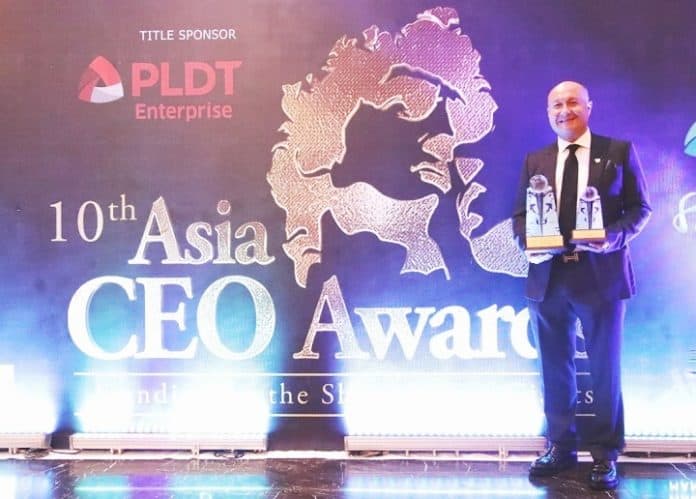
1. Regulation

Licensed Philippine-based pawnshops, like Cebuana Lhuillier, are regulated by the Bangko Sentral ng Pilipinas (BSP) through the Registration of Pawnshops and Money Service Business. This is to ensure the physical and financial safety of all pawnshop customers.

2. Responsibility

Aside from regulation, pawnshops also work with various establishments to ensure that the items they accept aren’t stolen goods. Pawn brokers are trained to identify their customers and keep records of the people they deal with.

In fact, all personnel in charge of pawnshops are screened and required to attend a seminar as per the orders of the Anti-Money Laundering Council (AMLA). This is to ensure that they are knowledgeable about customer identification, record keeping, and reporting of covered or suspicious transactions.

3. Authenticity

Pawnshops disregard age, style and brands when appraising jewelry. Instead, they pay attention to the actual value of the item. The prices of precious metals, such as gold and platinum, and precious stones, like diamonds, tend to fluctuate in the international market. Pawnbrokers monitor these and will adjust their prices accordingly to the weight and karat of your item. This means that, no matter how old your item is, you’ll still get a fair price according to the world market.


4. Accessible

According to the BSP, 86% of Filipino households don’t have a bank account. That means that these Filipinos cannot apply for a bank loan should the need arise. Also, most lending establishments will require you to present a credit report, something that is not at all easy to keep spotless nowadays.

Pawnshops, on the other hand, do not require you to have a good credit score. They only need two things to conduct a transaction: a valid ID and collateral.

That’s not to say that pawnshops are unsafe because of their availability. The essence of their business, to ‘hold’ an item in exchange for a loan, protects the establishment from losing money by taking ownership of said item should the pawner default on their payments. But as long as you stick to the agreement, you’ll get your item back at the end of the loan period.

This is good news for people outside the financial mainstream. Sure, temporarily losing your precious ring or laptop may not feel good, but going to a pawnshop is a much safer bet than borrowing from an unscrupulous lender and falling in an unending cycle of debt.

5. History

What may come as a surprise to most people is that St. Nick, Father Christmas, or more commonly known as Santa Claus, is the patron saint of pawnshops. The pawnshop industry started out as charitable organizations that helped the needy known as montespietatius. They would give low-interest loans to the poor to help them buy food and other necessities. Santa Claus’ well-known generosity and selflessness cemented his place as the patron saint of the montespietatius.

In the context of the Philippines, not much has changed. While most people who go to pawnshops are not in such dire straits that they are lacking in food, they still receive the help they need at an affordable cost.
With all of that said, you may be looking for a pawnshop that can provide you with some help during this Christmas season. No worries, as Cebuana Lhuillier has got your back. With their Pawning Service, you can be sure that you’ll never go short on any amount, as they accept an array of items, from jewelry to gadgets, as collateral. They also lead the pawning industry by offering safety and the highest appraisal rate with close to 2,500 branches nationwide. Visit your nearest Cebuana Lhuillier branch now – for a fast, easy and secure transaction.

Bank Loans vs Pawn Loans: What’s the Difference?

Let’s admit it. Sometimes, we want things we can’t afford. Most of the time, we can curb such destructive desires because we know better. However, there are rare times when that thing we want is actually also a thing we need. If that’s the case, then maybe it’s time to think about getting a loan.


There are several ways to get a loan in the Philippines, but let’s compare two of the most common methods: loans from banks and loans from pawnshops.

Who can get a loan?

To apply for a bank loan, you must have an account in a bank. You also need to meet a certain financial standard depending on the type of loan (housing, business or car) and the amount of money you want to borrow.

Pawn loans don’t need any sort of membership. As long as you have something valuable enough to pawn, you’re good to go.

How much can I get?

Bank loans can readily give higher amounts of funds. More often than not, people take out bank loans to pay for large expenses like cars, a house, or to start a business.

The amount of money you can get in a pawn loan depends on the value of the pawned item. Likely, it won’t reach the same amount than that of bank loans’.

How long does it take?

Typically, the entire process of applying, reviewing, and approving a bank loan takes around seven days. In some cases, it may even take a little longer.

On the other hand, as long as everything is clear, a pawn loan won’t even take you an entire day. This is good news for people who are in urgent need of money.

Which is best for me?

It depends on your needs really. If you plan on getting a loan for a business, a bank loan might be more suitable as it’s likely that you’ll need a large amount to get your startup running. However, pawn loans are more convenient if there’s an emergency, if you’re in a hurry, or if you just need a certain amount to tide you over the next few weeks.

With that in mind, if you are in need of no-fuss quick cash, Cebuana Lhuillier has got your back. With our Pawning Service, you can feel at ease that you’re getting your collateral’s worth. Our expert appraisers will provide you with the highest appraisals and the fairest terms. Visit your nearest Cebuana Lhuillier branch now – we assure a fast, easy and secure transaction.

Cebuana Lhuillier participates in disaster-resilience activities

Taking off from the launch of Cebuana Rapido, an employee volunteer group for disaster resilience-related activities, Cebuana Lhuillier has participated in a number of projects and activities meant to promote disaster resilience (DR) across the Philippines.

“I’m pleased to say that Cebuana Rapido members have taken to heart the company’s disaster resilience advocacy. In the recent months, many of our employees have volunteered in various DR-initiatives,” said Jean Henri Lhuillier, President and CEO of Cebuana Lhuillier, Inc.


Flood safety training, relief donation, and fire response

Cebuana Rapido is comprised of 4 teams, namely: Donation, Rehabilitation, Response, and Counseling. A number of activities have kept Cebuana Rapido members busy.

Last quarter, 40 employee volunteers from Cebuana Lhuillier already attended the two-day Metro Manila Development Authority (MMDA) Flood Incident Response and Safety Training (FIRST) at the MMDA Training Center.   FIRST is part of MMDA’s disaster management initiatives for capacity building in life and rescue operations.

The delegation from Cebuana was trained on disaster response, water safety training, and lifeboat handling, all of which are focused on a primary mission which is to save lives during calamity or disaster such as flooding.

Another set of employees has volunteered to participate in the disaster response initiatives of GMA Kapuso Foundation. The Cebuana Rapido Donation team helped re-pack and sorted relief goods for typhoon victims. For Iren Bello, a Cebuana Lhuillier employee, the experience was very fulfilling. “In my own little way, I want to help those who are in need especially victims of calamities” she said.

Carlo Y. Santana, CLIS Claims Lead, sees his participation in Cebuana Rapido as his contribution to educating Filipinos about the importance of preparing for unexpected catastrophes in life. Carlo joined Cebuana Rapido’s onsite response to a massive fire incident in Quezon City which has affected hundreds of families.


“Being part of the Rapido team is a selfless advocacy. You have to risk your life to reach out and help people in times of disasters. As a volunteer, you also need to help the victims be physically, mentally, and emotionally strong,” said Carlo. “Being prepared and resilient to any disaster is important. That it is the only way we can survive and save families and friends,” he added.

The Cebuana Rapido team’s most recent activity was the activation of its Donation team which quickly responded to the havoc caused by typhoon Ompong in North Luzon. Employee-volunteers went to Brgy. Lecaros Extension, Ugac Sur, Tuguegarao City, Cagayan and distributed relief goods. Led by Jonathan D. Batangan, First Vice President and Group Head of Cebuana Lhuillier Insurance Solutions Inc., the team also handed over their donation to representatives of Philippine Disaster Resilience Foundation (PDRF).

Art Relief Mobile Kitchen: Feeding the hungry in times of disasters

Food is one of human’s most basic needs. In times of disasters however, many families – traumatized, worried, and confused – find themselves with nothing, not even a simple meal. Art Relief Mobile Kitchen knew this too well and thought of a solution.

Since 2012, the non-profit group has been setting up community kitchens across the country to cook for people affected by disasters. Through the help of volunteers, Art Relief prepares warm meals at disaster sites and/or evacuation centers instead of just distributing relief goods typically comprised of dried and packed meals.

“Sometimes, all that people need to start bouncing back is a decent meal,” said Alex Baluyut, Art Relief Mobile Kitchen co-founder and president. People need something to warm their stomachs and energize their tired bodies,” Alex added.


The start of a mission

In November 2013, at the height of post-typhoon Yolanda operations, journalists and artists pulled their resources together to help feed families who were evacuated from Leyte to Villamor Airbase. Led by the couple Alex Baluyut and Precious Leano – who transported their entire kitchen to Villamor Airbase – the volunteers cooked warm meals for disaster victims.

“People were willing to help. Within 30 minutes upon reading my Facebook post about cooking for the evacuees, I received calls from friends offering money, food, kitchen stuff, and their own time to help us feed the hungry at Villamor,” said Alex.

Art Relief Mobile Kitchen was born. The group camped at Villamor for 22 days, and cooked non-stop for typhoon Yolanda victims.


Challenges and difficulties

Art Relief has fed the hungry during most of the worst disasters that hit the Philippines. Recently it has mobilized teams to cook for families and individuals affected by typhoon Ompong in Itogon, Benguet and the tragic landslide that took many lives in Naga, Cebu.

Finding the people who will cook is not a concern. While Art Relief only has 15 volunteers as part of its core, the organization is able to immediately set up mobile kitchens and cook for disaster victims because community members and even the evacuees themselves volunteer to take part in cooking and meal distribution. It has also been easy to call for help. Thanks to social media, Alex said he is able to cascade information and ask for assistance in just a few click.

The major challenge is logistics. Alex explained the difficulty in transporting kitchen equipment to disaster sites and how gathering donated food ingredients from supporters could cause logistics concerns as well.

The mission in Marawi has been the most difficult to date because of logistics and security concerns. “We were in Marawi at the height of efforts to free the city, just a few days before Philippine Independence Day. It was hard to move stuff from point A to point B. The chances of us getting caught in the cross fire was high,” Alex explained.

Despite these challenges, Art Relief vows to continue feeding the hungry in times of disasters. It has survived 6 years and is going strong.


Photo Credit: Art Relief Mobile Kitchen

DRRM stories from the regions

Post ‘Ompong’ rehab plan pushed for CAR

Office of Civil Defense Administrator Ricardo Jalad recommended the conduct of a comprehensive post typhoon Ompong recovery and rehabilitation plan for the Cordillera Region. The plan, he said, will play an important role in securing government funding support for the region’s rehabilitation efforts. Typhoon Ompong in CAR caused billions worth of damages in infrastructure and agriculture, affected the lives of 102,371 families, and claimed the lives of 114 people.

Source: PIA story, October 22


Disaster preparedness platform launched

In Cebu, more than 20 representatives from the public, private, and civil society sectors gathered to sign a memorandum of agreement for regional collaboration on disaster risk reduction and management. The event saw the launch of the Asia Pacific Alliance for Disaster Management (A-PAD) Central Visayas Regional Platform on disaster preparedness and response. A-PAD Philippines is jointly convened by the Citizen’s Disaster Response Center (CDRC) and the Philippine Disaster Resilience Foundation (PDRF). The former is an NGO that promotes community-based disaster management through its 16 regional centers in the Philippines, while PDRF is the country’s major private sector vehicle and coordinator for disaster risk reduction and management.

Source: Manila Bulletin, October 15


Disaster-related projects in Negros OKd

The Provincial Disaster Risk Reduction and Management Council (PDRRMC) in Negros Occidental approved the funds for disaster-related projects in the province. These projects include the establishment of a two-hectareresettlement site in Hinobaan town, establishment and operations of Task Force Buglas Humanitarian and Disaster Response and Coordination Center, climate resilience in fisheries through access to insurance, and training of the Negros Occidental Special Rescue Unit as well as city and municipal fire marshals.

Source: PIA story, September 27


Photo credit: Philippine Information Agency Cebu

House approves disaster insurance for vulnerable and marginalized groups

Legislators hope vulnerable and marginalized groups can better prepare for disasters through insurance coverage.

The House of Representatives approved on third and final reading House Bill No. 8165, also known as the Department of Disaster Resilience Act on 1 October 2018. Chapter 10, Section 32c of the said bill provides that the “Department shall oblige the local government units the mandatory insurance coverage of assets, properties, and livelihood of vulnerable and marginalized groups for unforeseen or contingent potential losses, damages, and disruption from natural hazards and human-induced disasters.”

Funds for the mandatory insurance shall be charged against the Local Disaster Risk Funds (LDRF). HB No. 8165 provides that no less than 7% of the local revenues must be allocated to the LDRF.

The Department of Disaster Resilience shall oversee local government units’ compliance to this provision, including all climate and disaster risk-transfer and risk–sharing instruments and initiatives to ensure the protection of both public and private institutions. The Department is also mandated to ensure that all assets and properties of government agencies including government owned and controlled corporations are insured.

“Despite the Philippines’ vulnerability to extreme weather and natural disturbances, Filipinos still have a long way to go in terms of appreciating the value of insurance. Mandatory insurance for vulnerable and marginalized groups is a major step towards educating Filipino communities on how insurance can help them prepare for natural or human-induced calamities,” said Jonathan D. Batangan, First Vice President and Group Head of Cebuana Lhuillier Insurance Solutions.

Cebuana Lhuillier annually convenes the Cebuana Lhuillier Disaster Resilience Forum as part of its advocacy to empower, capacitate, and educate Filipinos to be disaster-ready and resilient. The third Disaster Resilience Forum was held in July 2018 at the Shangri-la at The Fort, Taguig City.


Department of Disaster Resilience

The Department of Disaster Resilience is mandated to “oversee and coordinate the preparation, implementation, monitoring, and evaluation of disaster and climate resilience plans, programs, projects, and activities.” To be led by a Cabinet Secretary, the Department shall lead the continuous development of strategic and systematic approaches to make the country disaster resilient.

The Department however will only be created once the bill proposing it is signed by President Rodrigo R. Duterte. Under Philippine laws, both the House of Representatives and the Senate must approve their respective version of the bill, deliberate and draft a joint version, and submit it to the Office of the President for signature. To date, the Senate still has to approve its own version of the Department of Disaster Resilience bill.


Source: HB 8165

Photo Credit: Art Relief Mobile Kitchen

6 Practical Tips to Burglar-Proof Your Home

The local news is always abundant of reports involving crimes. Each and every day, we’d hear news of break-ins and robberies. Indeed, it is a risky world out there, which is why we are always comforted by the fact that the four corners of our home will always be a reliable fortress against these people who do not particularly have our own interest at heart. However, what if our homes are the next target of these muggers? No need to worry, as we have enumerated a few cost-effective ways to rack up the security of your homes against these burglars:

1) A few small adjustments can go a long way.

Home security doesn’t have to be complicated. If you want to know the mindset of a thief, think like one. Re-enact the possible scenarios, “What if I was a thief? Where would my point of entry be? What would I have to steal first?” Assess the situation, analyze the scenario, and change what has to be changed. You could block entry points to your home. You could fix that broken lock on your windows (local hardware stores sell them at an affordable price), you can trim shrubs at your yard, you can plant empty soda cans that goes “crunch!” whenever someone steps on them at the late hours. Your options are limitless.

2) Keep expensive outdoor items in the garage.

If your vehicle isn’t occupying the whole garage space, then consider stowing in your other outdoor items with the vehicle as well. You can keep your motorcycle, bikes, and grill beside the vehicle, behind closed doors and away from the prying eyes of thieves. You can also install an additional lock within your garage; hence, it could only be opened from the inside, an added security measure, overall.

3) Install curtains on your windows.

One of the most overlooked security measure may just be the simplest yet – curtains. Your mom and grand mom would normally install them in order to keep the heat of the sun at bay, and when there’s a cool breeze, you can simply tie them in order to let the breeze in. However, they are also an effective way to limit visibility from the outside. Thieves are master planners when it comes to staking out their targets, hence, why it’s important to block their view. Curtains would not only keep outsiders from seeing your valuables, they’d also prevent assailants from having a definite idea of the number of people they’d have to go against with, if ever they make the crucial mistake of breaking in your humble home.

4) Don’t hide keys outdoors.

There are times in which we’d lose our keys due to work stress and confusion, that happens to everyone, but you should remember not to keep a spare key outside your home. You may be used to the idea of hiding a key under a rock or the welcome mat, but thieves are perceptive nowadays, hence why you should mix it up and avoid doing the usual. If you want to keep a spare key, you may do so within your own pocket or bag, you may even keep it inside the shoe you’re wearing, just as long as there’s proper padding to keep it from puncturing your sole.

5) Whenever you leave the house, even for a while, leave a light or a radio on.

Nothing terrifies a thief more than the presence of residents within a supposedly empty home. Don’t give them any peace of mind or satisfaction at all, leave a diversion instead. Burglars are wary of in-home presence, and they’ll always think twice of entering a home with a loud radio or a light turned on.

6) Adopt a dog.

It may seem counterintuitive at this point, but think of it this way, you’ll not only earn a very loyal companion, you’ll also have an active defense against burglars, 24/7. Even if the burglars were to change their mind upon seeing the presence of your dog, you’d still have enough time to call the police and report a burglary attempt. This would further re-enforce your community security as a whole.

With all of those in mind, one main way of protecting your home is availing a home insurance; however, you may definitely want to weigh in your options, analyzing which establishment would be best for availing a home insurance premium and coverage. Look no further than with Cebuana Lhuillier’s HomeCARE Insurance, with its very affordable insurance coverage. It offers loss protection to buildings and residential dwellings including their contents against perils of fire, lightning and other allied perils such as earthquake, typhoon and flood. Visit your nearest Cebuana Lhuillier branch now – we assure a fast, easy and secure transaction.

CORPORATE AGENT PARTNERS

  • ACTION.ABLE, INC.
  • ALL ACCESS GATEWAY INC.
  • ANTRECCO (AGUSAN DEL NORTE TEACHERS, RETIREES, EMPLOYEES & COMMUNITY COOPERATIVE)
  • ACM VIP
  • ALL CASH
  • AGRILIFE/ AGRIVET
  • ASENSO PINOY STORE, INC. (EASY DAY SHOP)
  • AVICOM ENTERPRISES
  • AYALA ALABANG VILLAGE ASSOCIATION
  • BAUG CARP MULTI PURPOSE COOPERATIVE
  • BAGUIO BENGUET COOP
  • CARD BANK INC
  • CARD MRI RIZAL BANK INC
  • CARD SME BANK
  • CARITAS BANCO NG MASA, INC.
  • CEBU PEOPLE’S MULTIPURPOSE COOPERATIVE
  • CIS BAYAD CENTER, INC
  • COOPERATIVE BANK OF BOHOL, INC
  • COUNTRY BUILDERS BANK
  • CREDENCE FINANCING, INC.
  • CURAMED PHARMACY
  • DALTON PAWNSHOP AND JEWELRY INC.
  • DANIELA PAWNSHOP
  • DIRECT AGENT 5 (DA 5)
  • DEVELOPMENT BANK OF THE PHILS.
  • EXPRESSPAY INC.
  • EVRIJEM FOREIGN EXCHANGE AND MONEY REMITTANCE
  • FILHAI MULTI PURPOSE COOPERATIVE
  • GLOBAL PINOY REMITTANCE AND SERVICES (GPRS)
  • GEMARY PAWNSHOP AND JEWELRY (CORP.)

OVER 600 BILLER PARTNERS NATIONWIDE

  • 123 FINANCE CORPORATION
  • 123 LENDING CORPORATION
  • 2C2P
  • 8AMC (VIA ECPAY)
  • ABEJO WATERS CORP.
  • ABRA
  • ACOM CONSUMER FINANCE CORPORATION
  • ACTIVE REALTY & DEVELOPMENT CORP.
  • ADA MANUFACTURING CORPORATION (VIA ECPAY)
  • AEON CREDIT SERVICE
  • AETERNITAS CHAPELS AND COLUMBARIUM (VIA ECPAY)
  • AFC SME FINANCE INC
  • AFTERWEST MICROLOANS INC
  • AGODA – DRAGONPAY
  • AGRIBANK
  • AGRO-INDUSTRIAL FOUNDATION COLLEGE OF THE PHILS.
  • AGUSAN DEL NORTE ELECTRIC COOPERATIVE, INC.
  • AIR YOU GO TRAVELS PHILIPPINES CO.
  • AKLAN ELECTRIC COOPERATIVE, INC.
  • ALAMINOS CITY WATER DISTRICT (VIA ECPAY)
  • ALLIANZ PNB LIFE INSURANCE INC.
  • ALPHA FUND SAVINGS & CREDIT COOPERATIVE (VIA ECPAY)
  • AMADEO WATER DISTRICT (VIA ECPAY)
  • AMYA POLYTECHNIC COLLEGE, INC. AND FINANCING CORPORATION (LENDPINOY)
  • ANGAT WATER DISTRICT (VIA ECPAY)
  • ANGELES ELECTRIC COMPANY ANGELICUM SCHOOL , INC. ILOILO CITY (VIA ECPAY)
  • ANJELMAN REAL ESTATE LEASING
  • ANTIQUE ELECTRIC COOP, INC ANTRECCO (BILLS PAYMENT)

OVER 600 BILLER PARTNERS NATIONWIDE

  • 123 FINANCE CORPORATION
  • 123 LENDING CORPORATION
  • 2C2P
  • 8AMC (VIA ECPAY)
  • ABEJO WATERS CORP.
  • ABRA
  • ACOM CONSUMER FINANCE CORPORATION
  • ACTIVE REALTY & DEVELOPMENT CORP.
  • ADA MANUFACTURING CORPORATION (VIA ECPAY)
  • CREDIT SERVICE
  • AETERNITAS CHAPELS AND COLUMBARIUM (via ECPAY)
  • AFC SME FINANCE INC
  • AFTERWEST MICROLOANS INC
  • AGODA – DRAGONPAY
  • AGRIBANK
  • AGRO-INDUSTRIAL FOUNDATION COLLEGE OF THE PHILS.
  • AGUSAN DEL NORTE ELECTRIC COOPERATIVE, INC.
  • AIR YOU GO TRAVELS PHILIPPINES CO.
  • AKLAN ELECTRIC COOPERATIVE, INC.
  • ALAMINOS CITY WATER DISTRICT (via ECPAY)
  • CREDENCE FINANCING, INC.
  • CURAMED PHARMACY
  • DALTON PAWNSHOP AND JEWELRY INC.
  • DANIELA PAWNSHOP
  • DIRECT AGENT 5 (DA 5)
  • DEVELOPMENT BANK OF THE PHILS.
  • EXPRESSPAY INC.
  • EVRIJEM FOREIGN EXCHANGE AND MONEY REMITTANCE
  • FILHAI MULTI PURPOSE COOPERATIVE
  • GLOBAL PINOY REMITTANCE AND SERVICES (GPRS)
  • GEMARY PAWNSHOP AND JEWELRY (CORP.)

List of Accepted Government/ Valid IDs

  • Passport
  • Driver’s License
  • Professional Regulation Commission (PRC) ID
  • National Bureau of Investigation (NBI) Clearance
  • Police Clearance
  • Postal ID
  • Voter’s ID
  • Philippine Identification System (PhilSys) ID
  • Government Service Insurance System (GSIS) e-Card
  • Social Security System (SSS) ID
  • Senior Citizen’s ID
  • Overseas Workers Welfare Administration (OWWA) ID
  • OFW ID
  • Seaman’s Book
  • Alien Certification of Registration (ACR)
  • Barangay Certificate or ID (with picture and signature)
  • Birth Certificate (applicable to minors only)
  • Firearm License
  • Immigrant Certificate of Registration
  • Marriage License
  • National Council for the Welfare of Disabled Persons
  • New TIN ID
  • OWWA ID
  • Student ID
  • Alien Certification of Registration (ACR) / Immigrant Certificate of Registration
  • Government Office or Government Owned and Controlled Corporations (GOCC) ID (e.g. AFP ID, HDMF (Pag-ibig Fund) ID, etc.
  • Certification from the National Council for the Welfare of Disabled Persons (NCWDP)
  • Department of Social Welfare and Development (DSWD) Certification
  • Integrated Bar of the Philippines ID (IBP)
  • Company IDs issued by private entities or institutions registered with or supervised or regulated either by the BSP (Bangko Sentral ng Pilipinas), SEC (Securities and Exchange Commission) or IC (Insurance Commission)

IDs Accepted

As required by Bangko Sentral ng Pilipinas (BSP), clients who engage in a financial transaction with covered institutions for the first time shall be required to present the original and submit a clear copy of at least ONE (1) valid photo-bearing identification document issued by an official authority. For our clients’ convenience, Cebuana no longer requires submission of the photocopied ID. IDs are captured using a webcam in all branches. Clients are also required to submit an updated photo and other relevant information whenever the need for it arises.

Forms of identification accepted are the following;

Pawn Accepted IDs
1. Passport
2. Driver’s License
3. Professional Regulation Commission (PRC) ID
4. National Bureau of Investigation (NBI) Clearance
5. Police Clearance
6. Postal ID
7. Voter’s ID
8. Philippine Identification (PhilID) card
9. Social Security System (SSS) Card / Unified Multi-Purpose ID (UMID)
10. Barangay Certification
11. Government Service Insurance System (GSIS) e-Card
12. Senior Citizen Card
13. Overseas Workers Welfare Administration (OWWA) ID
14. OFW ID
15. Seaman’s Book
16. Alien Certification of Registration/Immigrant Certificate of Registration (for foreigners)
17. Government Office and GOCC ID, e.g., Armed Forces of the Philippines (AFP ID)
18. Home Development Mutual Fund (HDMF ID)
19. Certification from the National Council for the Welfare of Disabled Persons (NCWDP)
20. Department of Social Welfare and Development (DSWD) Certification
21. Integrated Bar of the Philippines (IBP) ID
22. Company IDs issued by private entities or institutions registered with or supervised or regulated either by the Bangko Sentral ng Pilipinas, Securities and Exchange Commission or Insurance Commission
23. ID issued by the National Council on Disability Affairs (NCDA)